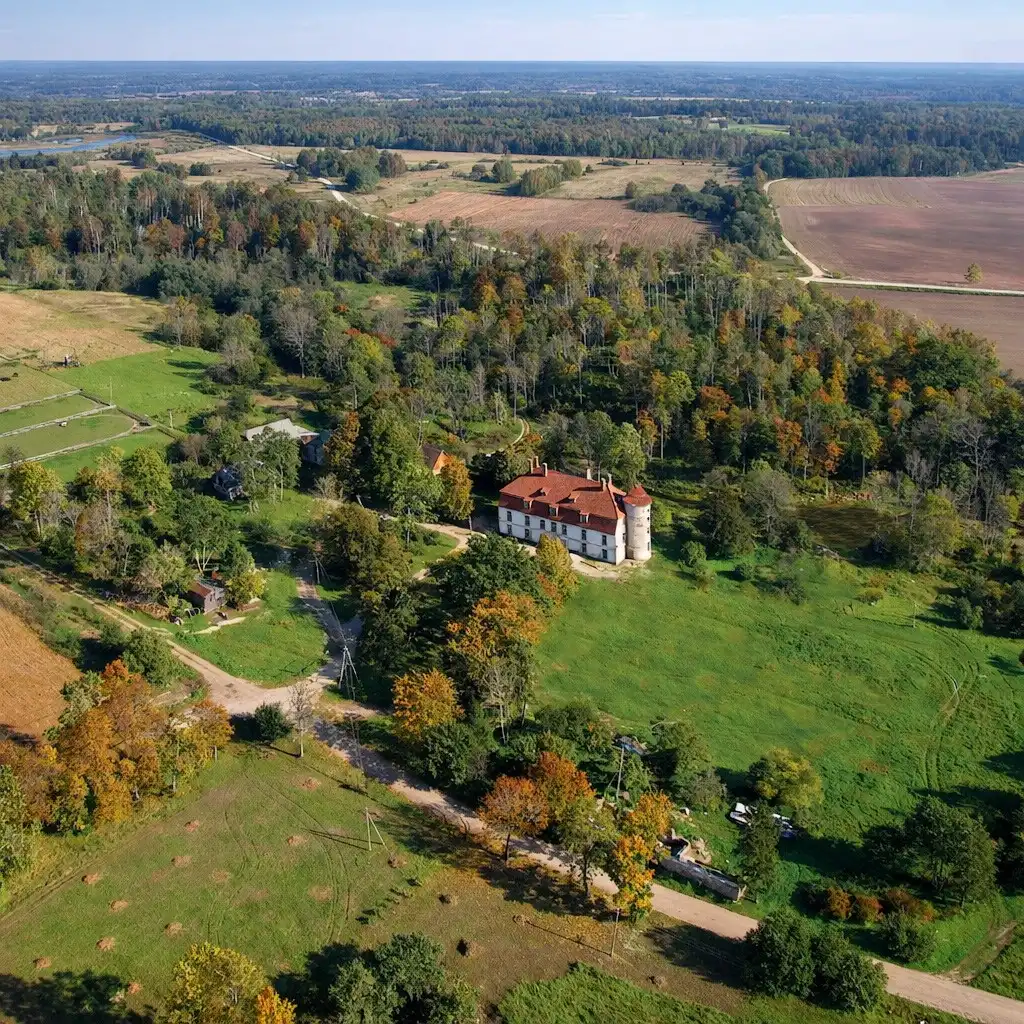
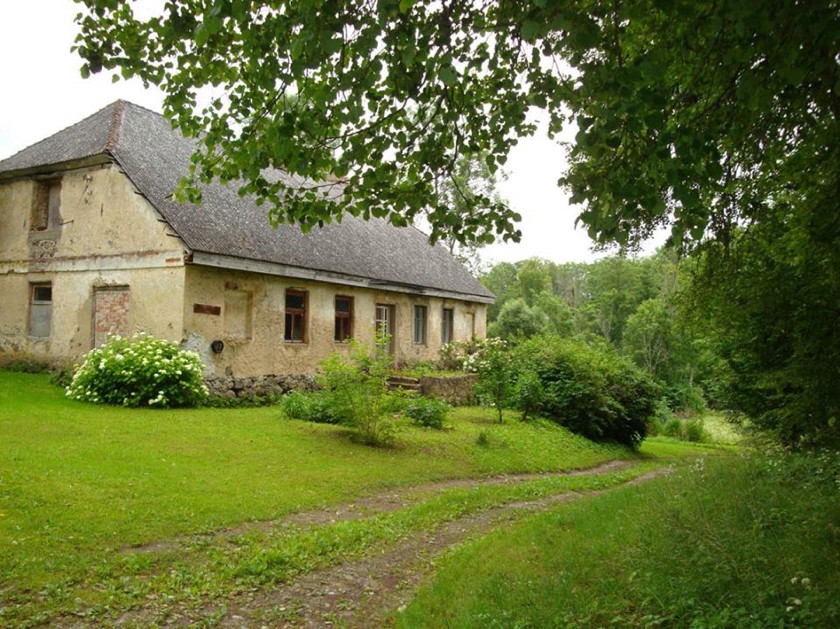
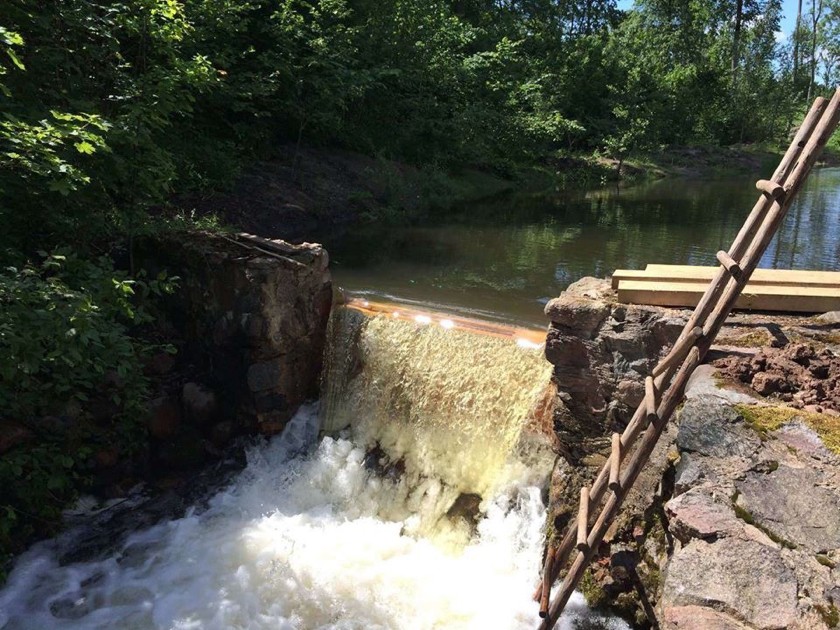
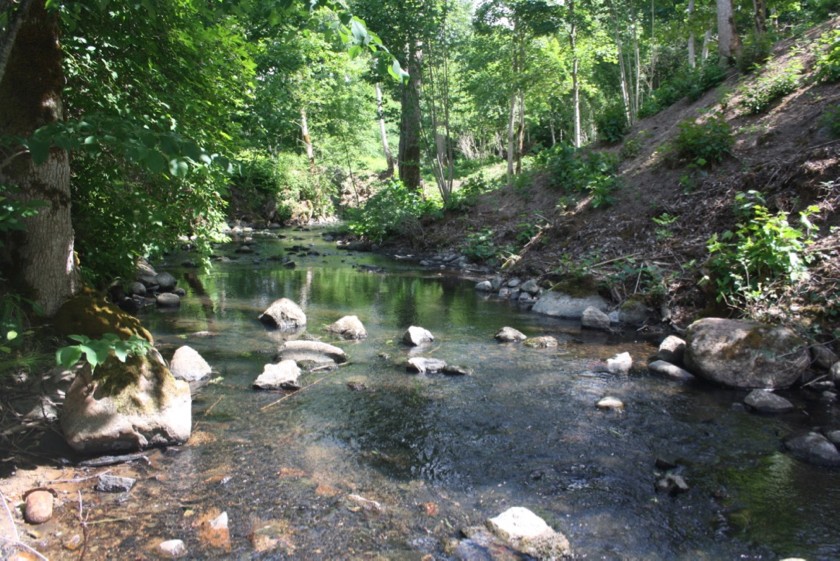
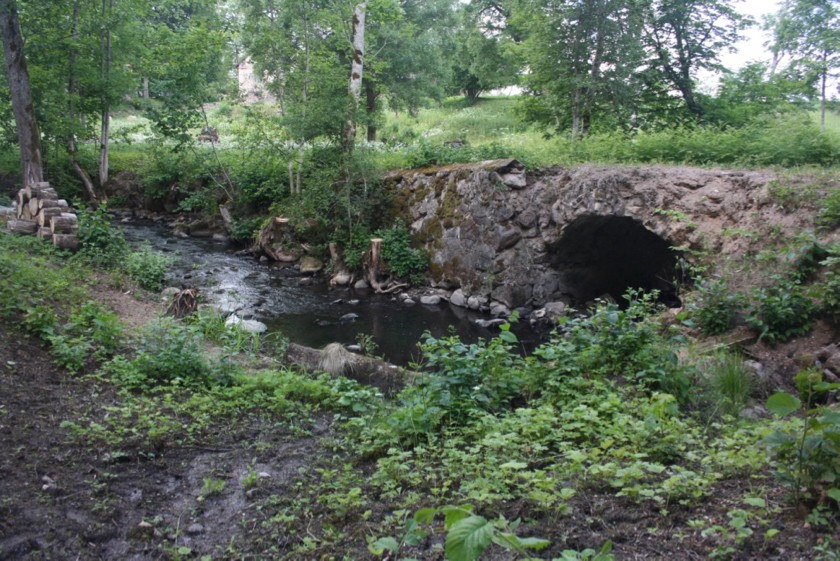
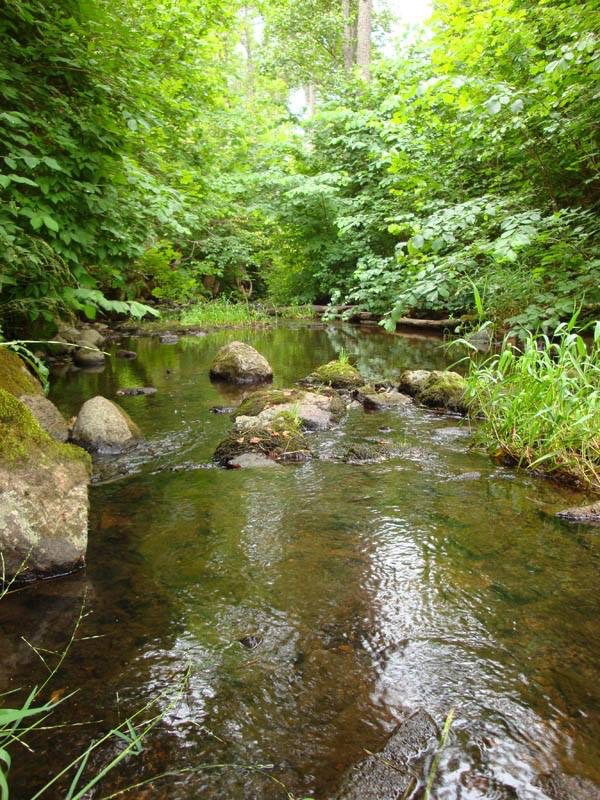
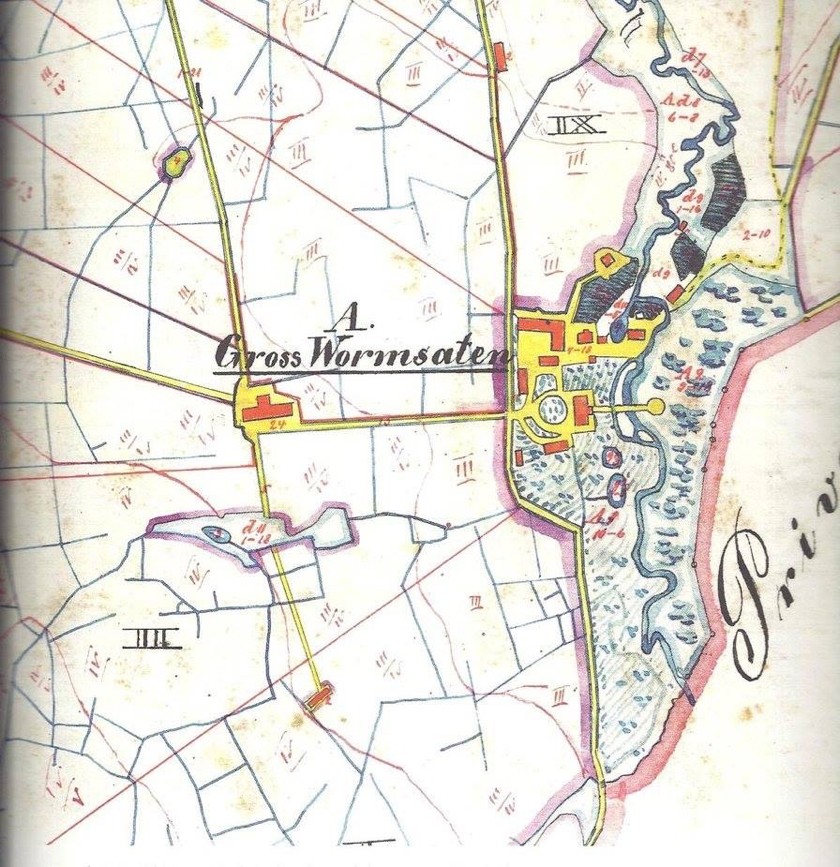
Wormsahten estate is located in one of the most picturesque regions of Courland, nestled between the Embute hills and the Venta River valley. The Wormsahten manor lies about 1 km from Nīkrāce, on the left bank of the Šķērvele River. The property is traversed by the fastest river in Courland, the Šķērvelis, which was also declared the cleanest river in Latvia in 2009.
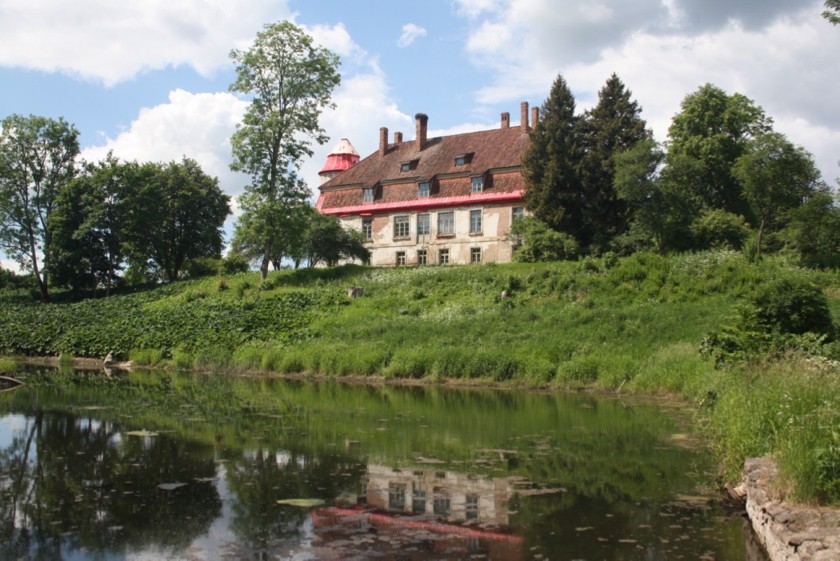
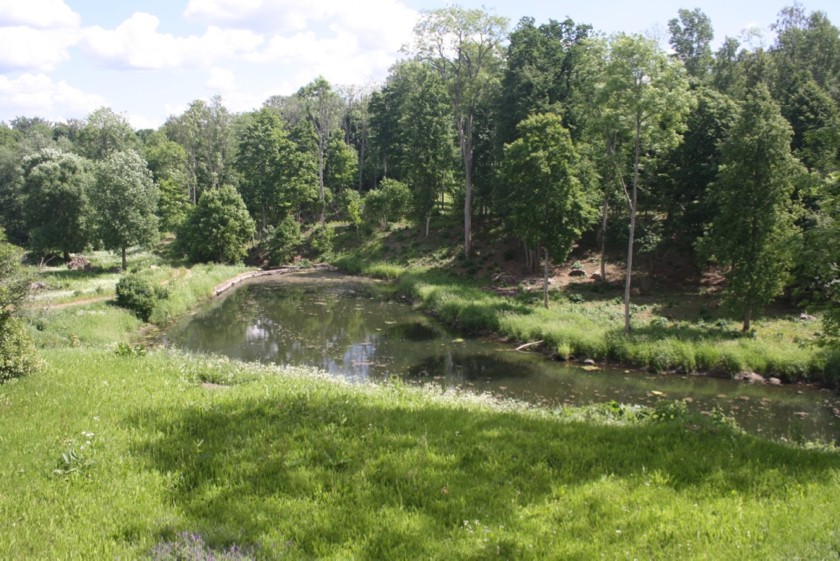
The former landscape park was originally the largest and oldest in the Baltics, listed in several international garden and park catalogs as well as in 18th- and 19th-century chronicles. Directly in front of the manor house, the river is dammed into a small lake, which can be viewed from the manor. In the past, a wooden bridge extended from the upper floor of the house to the opposite bank and continued into the park.
Since the 15th century, the estate belonged to the ancient Baltic von Rosen family. The von Rosens lost the estate during the Swedish land reduction, after siding with Johann Reinhold von Patkul, the defender of the Livonian and Courland nobility’s rights. The estate then passed to the von Schlippenbach family, who are believed to have commissioned the 1809 version of the house.
The 1809 book Picturesque Walks through Courland by Baron Ulrich von Schlippenbach already mentions a house on the Wormsahten estate, described as a “two-story building combining new and yet old Gothic residential forms.” Ulrich von Schlippenbach also provides a detailed prose description of the estate’s mysterious park.
The estate changed hands several times thereafter. After passing through the barons von Fircks and von Roenne, it finally came into the possession of the von Hahn family in 1856, who remained owners until expropriation in 1922.
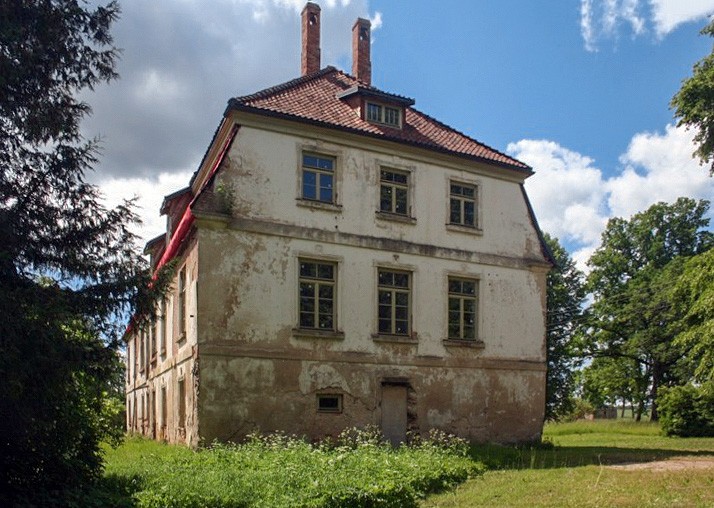
The basic structure of the house likely dates back to 1568 under the von Rosen family. The 1809 renovation appears to have preserved much of the house’s archaic character. During the 1905 unrest, the house burned down and was carefully rebuilt under the supervision of Riga architect Wilhelm Ludwig Nicolai Bokslaff.
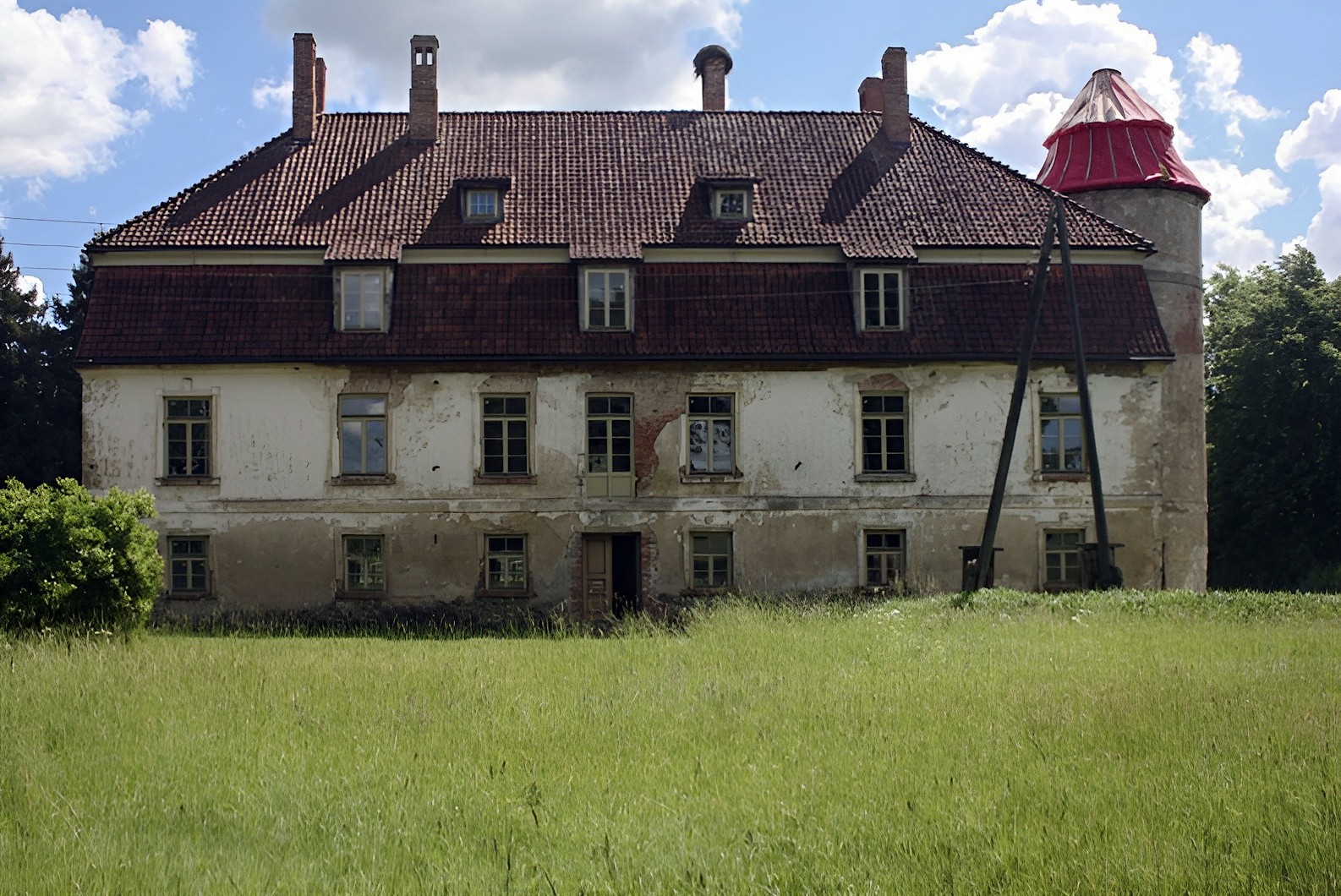
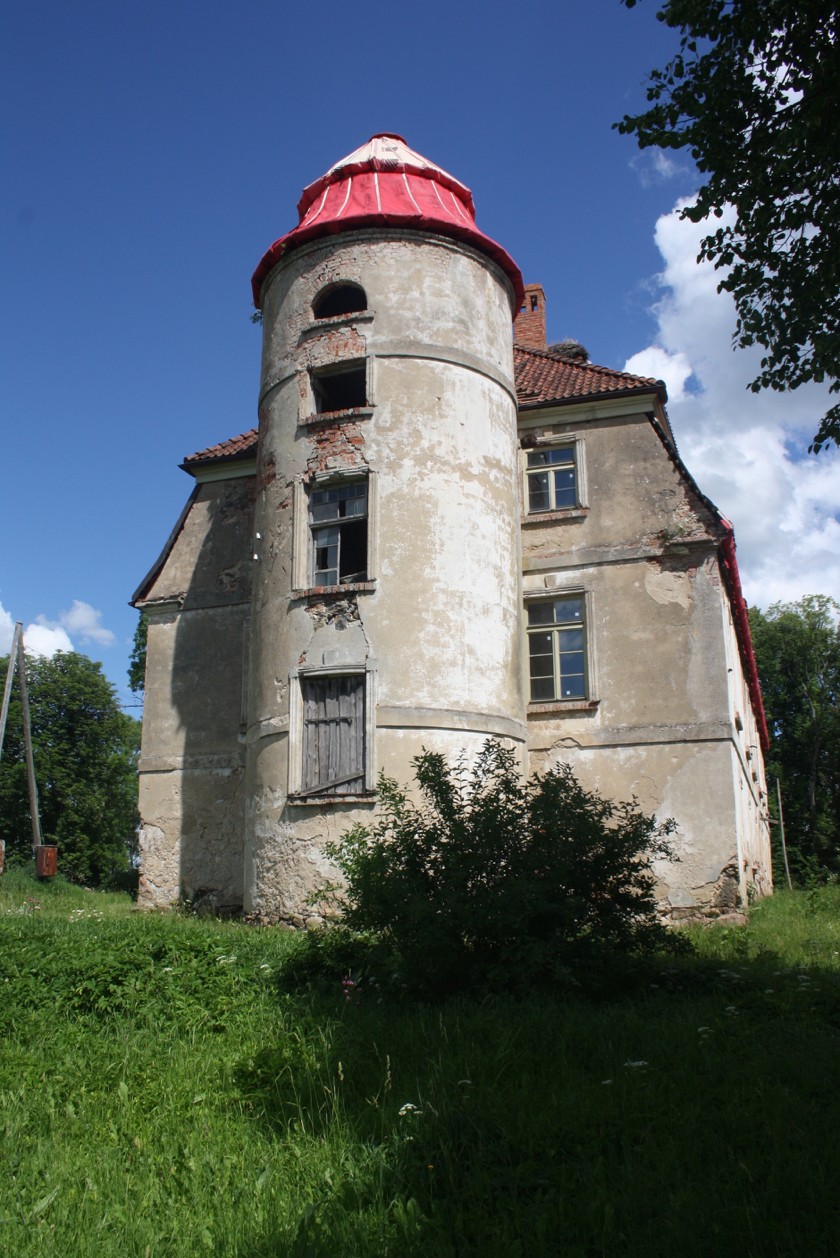
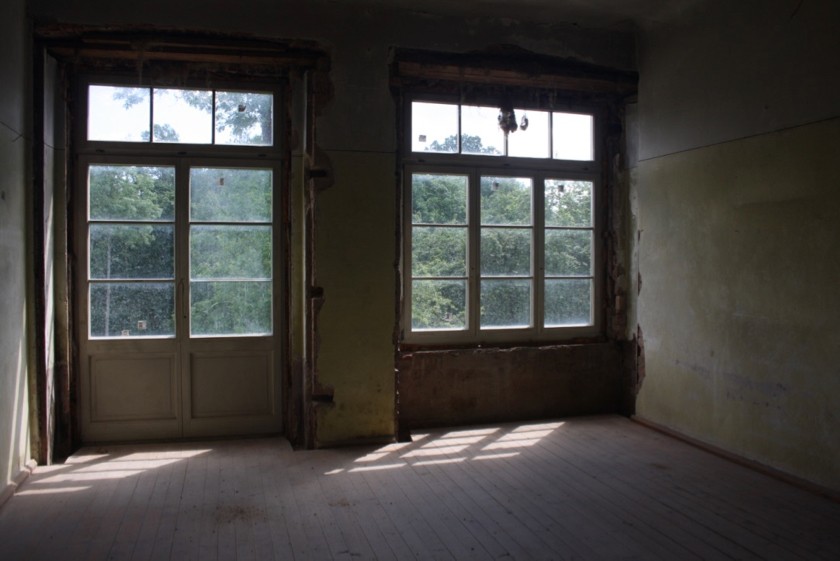
The house is two stories tall, seven bays wide, and crowned with a large mansard roof. A stair tower is attached to the south gable. On the river side, the two central windows framing the door window (likely the former bridge access) are noticeably larger, softening the otherwise fairly strict facade.
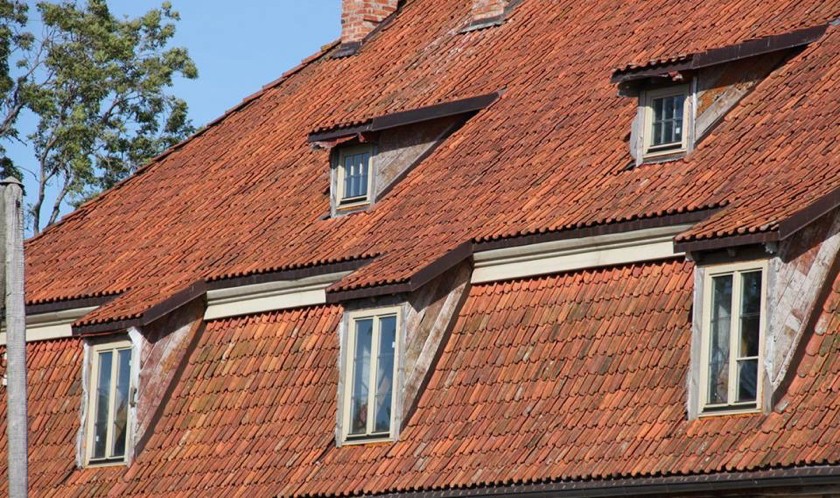
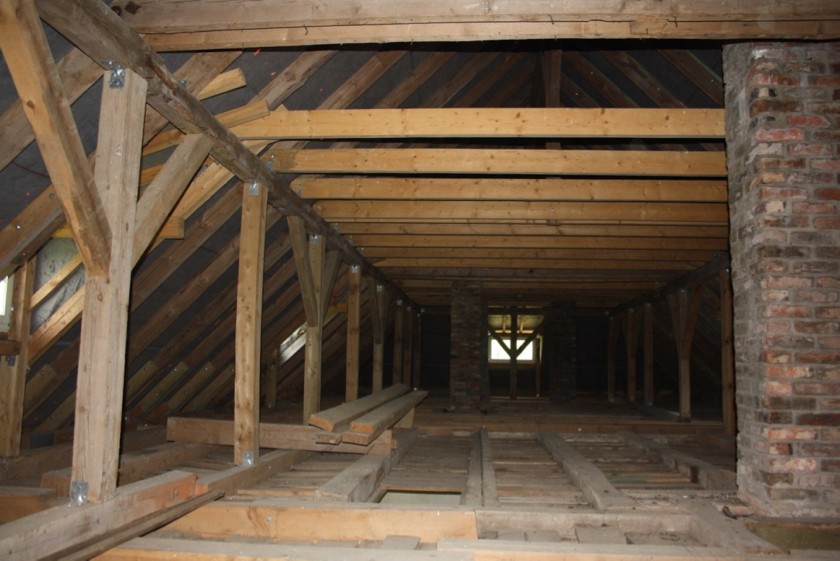
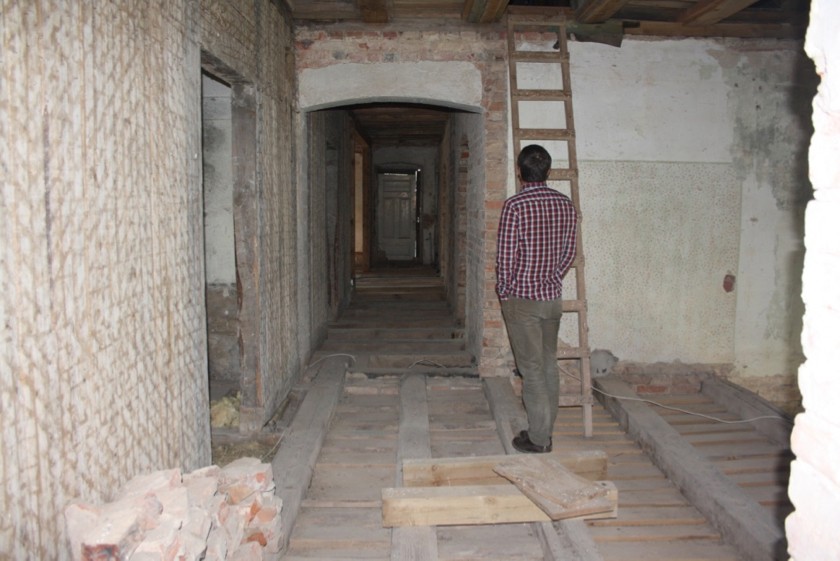
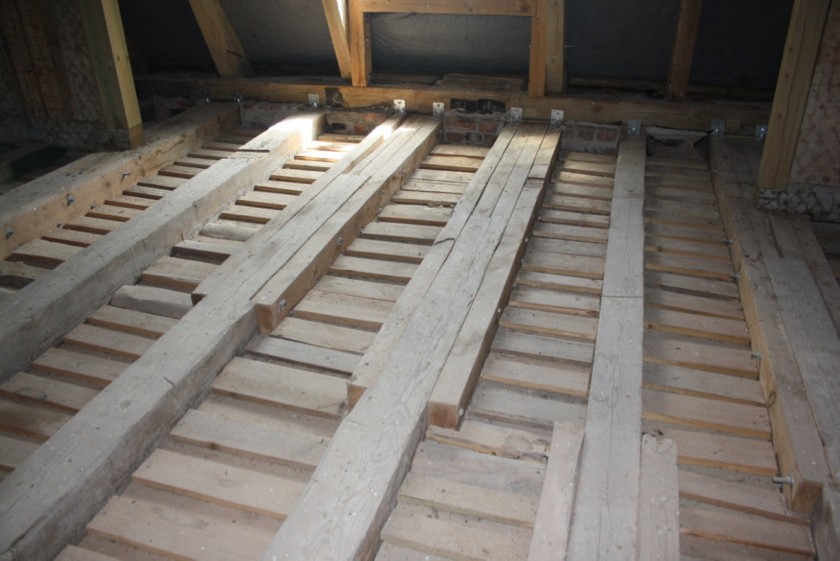
The first attic level is illuminated by three large dormers, making it fully habitable. In recent years, the house has undergone extensive renovations: roof and roof structure, beams and posts, new wooden windows and oak doors, staircases, and preparation for underfloor heating on the first floor. The attic is also ready for further development.
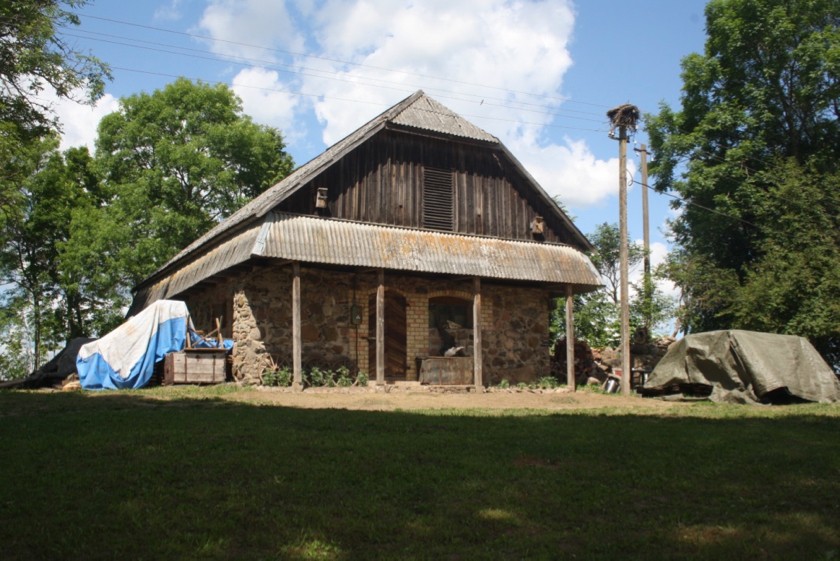
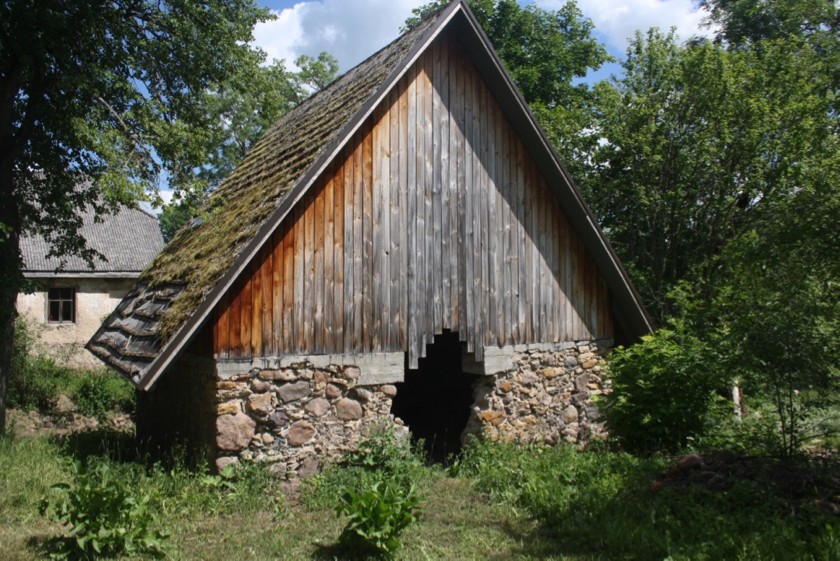
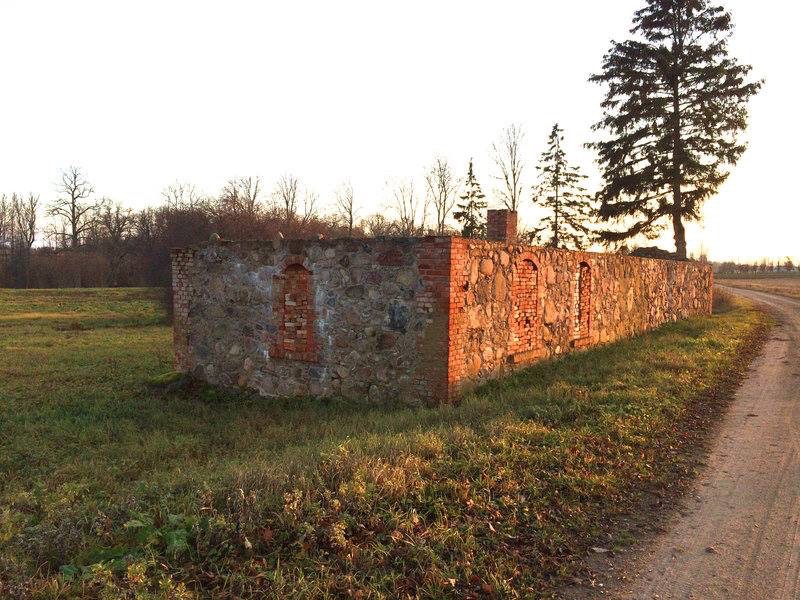
The estate complex includes a gardener’s house (200 sqm), a vegetable storage building (100 sqm), a stable, a barn, a garage for three cars, a firewood storage, a riverside sauna, two fish ponds, a well (80 m), and several foundations for agricultural buildings.
The property covers a total area of 20.37 hectares, including 12.37 hectares of park and forest, 6 hectares of arable land, and 2 hectares occupied by the manor complex.