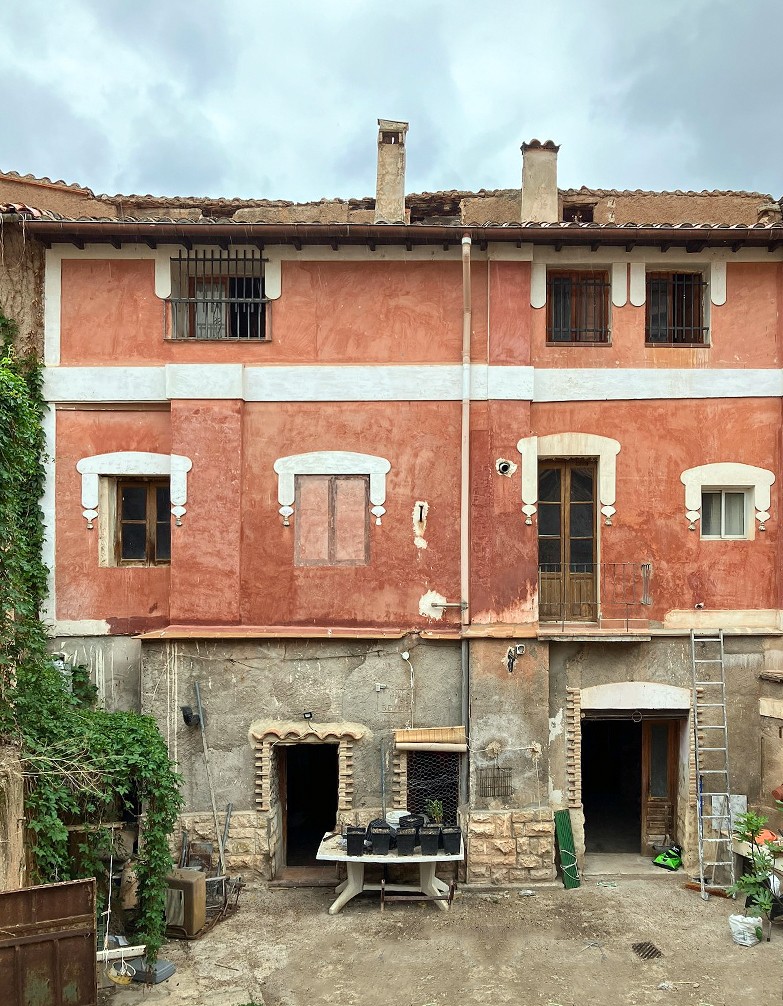
The house was built in the 15th century and was used until the 19th century as a residence for canons. Nowadays it is called “Casa del Diablo” (House of the Devil) because in it lived around 1836 a prominent anticlerical revolutionary, nicknamed El Diablo Royo, both for the color of his hair and for his not very exemplary behavior. Taking advantage of the disentailment of Mendizábal, he took possession of a good number of ecclesiastical properties, among them, the house we are dealing with.
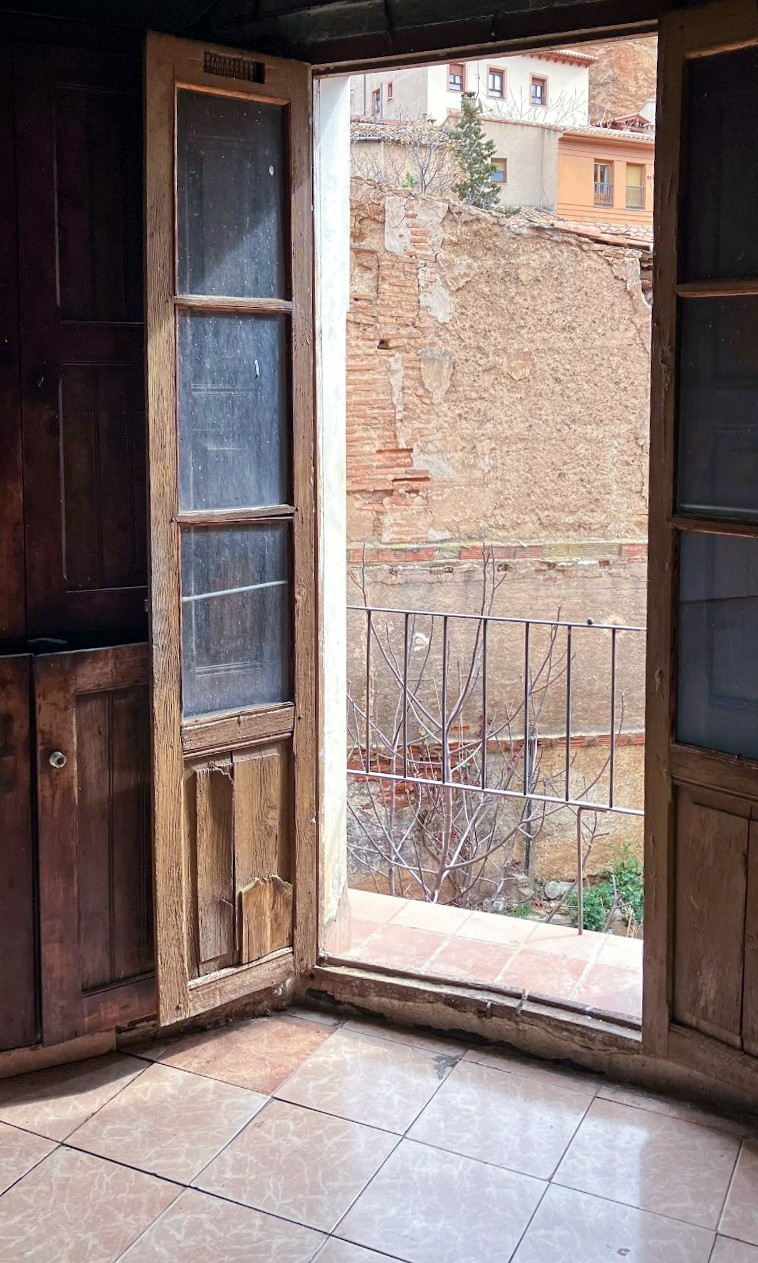
On the exterior there is a masonry Muslim wall, interrupted on the interior by the construction of cellars. The wrought iron grille that covers an exterior opening dates from the 15th century; it is decorated with zig zag incisions on the border, engraved manually with a chisel, accompanied by arrowhead ornaments with similar incisions; the whole is finished off with a vegetal ornament.
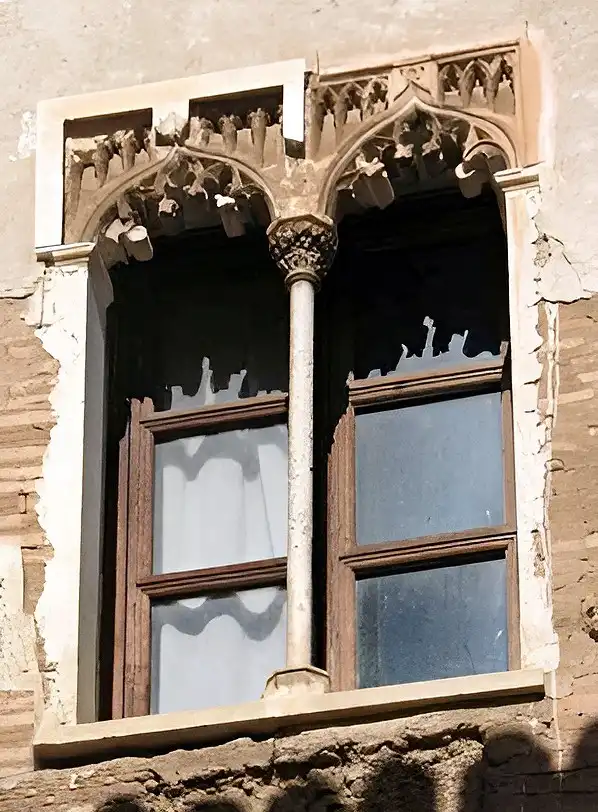
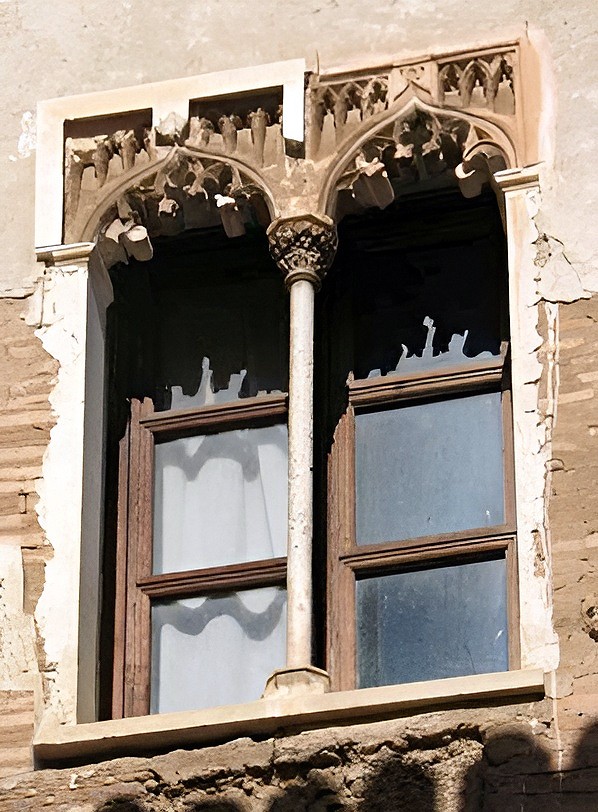
An important decorative piece is the mullioned window decorated with two ogee arches resting on a column of cylindrical shaft, capital decorated with trepanned vegetal motifs and octagonal abacus; the base, also octagonal, is semi-covered when the window was later enlarged. The adjoining window would be very similar, although it was destroyed in a renovation.
The façade, built of rammed earth, was plastered with sgraffito work similar to the decorative motifs of the grille, of which only small fragments remain.
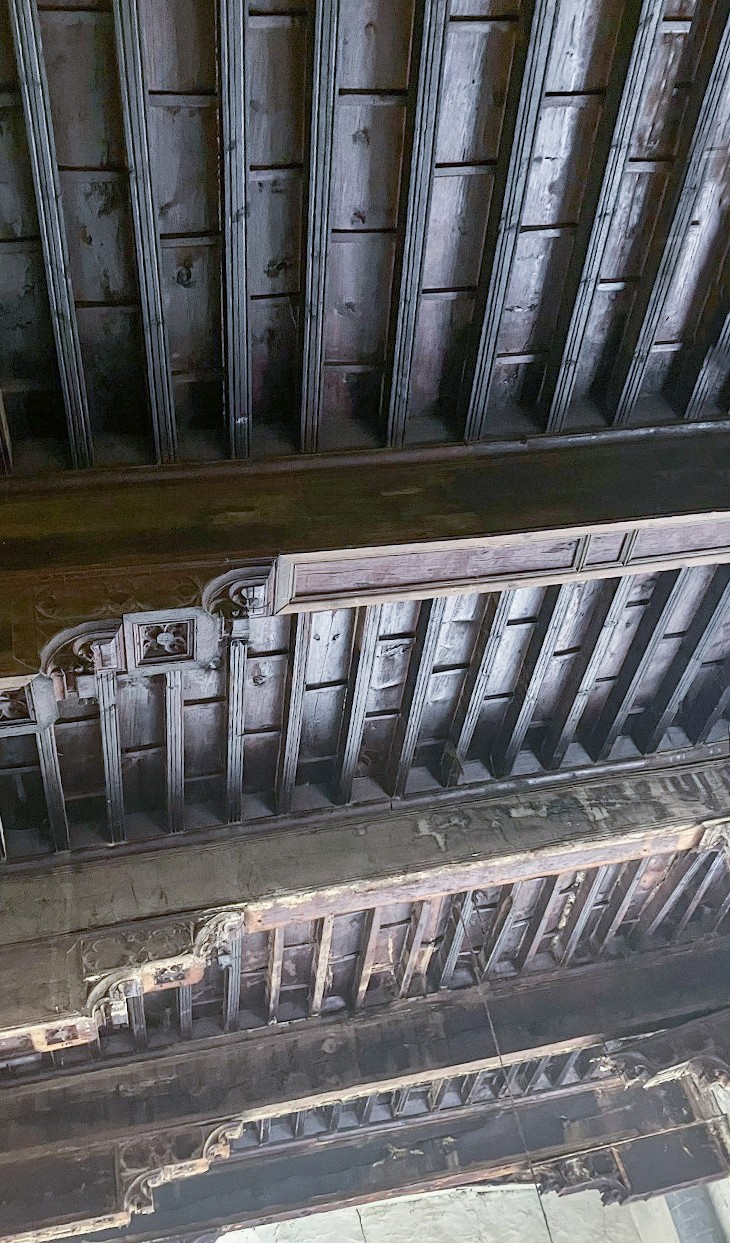
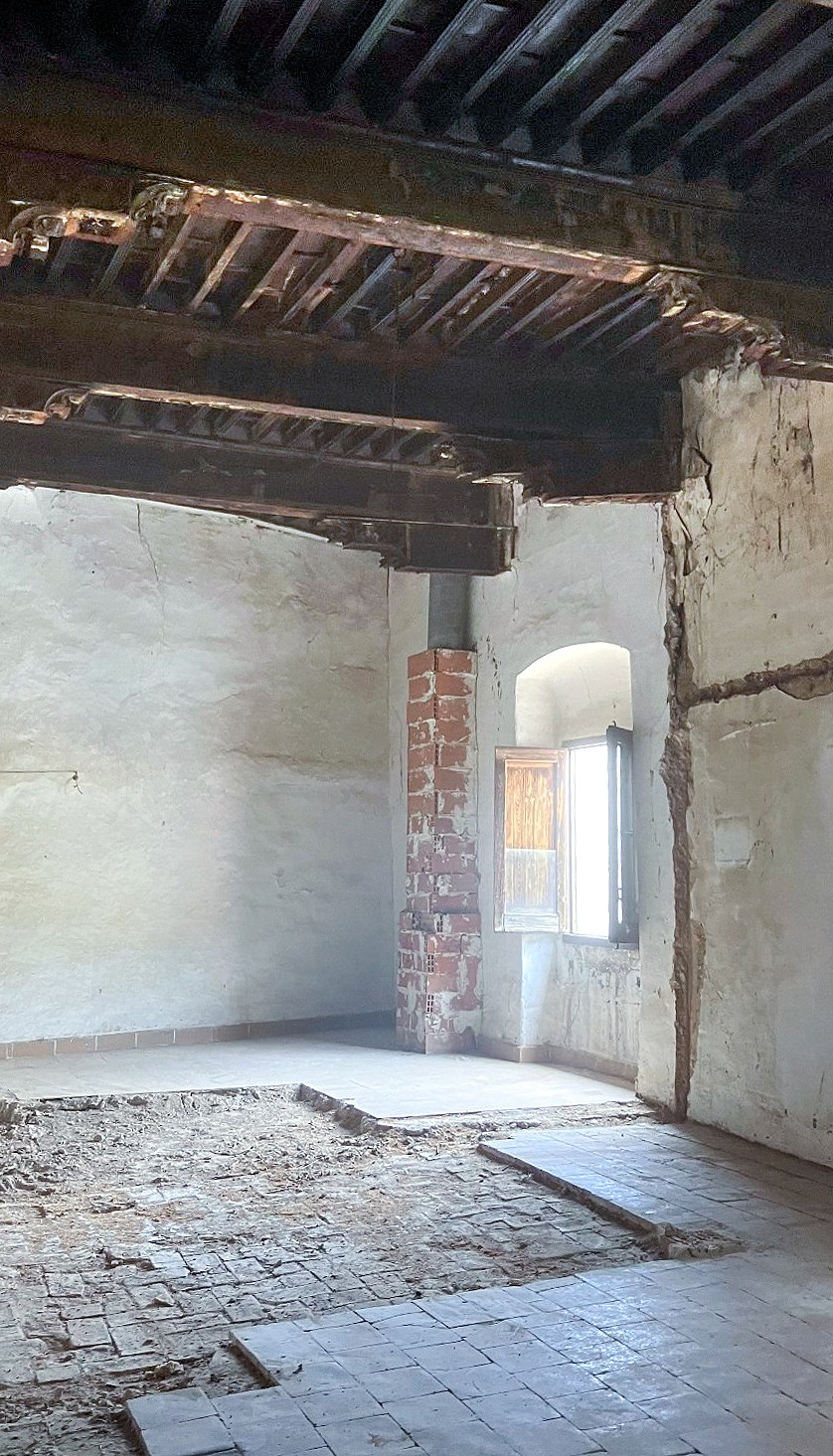
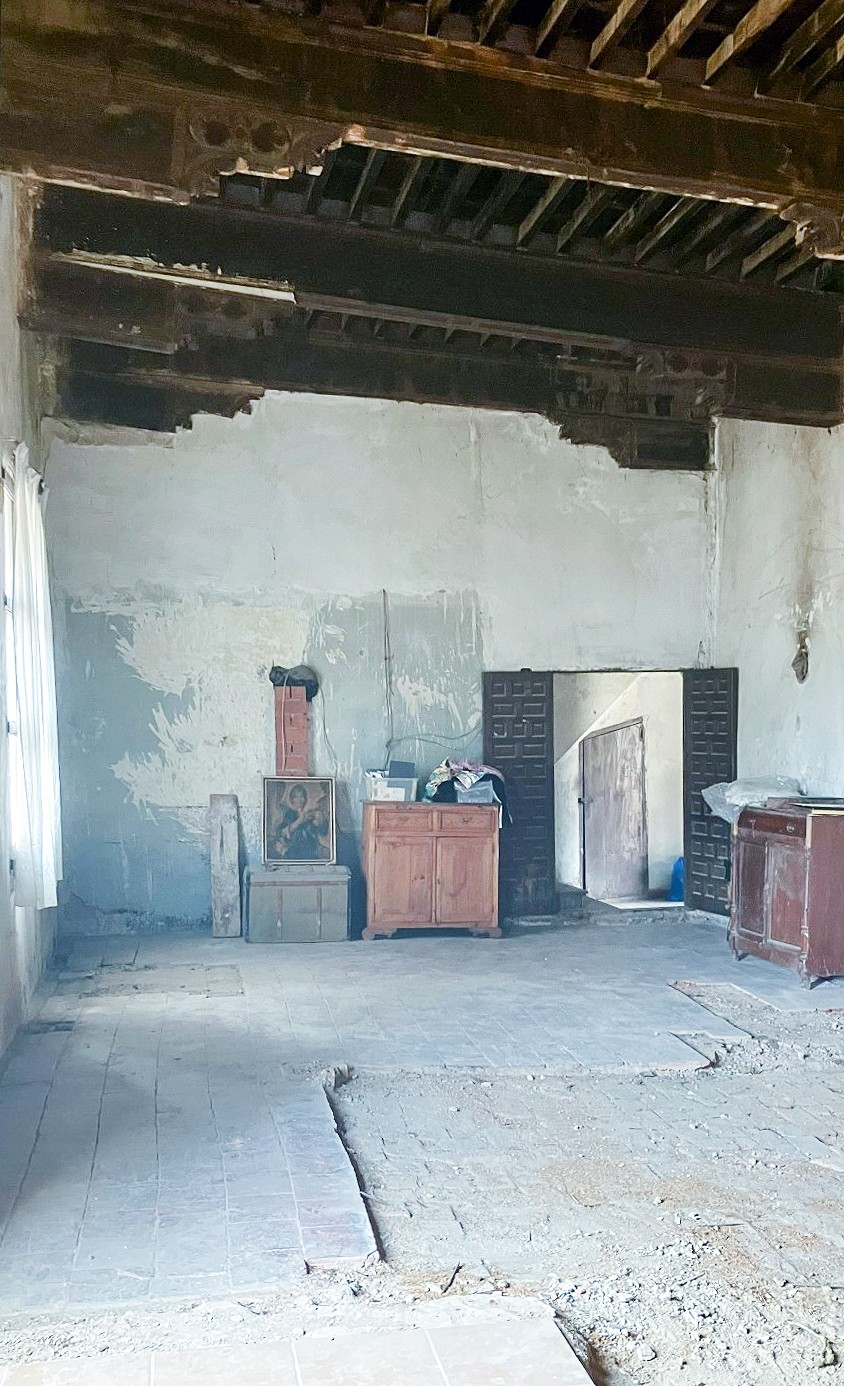
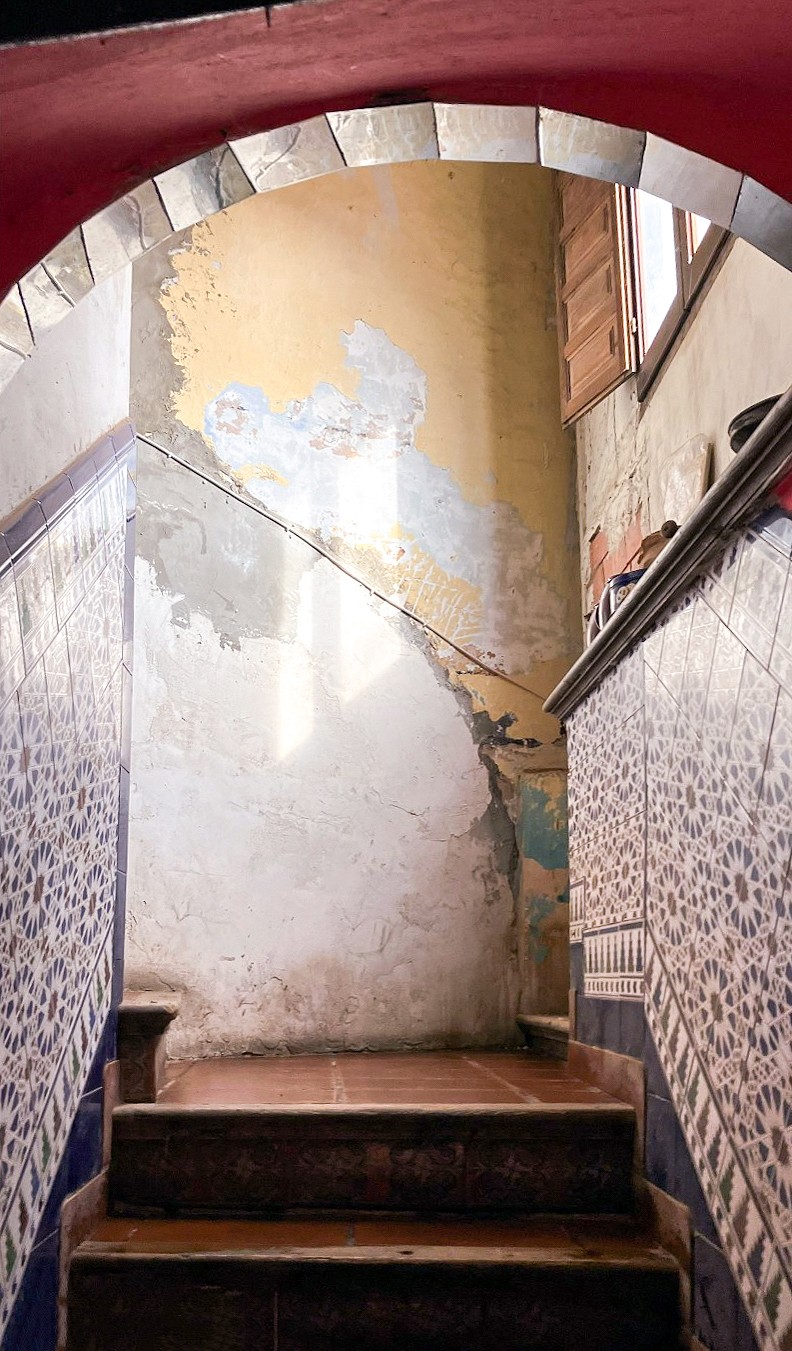
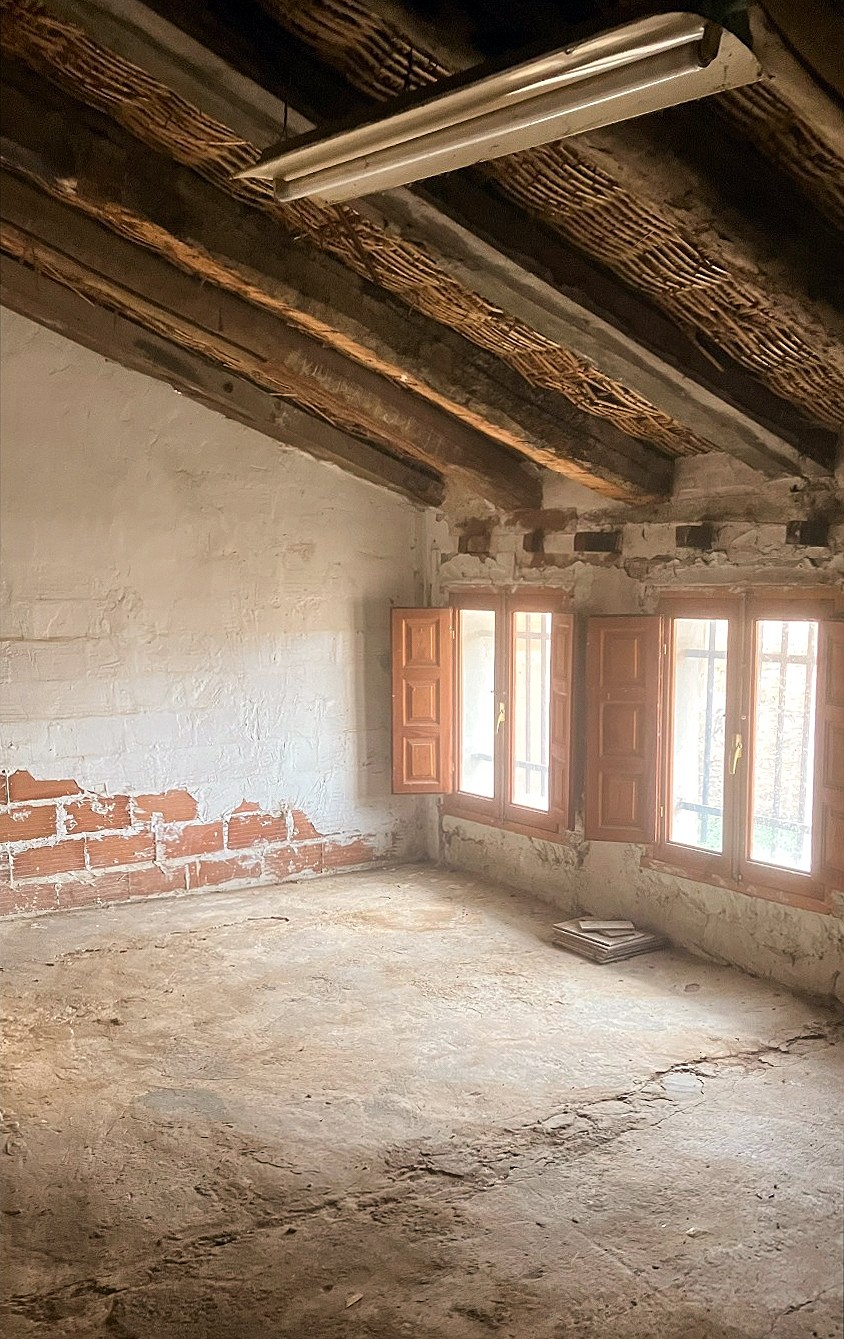
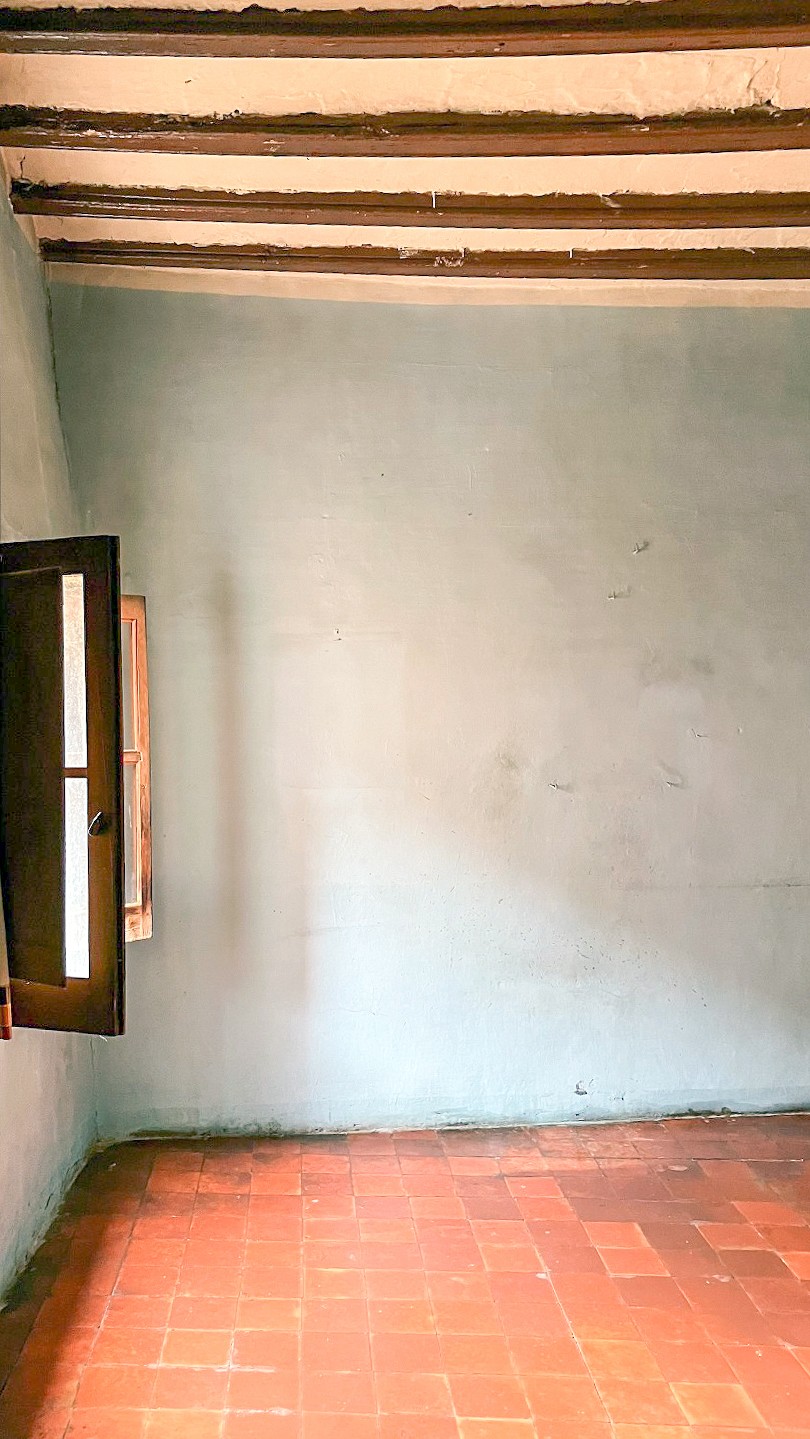
The interior is adapted to the needs of the time, with cellars in the lower part, a paved first floor with outbuildings for the horses, whose entrance ceiling is decorated with a coffered ceiling of carved canes with Gothic motifs. On the second floor there is a noble hall covered with a magnificent coffered ceiling with richly carved canes repeating the decoration of the window already described, which is shown in the interior of the hall, homogenizing the whole. (Source: Daroca Town Hall).