 RTICO
RTICO
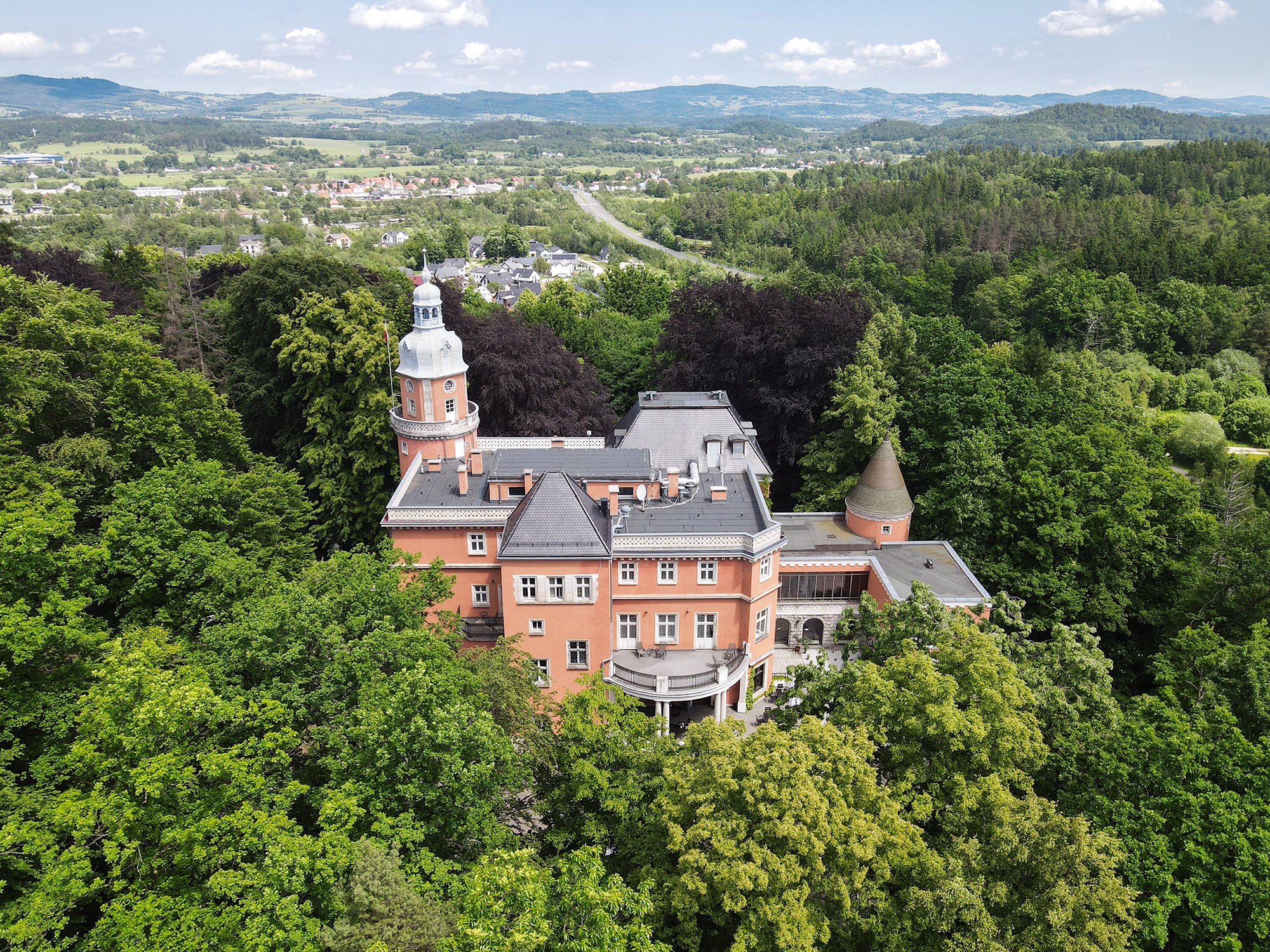
Paulinum Castle in Jelenia Góra
Pałac Paulinum, Jelenia Góra
Jesuit estate, industrial residence, hotel conversion
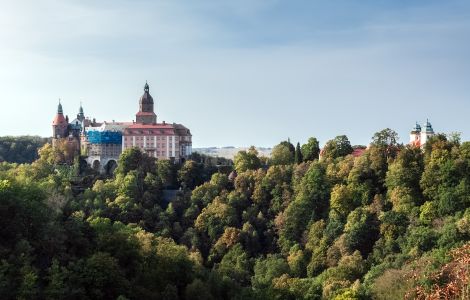
Overlooking the Hirschberg Valley, Paulinum Castle traces its origins back to 1655, when the Jesuit order established a rural estate on land south of the town. The acquisition formed part of the wider Counter-Reformation policy under the Habsburg monarchy, aimed at strengthening Catholic influence in Silesia after the Thirty Years’ War. The estate became known as Paulinenhof, a name likely derived from the Jesuit superior Paul Kotting.
Following the transfer of Silesia to Prussian rule in 1740, the conditions for ecclesiastical landholdings changed significantly. Economic restrictions were gradually imposed on church properties, and the dissolution of the Jesuit order in 1773 ended its formal presence. In 1810, as part of the broader secularisation process, the Paulinenhof passed into Prussian state ownership.
During the 19th century, the estate entered a new phase under industrial ownership. The Hirschberg textile entrepreneur Richard von Kramsta acquired the property and surrounding lands, initiating its transformation into a landscaped country seat. From 1855, a park was laid out on Kreuzberg, designed as a carefully structured scenic landscape. Paths, viewpoints, and rock formations were integrated to highlight the natural topography rather than reshape it. During the works, remnants from the Thirty Years’ War were also uncovered.
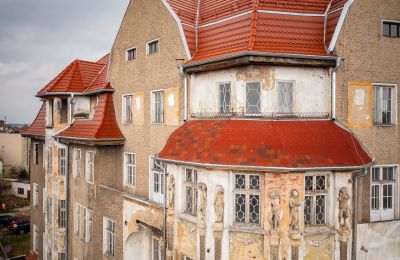
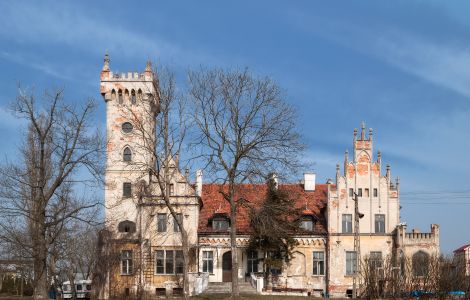
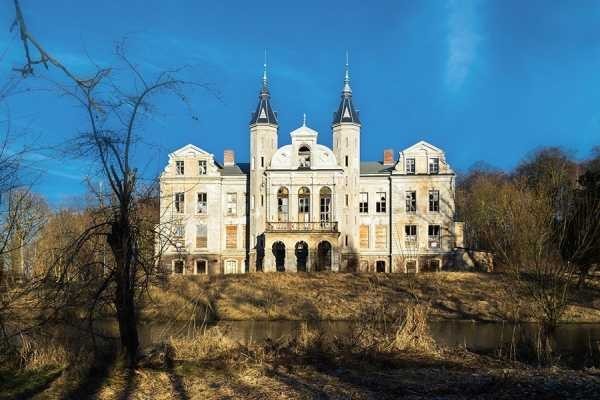
In 1872, a new residential building was constructed to designs by architect Kurt Spate. The structure drew on forms of the German Renaissance and was executed by regional craftsmen. Until the end of the 19th century, the property ranked among the notable industrial estates of the Hirschberg Valley.
In 1906, the estate was acquired by Oskar Caro, general director of an Upper Silesian ironworks company. After retiring from industrial management, he commissioned a redesign of the interiors by Breslau architect Karl Grosser. While the exterior architecture remained largely unchanged, the interior layout was adapted to contemporary standards of residential comfort and representation.
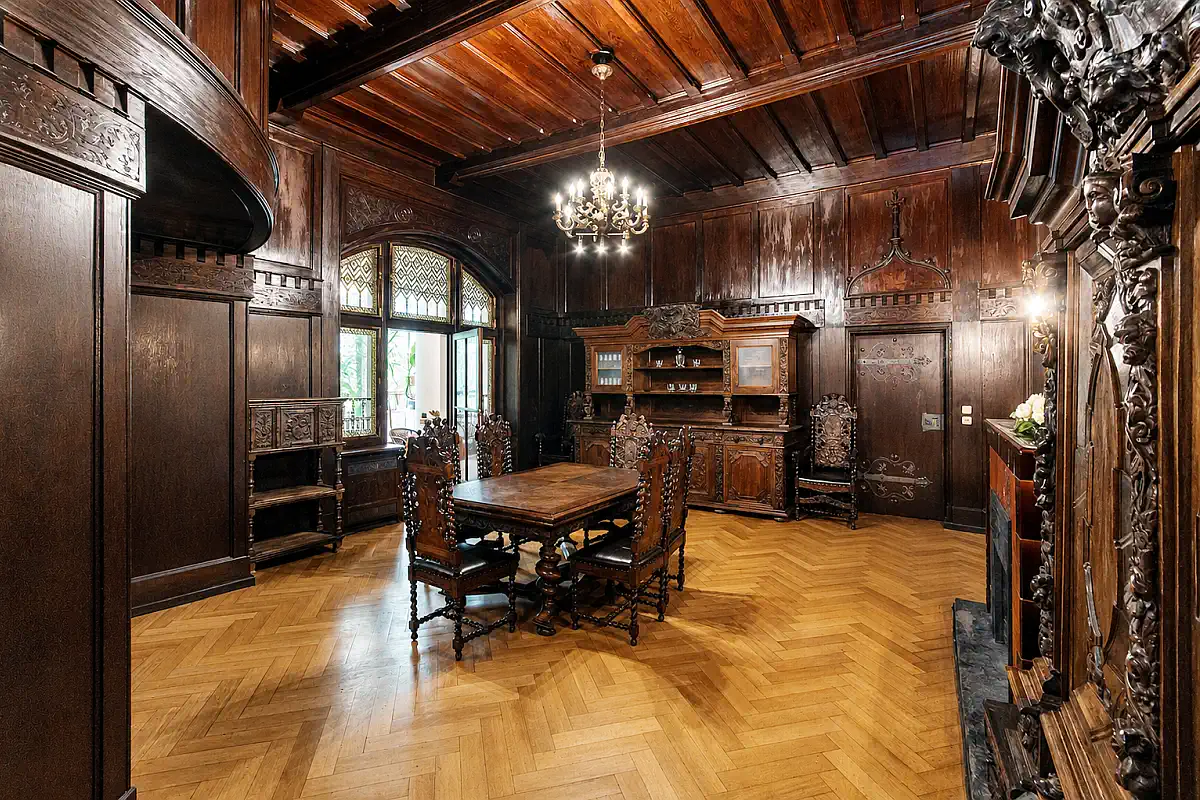
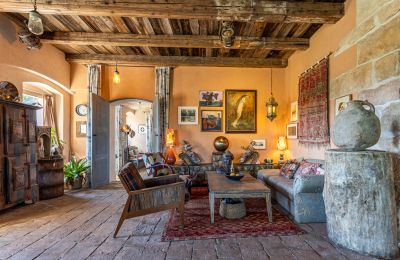
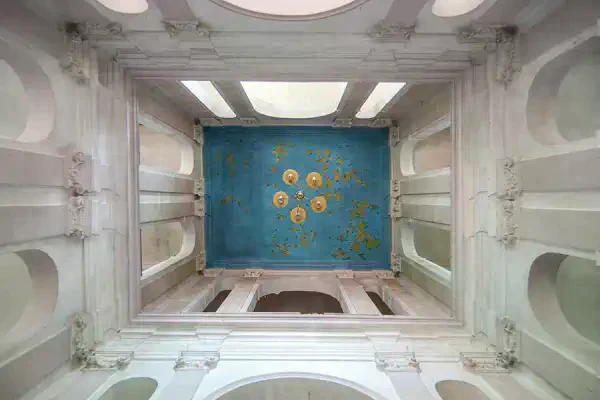
The Gdańsk Salon at Paulinum
Following Caro’s death in 1931, the property passed to his heirs and was sold in 1933 to the German Labour Front. During the Second World War, the Hirschberg Valley became an important relocation area for museum collections, libraries, and institutional holdings from Berlin. Paulinum Castle formed part of this dispersed network of storage sites intended to protect cultural assets from air raids.
After 1945, the building was repurposed as a central collecting point for artworks and cultural objects recovered across Silesia. These included both German and Polish holdings from diverse provenance contexts. The facility was managed by Barbara Tyszkiewicz, who played a key role in the early post-war phase of securing and documenting the collections.
In 1952, the castle was taken over by the Polish military and used as an officers’ mess. Substantial structural alterations were carried out during this period. A fire in the early 1960s destroyed large parts of the roof structure and staircase, and the subsequent reconstruction only partially restored the historic appearance.
After the end of military use in the 1990s, the property was first administered by the State Military Property Agency (Agencja Mienia Wojskowego, AMW). In 2002, it was transferred to a newly established company. Since then, efforts have focused on adapting the site for use as a heritage hotel and cultural venue.
Lower Silesia still contains well over 1,000 surviving castles and manor houses. In addition to regular castle properties for sale, the agricultural authority KOWR manages around 100 assets that are periodically offered through public tenders. Most of these properties require renovation. However, investors who submit viable redevelopment concepts and commit to restoration within defined contractual timelines may benefit from significantly reduced purchase prices.
Further studies on Silesian residences can be found in the publications of Arne Franke.

 Deutsch (DE)
 English (US)



Leave your opinion!