RTICO
RTICO

Some houses you go looking for. Others wait.
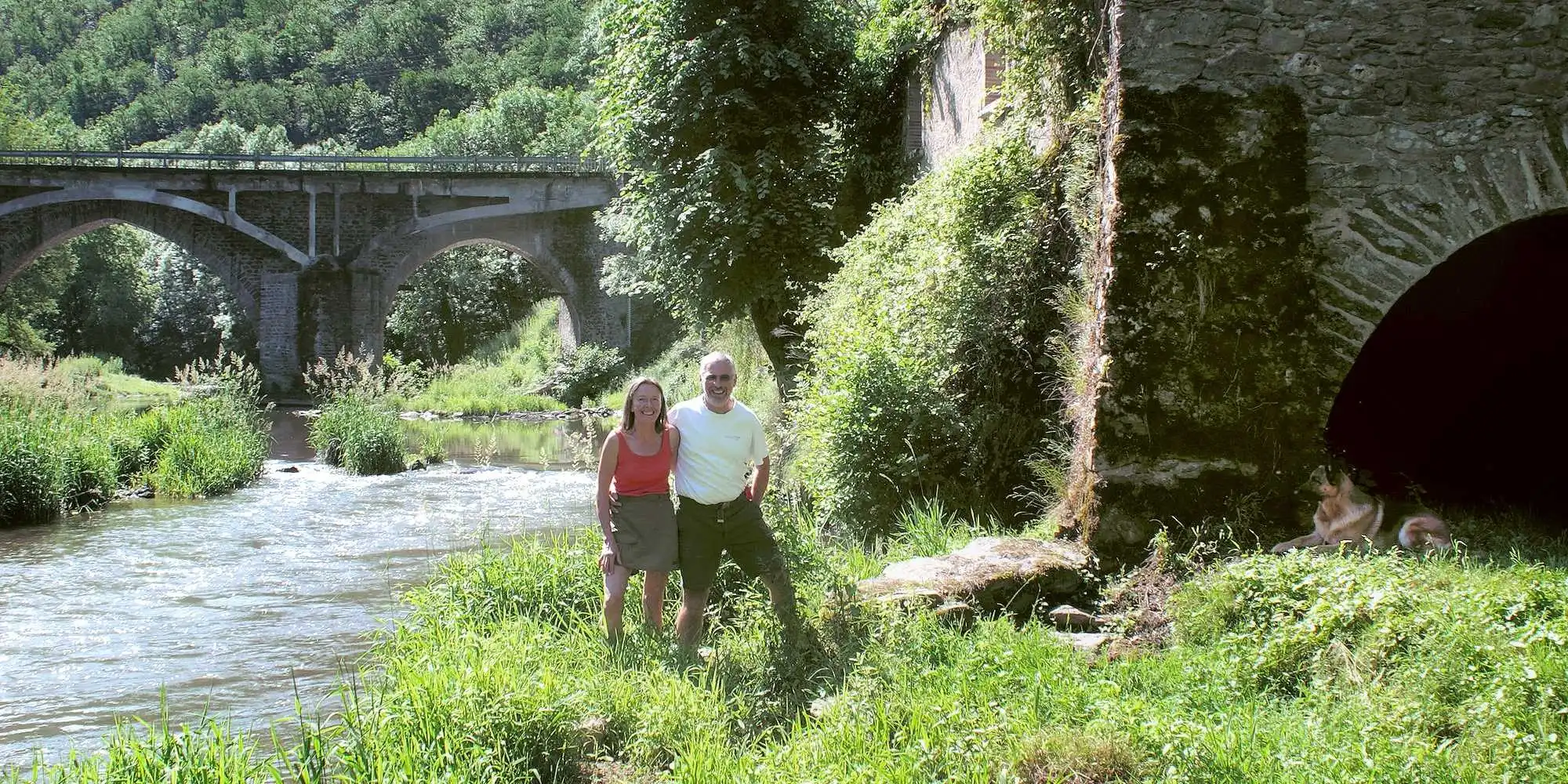
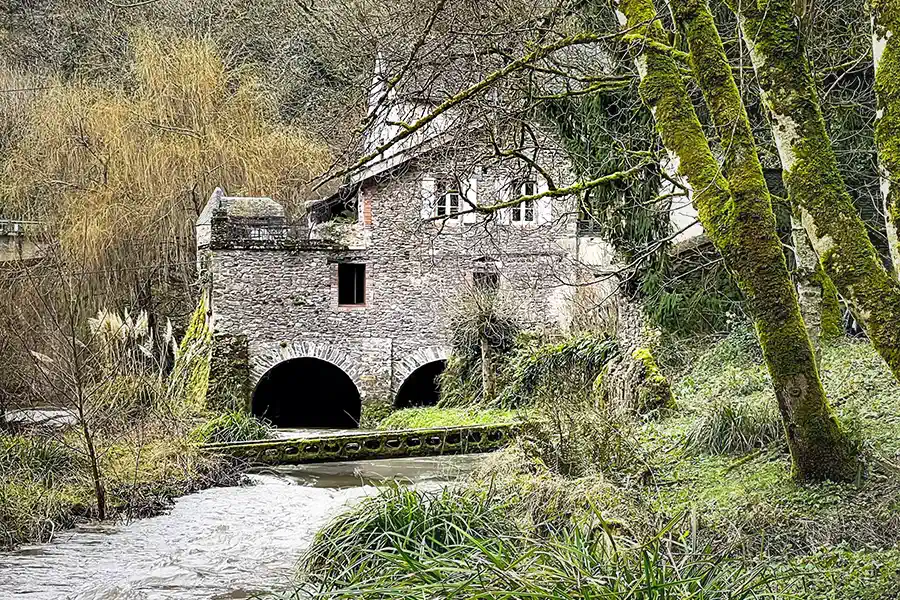
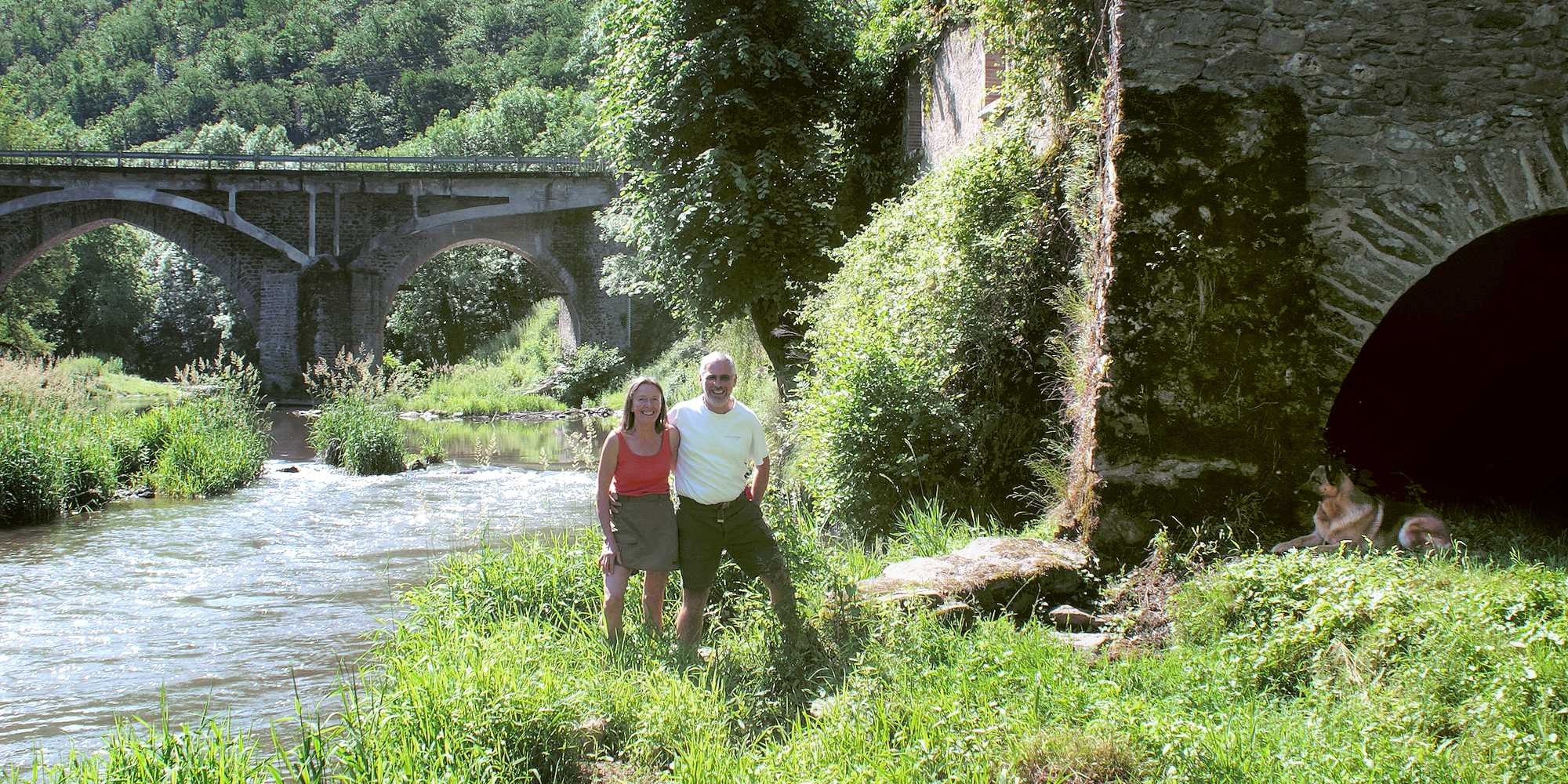
Moulin Bas, a 15th-century watermill in the rolling hills of Occitanie, waited for someone who could read it: its stones, its mechanics, its archives. Jan Spaens, a Belgian, polytechnic engineer, former soldier and firefighter, brought exactly that combination: technical understanding, craftsmanship and a childhood that began in windmills.
In 1997, he acquired the ruinous building on the edge of a forest, with a waterfall and no roof. What followed were nearly twenty years of restoration, faithful to materials, informed by history and largely carried out by his own hands. Today, Moulin Bas is complete. And ready for a worthy successor.
In conversation with REALPORTICO, Spaens explains what kept him tied to this place, what he discovered in the archives of Albi and why the time has come to pass on his life’s work of two decades.
- From Bruges to a river in Occitanie
- A waterfall, a mill, a decision
- A marriage certificate from 1487
- What an industrial mill and the fire service have in common
- Twenty years, one house, no regrets
- Why psychologists would open their practice here
- The right moment, even if it hurts
- Thirty years and still new paths
- Less house, more life
1. Mr Spaens, you were born in Bruges and worked in various countries as a polytechnic engineer, IT company director, soldier and firefighter. How did a derelict mill in Occitanie become part of your life’s path?
My connection to mills goes back to my childhood. Before I was even ten, my father occasionally worked in a windmill and I was often allowed to come along. While he did his work, I played among gears and beams. That is where my fascination with mill technology and historical machinery began. This combination of craftsmanship, history and mechanics never left me.
Later, between my time in the military and the fire service, I worked as a maintenance manager in an industrial grain mill. That experience deepened my technical curiosity and showed me how much precision and knowledge these structures require.
When we discovered the watermill in Occitanie, it felt almost like a return to my roots. It was located in the Région des Cent Vallées
, a landscape often described in travel brochures as the French Tuscany
for good reason: gentle hills, wide valleys and a constantly shifting light that bathes everything in warm colours. Despite its dilapidated condition, the mill had a soul and enormous potential.
For me, it was not just a building, but a place where everything that shaped me - technology, craftsmanship, organisation and a love of historical structures - came together naturally. The tranquillity, authenticity and beauty of the region drew us in immediately. The mill became a defining part of our lives, almost as if it had been waiting for us all along.
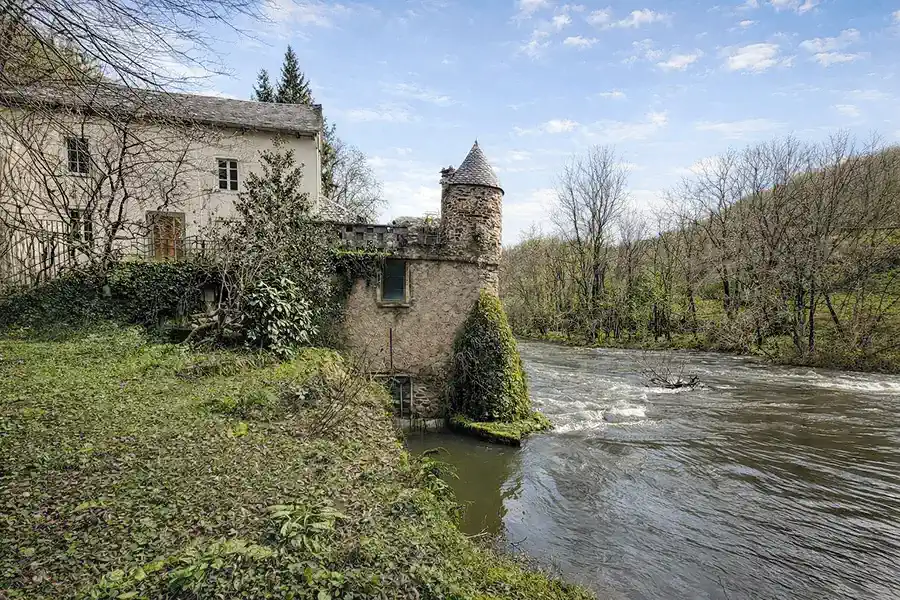
2. Many owners of historic properties recall a specific moment that sealed their decision. What was it at Moulin Bas?
When we first arrived, the viaduct of the four-lane expressway was still under construction. My first thought was: once it is finished, all the traffic will disappear and this place will be completely quiet. And that is exactly what happened. That silence, that sense of seclusion, was immediately striking.
The second moment that overwhelmed us was the waterfall on the property. Just about a hundred metres from the house, it speaks to the senses before you even begin to think about it.
And then, of course, the building itself. A 15th-century mill - you feel the history in every stone, every beam. For someone like me, who played in windmills as a child and later worked in an industrial grain mill, it was like encountering something both familiar and entirely unique.
All these impressions together - the quiet, the waterfall, the historical fabric - made the decision inevitable. Moulin Bas was a place with a soul that captivated us from the very first moment.
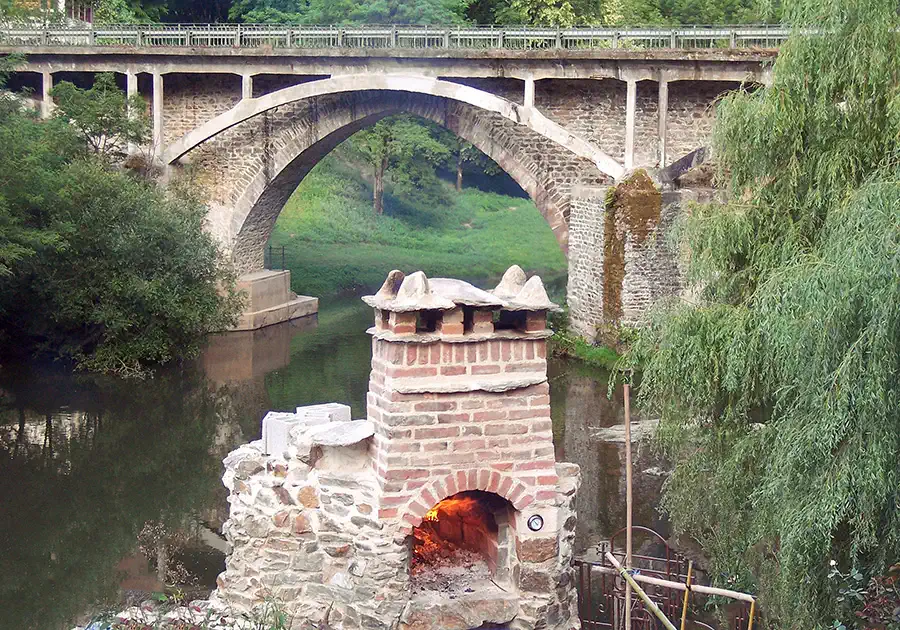
3. You traced the history of Moulin Bas back to the late 15th century. What was the most surprising discovery?
During my research in the archives of Albi, I was fortunate to meet someone who could perfectly read the old script and had extensive experience with historical documents. Through him, I came across the oldest document linked to the mill: the marriage certificate of the miller’s son from Moulin Bas and the daughter of the miller downstream. When I first held this document in my hands, it was a moment of great joy and genuine emotion. Suddenly, the place had faces, families, relationships.
This discovery became the starting point for further research, and I did indeed find many more documents. I was able to reconstruct an almost complete history of the mill, with its changing functions, inhabitants and activities. A fascinating dossier that shows the mill as a living part of regional history.
This knowledge strongly influenced the way I lived in the mill and restored it. I was determined to respect the “soul” of the house. No anachronisms, no interventions that would distort its character. Instead, we used as many original materials and traditional techniques as possible while integrating modern comfort in a discreet way.
Examples include the discreetly installed goods lift for firewood, the wood-burning stove integrated into the heating system, restored vintage light switches with concealed impulse relay control and small Art Nouveau details. All of this blends harmoniously into the historical structure. The history of the mill guided us and continues to do so.
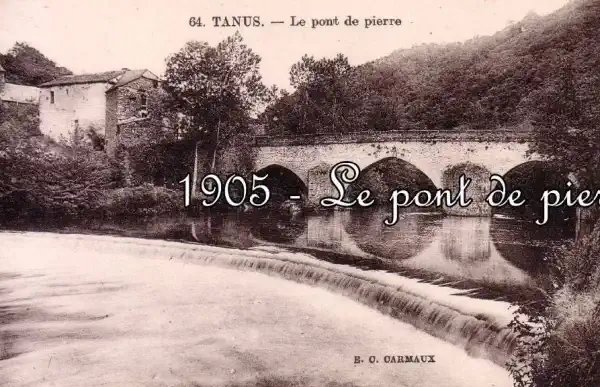
The results of his research can be seen in a 30-minute documentary on YouTube (FR).
4. Professionally, you have worked in very different fields. Which knowledge from your career helped you most with the restoration?
What helped me most was certainly my experience as a maintenance manager, both in the industrial grain mill and later in the fire service. In both fields, I had to deal with very different technical disciplines, analyse problems, find solutions and take responsibility. This exact combination was invaluable when restoring a technical monument like Moulin Bas.
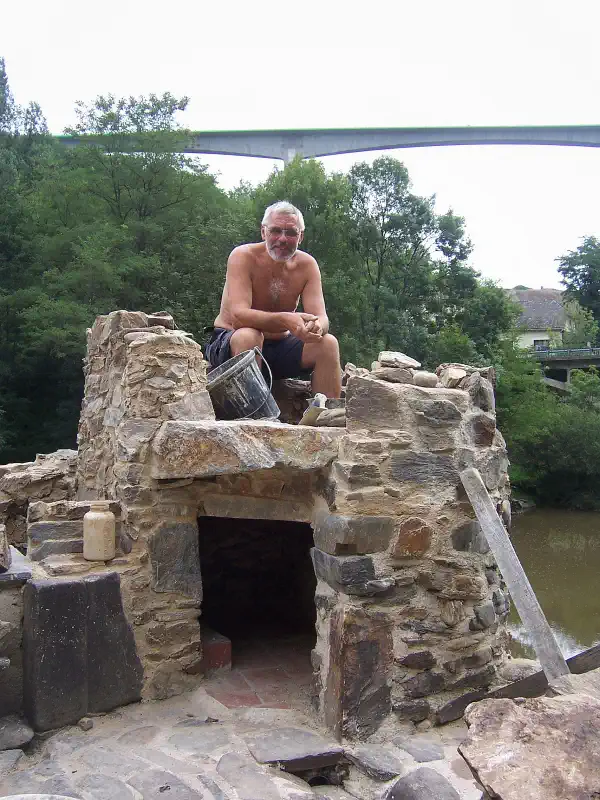
In essence, I was able to apply everything I had learned throughout my professional life, and whatever I did not yet know, I taught myself. With the support of local craftsmen, I was able to learn directly on the job. The restoration project, which spanned nearly twenty years, was an extraordinary school of life. It allowed me to grow enormously, not financially, but as a person and a craftsman.
This building taught me patience, attention to detail and respect for historical fabric. It also showed me how fulfilling it is to bring an old structure back to life step by step.
5. You acquired Moulin Bas in 1997 and restored it over more than twenty years, largely on your own. Looking back, would you take on such a project again and what would you do differently?
If I were the same age as I was then, with the knowledge I have today, I would start the project again without hesitation. But I would approach some things very differently. We are extremely satisfied with the result, but the path to get there was sometimes unnecessarily long and demanding, simply because we were operating in completely unknown territory. There is no school for turning a ruined building into a small château with your own means. You learn only by doing.
That is precisely why the restoration, which spanned almost twenty years, was such an extraordinary experience. It gave us a great deal, not financially, but in human, practical and emotional terms. Perhaps that is also why it is so difficult for us to say goodbye now. The mill has become part of our lives.
But time is relentless and we must remain pragmatic. The location by the river and forest is beautiful, but it is also a place that requires constant care. The garden work is becoming too demanding for my wife, and the house itself needs a lot of attention. Added to this is the considerable distance from our main residence in Bruges. We have reached a point where we must make sensible decisions. Selling is part of that, even though we still had many plans and dreams for the future.
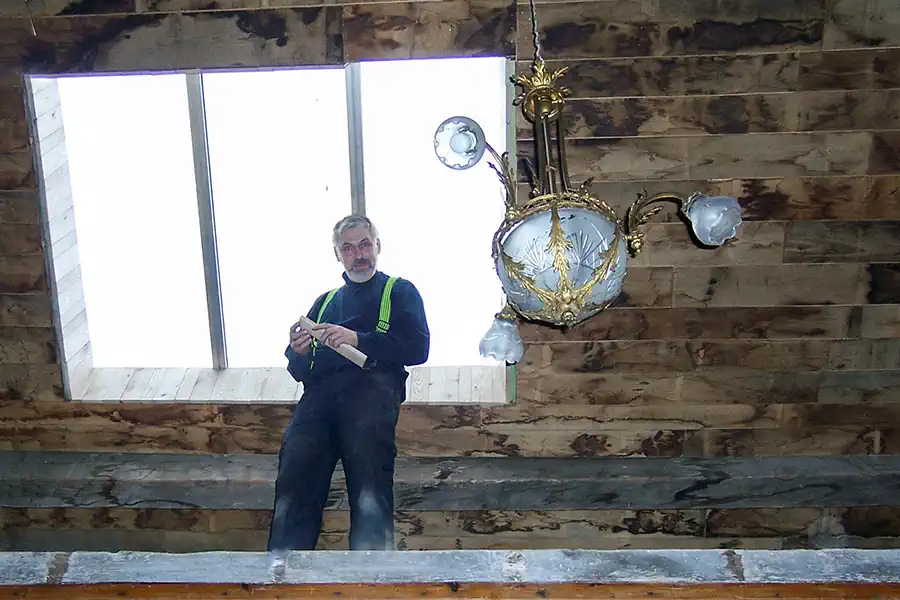
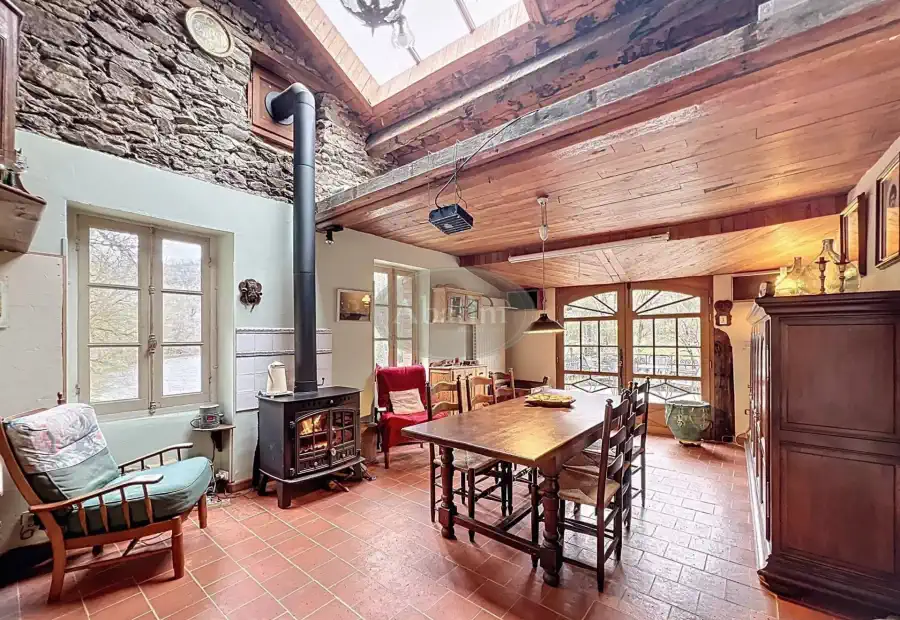
6. A private 40-metre waterfall is hardly an everyday feature. Does it have a particular meaning or even a therapeutic effect for you?
The waterfall is the true nerve centre of the mill throughout the year. Its sound changes with the weather: on some days it roars so powerfully that you can hear it even in bed, on others it flows softly, almost whispering, a sound that is indescribably soothing, especially when you are lying in a hammock nearby.
This environment has an almost trance-like effect. Sometimes, after a siesta, it takes a moment to orient yourself because you are so deeply relaxed. The sounds of the forest, the birdsong, the life along the river - it all creates a kind of paradise-like cocoon where the rest of the world simply fades away.
I have friends who are psychologists and they often joke that they would give a lot to set up their practice in this mill. That is how strong the therapeutic effect of this place is. We truly love the waterfall. It is a daily companion that brings calm, provides energy and makes this a unique living environment.
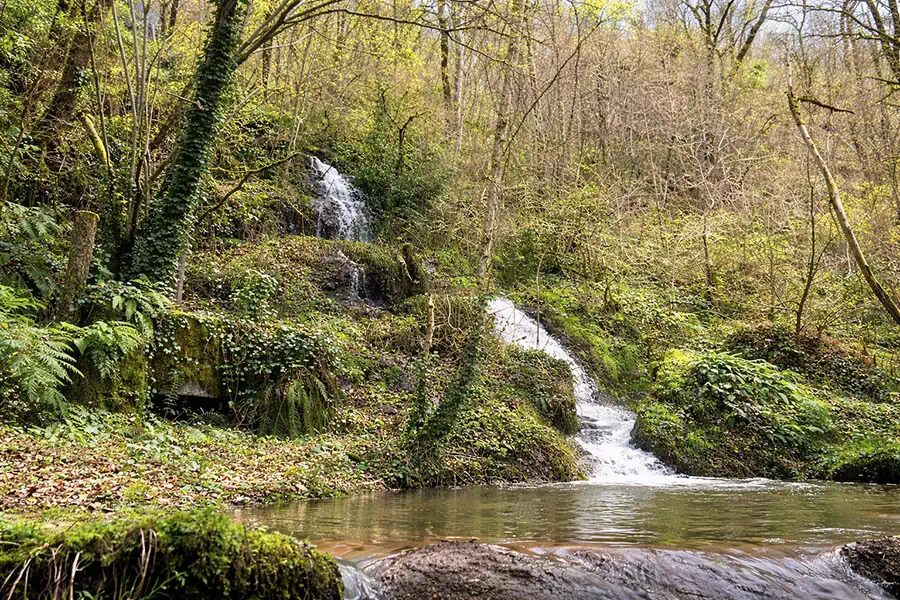
7. What prompted you to sell Moulin Bas now?
As mentioned earlier, our decision can essentially be reduced to two words: pragmatism and realism. Time does not stand still and life in the mill’s surroundings simply becomes more demanding with age. It would still be possible, but no longer sensible. Leaving the mill behind and moving to an environment that better suits our stage of life is ultimately the most logical decision.
That said, it is not easy. More than once we stood there with tears in our eyes thinking, no, we cannot do this. But we know it is the right moment, the right decision. A property like this requires constant care and regular attention. It is rewarding, but it also becomes a burden over time. There is also the distance to our main residence in Bruges.
We are at a stage in life where we must act sensibly. Selling now is part of that, even though we still had many plans and dreams. It is a farewell that hurts, but it is necessary. And we hope that new owners will find the same joy and fulfilment that we have experienced here for so many years.
Country living in southern France: see all historic properties.
8. Occitanie lies between the Pyrenees, the Mediterranean and the Spanish border. How would you describe life there to someone who does not know the region?
Our decision in favour of Occitanie was very deliberate. The region is an ideal starting point for exploring the fascinating landscapes and cultures around it, from the Pyrenees to the Mediterranean and across to the Spanish border. The immediate surroundings offer endless possibilities: hiking, cycling, horse riding, water sports, culture, everything that defines France. The culinary side is equally rich: classic southern French dishes, proximity to renowned wine regions, markets and aromas.
At the same time, we realised that you do not need to travel far to be happy. If you enjoy hiking or cycling, you hardly need a car. The nature around the mill is so diverse that even after thirty years, we are still discovering new paths and new impressions. There are also countless opportunities for water sports, all right on your doorstep.
The only minor drawback for a long time was local supply. There was no grocery shop in the village. Recently, however, a small Proxy market has opened, covering daily needs. A small supermarket is located in the neighbouring village, with larger shopping centres also within reach. Albi and Rodez are directly connected via the four-lane expressway, with the nearest access just a few kilometres from the mill. Both cities offer a full range of supermarkets and services. Distances are somewhat longer than in Belgium, but in view of the quality of life, this hardly matters.
Occitanie is a place where you breathe deeply, stay active, enjoy and truly live, a part of France that does not just welcome you, but leaves a lasting impression.
9. What are your plans for the future and where are you heading?
We initially considered a small, ready-to-move-in watermill in Burgundy, but we abandoned that idea. Instead, we have purchased an apartment near Bruges. Our passion for historic buildings remains strong, but we had to face reality: we are getting older. For family reasons, our centre of life has also shifted back towards my home region. Together, we decided that it would not make sense at our age to take on another property that requires intensive care and is far from Bruges.
We have therefore consciously chosen to scale down. We have worked and created enough in our lives. Now it is time to enjoy the coming years at a slower pace. The sale of the mill marks the beginning of this new chapter. It feels right, even though the farewell is naturally tinged with sadness. We look forward to placing our mill in good hands. A younger generation will surely appreciate this unique piece of nature just as much as we have, and if advice is ever needed, I will be happy to help.
 Saint-Chaptes, Occitania