RTICO
RTICO

Mecklenburg-Vorpommern is Germany’s heartland of manor houses. As a cultural landscape between the Elbe and the Oder, it was shaped for centuries by landed estates and aristocratic families that defined the economic and social fabric of the north-east. Unlike neighbouring Schleswig-Holstein, where a comparable estate culture has largely endured, the years after 1945 left deep marks here.
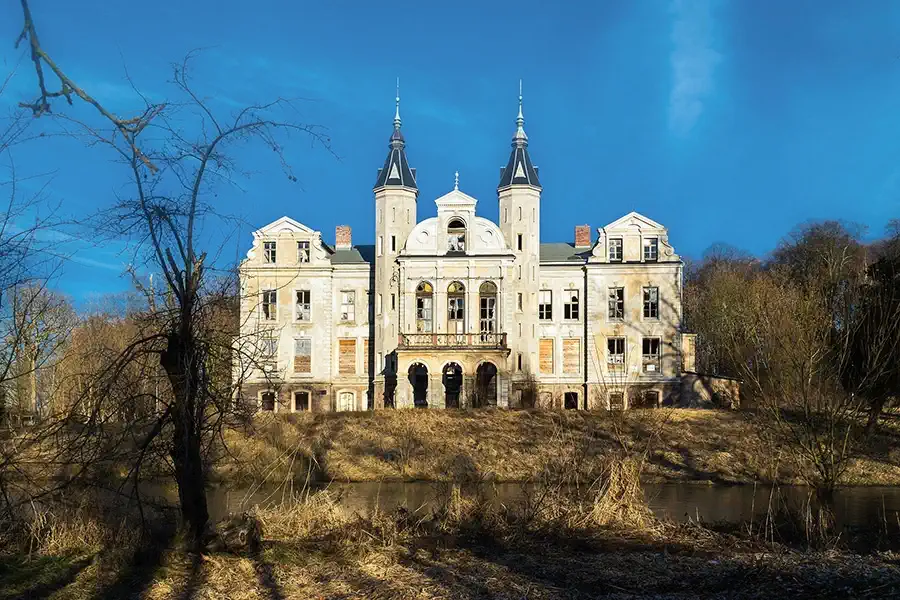
Anyone travelling through the region in the 1990s, shortly after reunification, encountered a landscape of striking contrasts: uneven roads, quiet villages. Then, beyond a bend or at the end of an avenue, a house of unexpected scale. Neglected, almost alien, as if from another era – and yet possessing a presence and dignity that remained inseparable from the landscape.
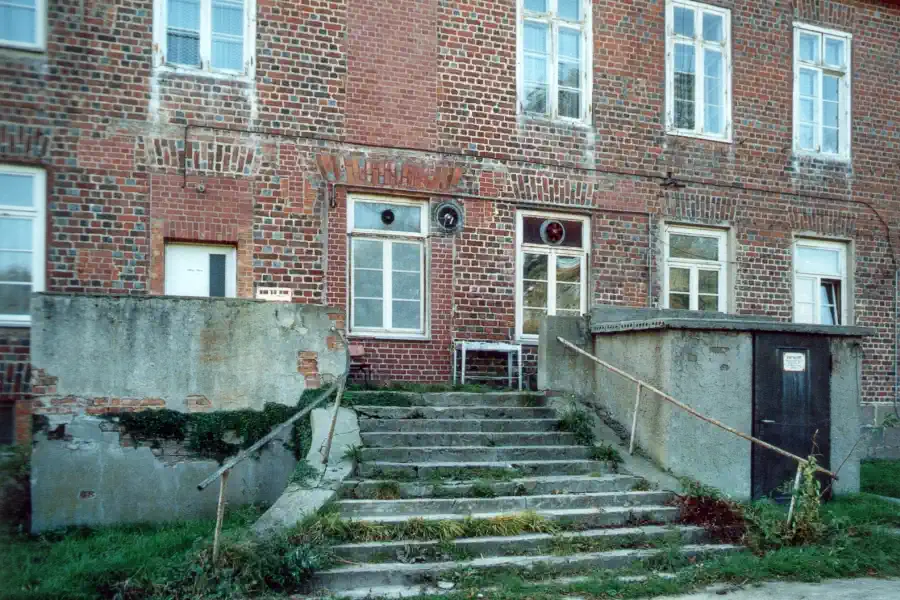
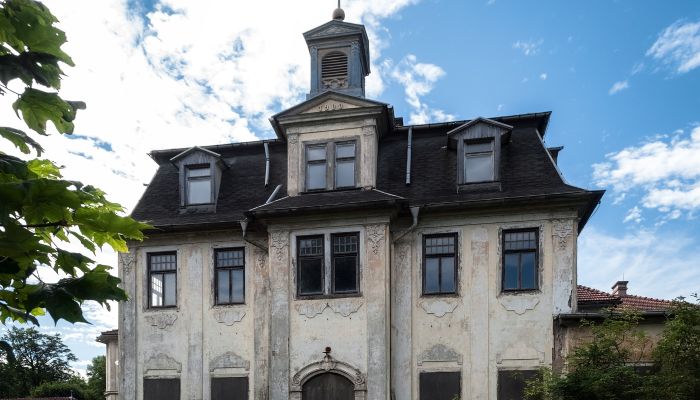
Expropriated, repurposed and left to decay, many manor houses stood as ruins in the years after reunification. In this period of upheaval, the market was swept by a sense of gold-rush optimism. Houses changed hands at prices that seem scarcely conceivable today. The downside was speculative buying, the consequences of which lingered well into the 2000s, with some houses long considered beyond recovery.
Yet the market evolved. New owners arrived – from Hamburg, Berlin and further afield. Houses were restored and new uses emerged: hotels, holiday homes and private residences. The recovery was remarkable. Today, amid rising construction costs, economic uncertainty and a shifting geopolitical climate, the market has become quieter. Interest in these distinctive properties, however, remains. A vibrant network of owners, associations and cultural initiatives continues to sustain the manor house landscape, not least through events such as the Mittsommer-Remise, which attracts large numbers of visitors each year.
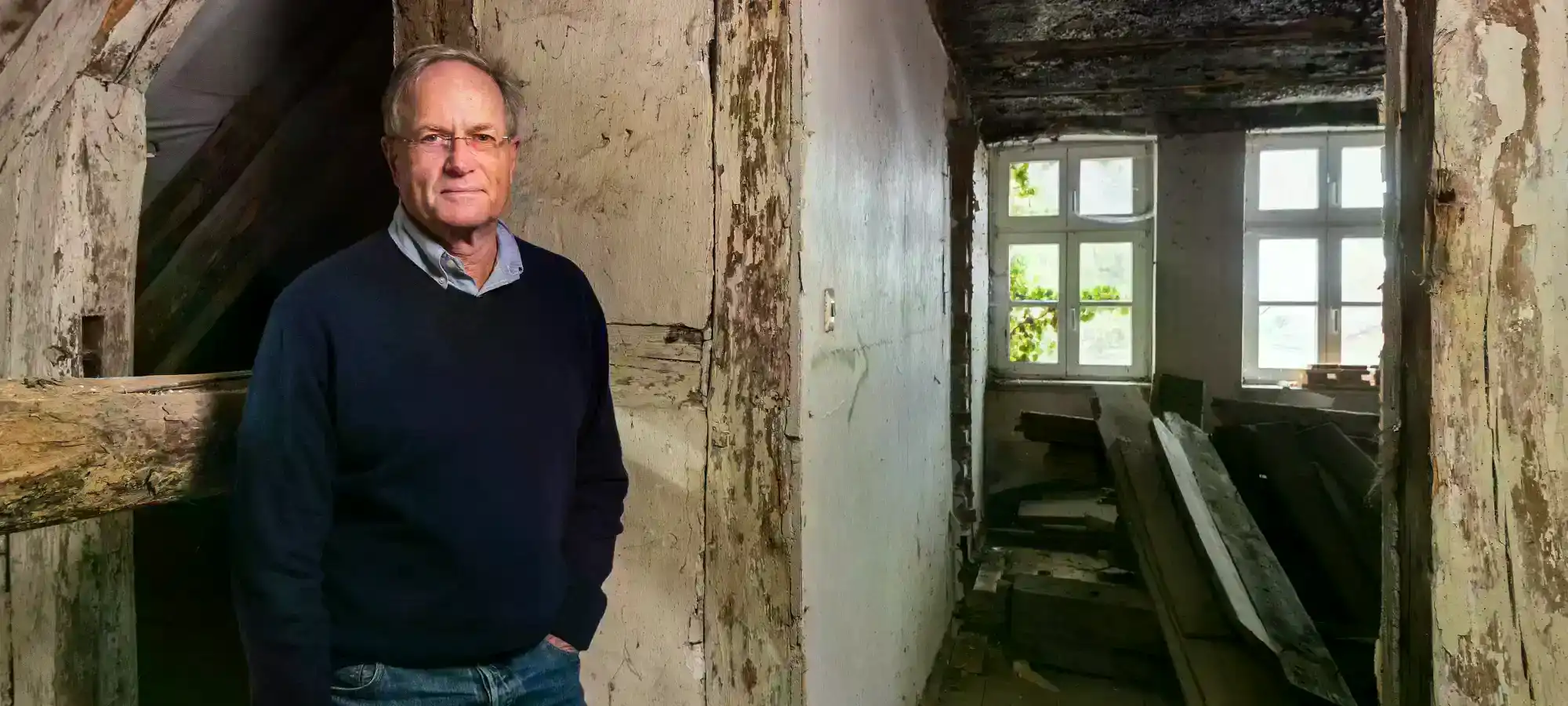
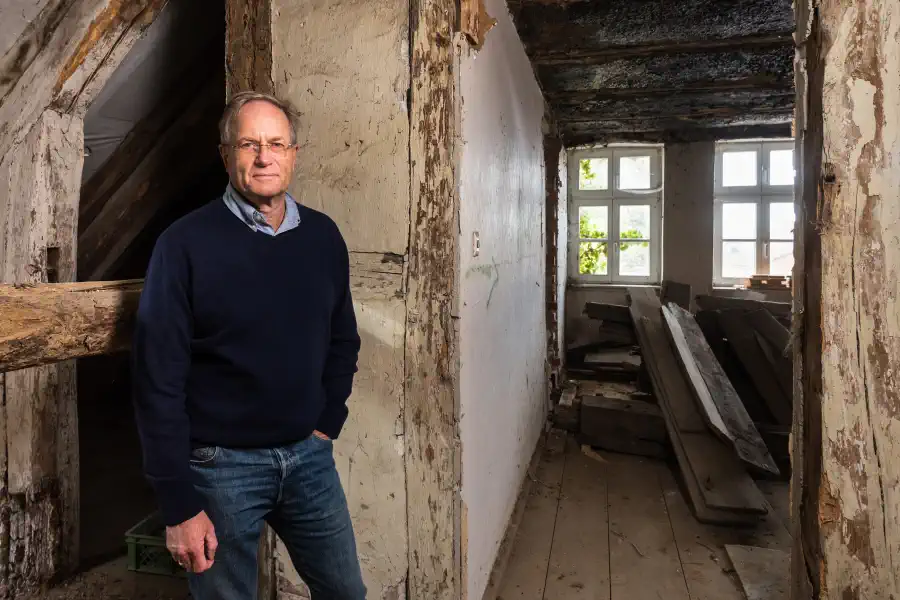
Manfred Achtenhagen has witnessed these developments at first hand. For nearly three decades he has been a hotelier at the Romantik Hotel Gutshaus Ludorf, a developer, a specialist agent for manor houses and chairman of the Association of Castles, Manor and Country Houses in Mecklenburg-Vorpommern. In this interview, he speaks about his early years in Ludorf, the wider European context of manor house culture in the Baltic region and how the future of these houses might unfold in a time of change.
- A lifelong fascination with manor houses
- Why Ludorf
- Passion project or investment
- Restoration between planning and reality
- Manor house hotels: challenges and perspectives
- Association work and the Mittsommer Remise
- Mecklenburg and the Baltic region: similarities and differences
- Restoring on a limited budget
- Ivenack Palace: a project in development
- Looking back
1. In the 1990s, hundreds of manor houses in Mecklenburg-Vorpommern stood empty and were in a state of severe disrepair. What first sparked your interest in the region’s manor houses and country estates?
I grew up in Mecklenburg and I was already fascinated by this landscape of large estates at an early age. Despite the misuse of many estate complexes during the GDR period, they continued to shape the rural areas east of the Elbe.
East of the Elbe
The expression east of the Elbe
generally refers to the regions of Germany located to the east of the River Elbe. It is loosely associated with the historical term “East Elbia” (Ostelbien), which describes predominantly agrarian areas characterised by large landed estates, particularly in Brandenburg and Pomerania as well as in the former eastern provinces of Prussia. Parts of these historical regions are now located in Poland and in Russia’s Kaliningrad region.
2. You acquired Ludorf manor in 1998, at a time when market conditions were very different from today. Which factors ultimately led you to make the purchase?
The key factor and ultimately the decisive one, was of course the location on Lake Müritz. The historical significance also played a major role. Ludorf is one of the oldest manor houses in the region and one of around twenty properties that were exempted from demolition after 1945 due to their heritage value under an order issued by the Soviet Military Administration. In our region, Ulrichshusen was the only other example. In addition, the building itself was still in reasonably good structural condition thanks to its solid construction.
Background: SMAD Order No. 209
Order No. 209 of the Soviet Military Administration in Germany (SMAD), issued in September 1947, regulated, among other things, the procurement of building materials for new smallholdings as part of the land reform. In practice, this led in many cases to the demolition of manor houses and castles, particularly in Brandenburg and Mecklenburg.
3. Looking back: Was the economic potential the main consideration when acquiring Ludorf or was it initially also a passion project whose viability had yet to unfold?
It became clear fairly quickly that, given the location in the emerging tourism region of the Mecklenburg Lake District on the shores of Lake Müritz and the scale of the house, only a commercial, that is tourist-focused use was feasible. However, I had no experience in hospitality or catering. In that sense, it was very much a venture with an uncertain outcome at the outset.
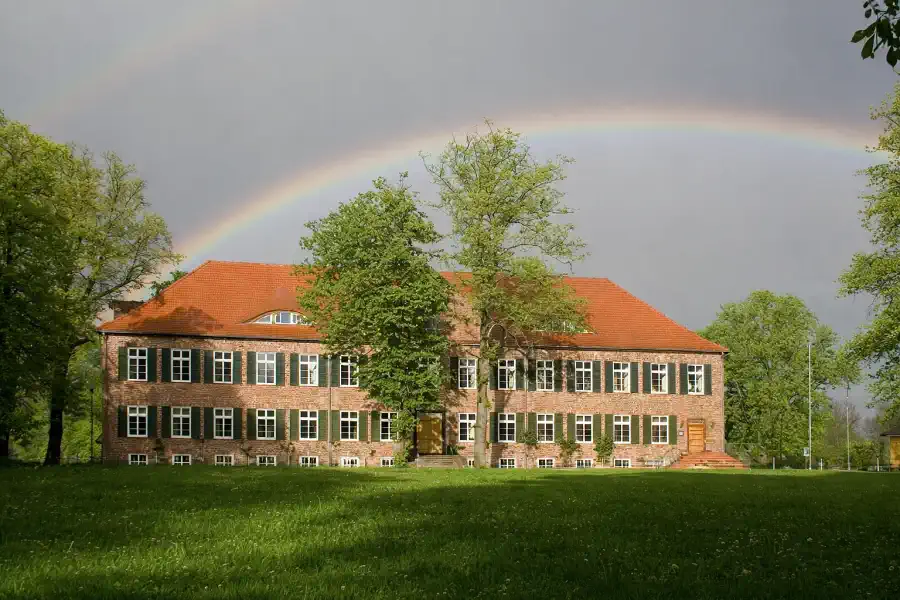
4. With a construction period of just under two years until the opening of today’s hotel, the project moved relatively quickly. Did the restoration proceed largely according to plan or were there unexpected disruptions, particularly in terms of costs and construction processes, that at times put the project at risk?
As is always the case with old houses that have long been neglected or often misused, unforeseen circumstances arise during restoration that typically increase the original budget or force a rethink of the intended use. In Ludorf, the main surprises were the rediscovered 17th-century ceiling paintings in three of the most important rooms. On one hand, an unexpected treasure and a unique feature of the house, on the other hand, significantly higher restoration costs and a temporary loss of accommodation capacity.
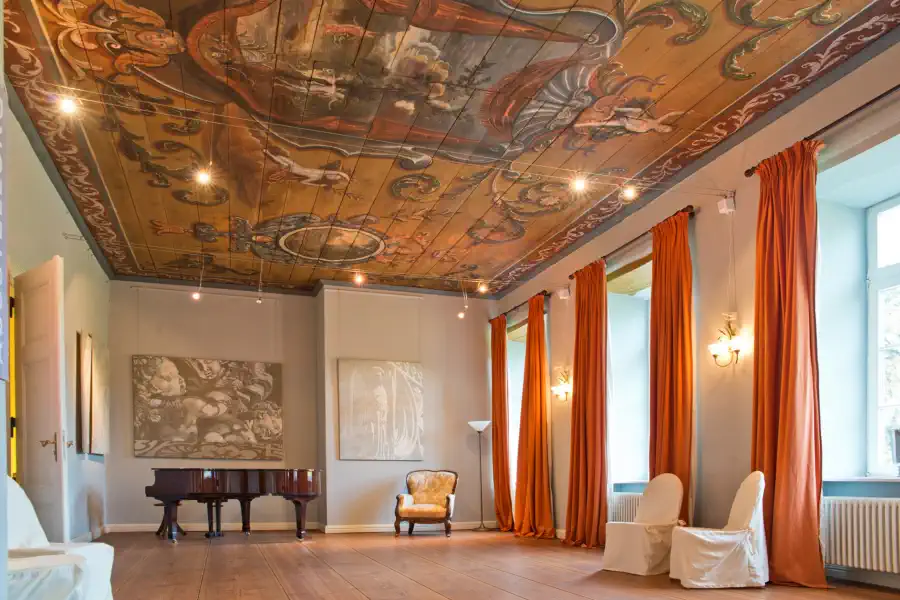
5. You have run the hotel successfully for over 25 years and are now gradually handing operations over to the next generation. The Covid period hit the tourism sector hard. What challenges and opportunities do manor house hotels face in the coming years?
There is really only one reason to come to Mecklenburg for tourism – if you exclude the coast – and that is nature. You can go elsewhere for a beach holiday.
In this natural landscape there are around 300 restored manor houses, almost all used for tourism, catering to every taste and budget, from hay hotels to five-star properties. Here the culture and history of the houses merge with the surrounding nature.
It is hard to step out of any of our manor houses without finding yourself in a protected area – nature reserve, landscape protection area, biosphere reserve, natural park or even a national park. This is an asset that tourist-oriented houses can leverage. That is why I am not worried about the future of this segment.
6. In addition to your own work, you serve as chairman of the Association of Castles, Manor and Country Houses in Mecklenburg-Vorpommern. How important is this work for the preservation of the houses and what concrete benefits does it bring beyond public perception?
Perhaps it can be summed up as “stronger together.” The association now has nearly 100 members and organises, among other things, the Mittsommer Remise. Each year on the midsummer weekend, between 70 and 100 manor houses open their doors, offering a variety of events that give visitors insight into the interiors – now in its 15th year with steadily increasing attendance. There are even several bus tours from major cities to the participating manor houses.
We have now exported this event. It exists as the Baltic Manors Festival in Poland, Lithuania, Denmark and Sweden. Other Baltic Sea countries are expected to join in the coming years.
Currently, we are working within a European INTERREG project to establish an official “European Cultural Route of Baltic Manor Houses.” Routes certified by the Council of Europe have existed for many years – with the anticipated official recognition next year, our houses will certainly achieve greater visibility and attract more visitors.
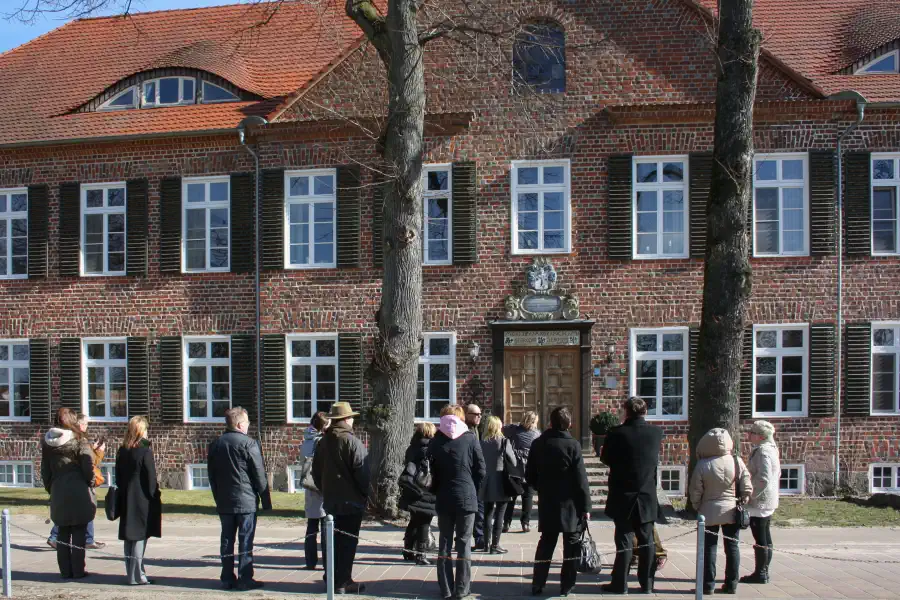
7. As a specialist agent for manor houses, you advise potential buyers in Mecklenburg-Vorpommern as well as in the Baltic states. What distinguishes manor house culture, funding structures and development opportunities in the Baltics from those in Germany?
First of all, there are surprisingly many similarities. Beyond our shared history, it is the same political upheavals, the expropriations and misuse of the houses, that connect us. And just as here in Germany, a remarkable number of people – particularly young people – have taken these houses on, restoring them and giving them a new future.
Latvians and Estonians have recognised former manor houses as part of their historical heritage and are once again placing them at the heart of rural life, as they once were. State support, thanks to common European funding frameworks, is similar to what we have here.
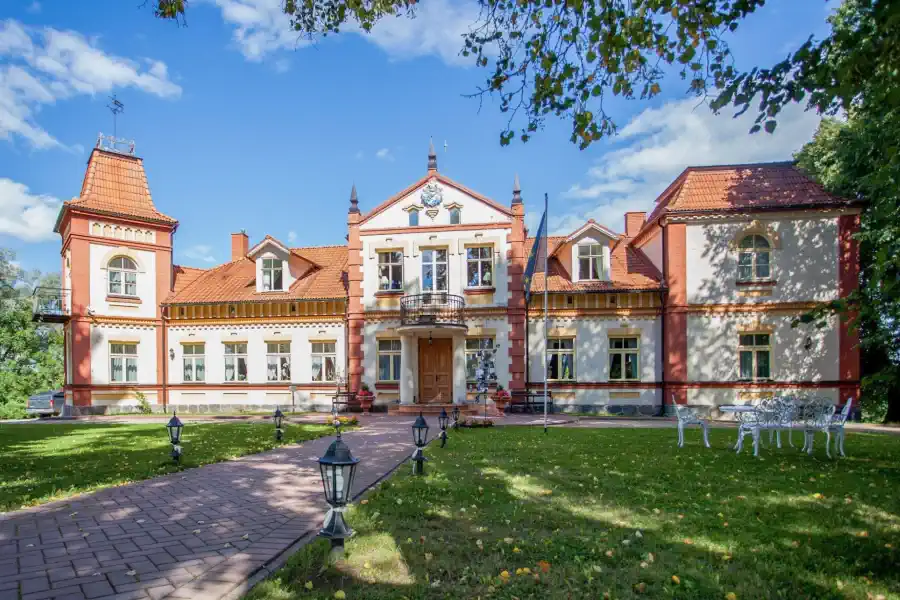
8. Economic uncertainty and rising construction costs influence many purchasing decisions. At the same time, younger buyers in particular are showing increased interest in so-called bargain properties and self-managed restorations. How can such projects succeed when capital is limited and much work is to be done personally?
It is all a question of time. You simply need time for a project like this. For most buyers of a property in need of major restoration, it is even a lifelong undertaking.
Still, you should have a certain amount of funds available, because there are areas that you generally cannot or should not handle yourself. I am thinking of structural integrity, or, if the property is to be used for accommodation, fire safety.
9. Compared with your own project, the restoration work at Ivenack Palace, which you are overseeing, has been ongoing for several years. What are the biggest challenges here and what are the next steps?
First, there is the sheer scale of the baroque ensemble – it is not only the palace itself, but also the orangery, the tea house and the park. In addition, there was severe damage from dry rot within the palace.
Its classification as a National Monument has also meant that the heritage conservation surveys have required enormous amounts of time and money. Then came the Covid period, during which work largely came to a halt. Since all tenders, contracts and execution must comply with the German federal building code, this adds even more time and patience.
Finally, for the owner, sometimes the journey is just as important as the destination.
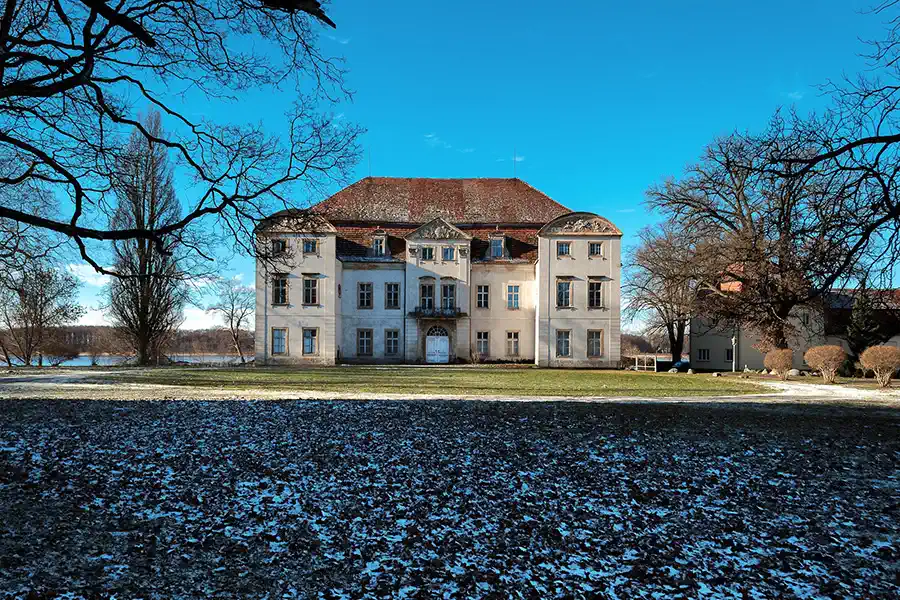
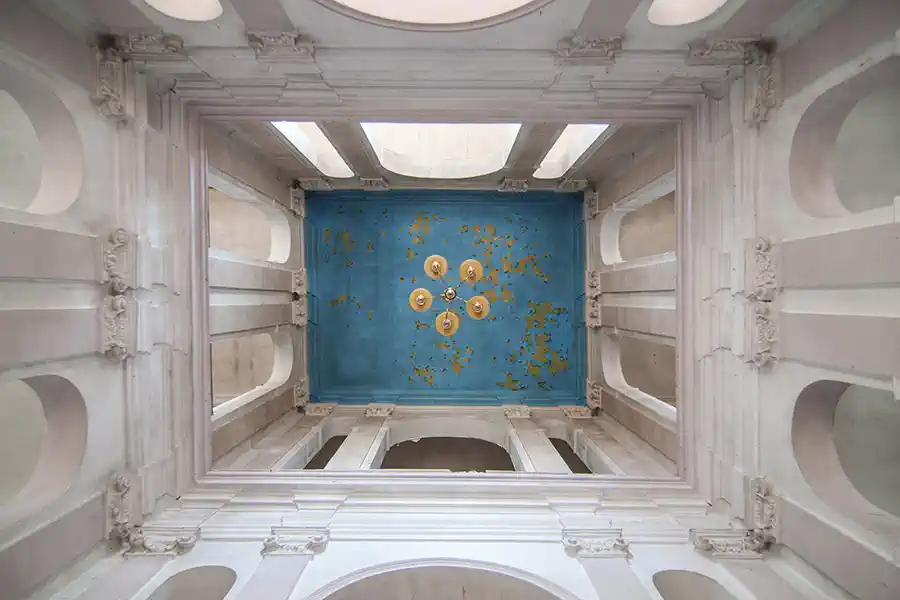
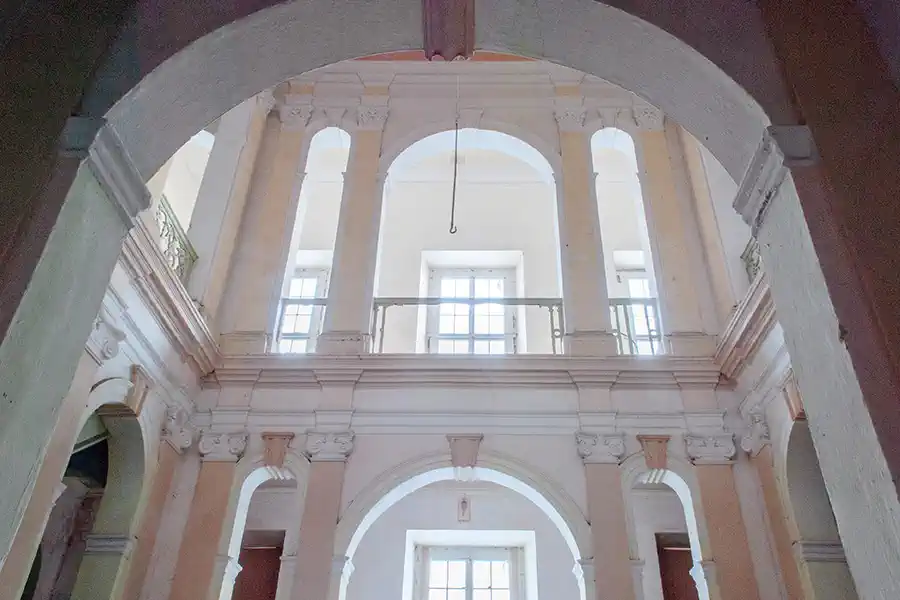
Manor houses in Mecklenburg reveal a rich variety of interiors and often hold surprises: The neighbouring Ivenack and Kummerow palaces share an identical monumental hall.
10. Looking back on nearly three decades of your work: Would you make the same decisions again today and what would you do differently?
You can only ever view decisions in their own time – just as history should always be considered in its temporal context. Unfortunately, this is so often forgotten today. With the knowledge of how some things turned out differently, one would certainly make some choices differently. But I do not ask myself that question.

 Berlin, Berlin