RTICO
RTICO

Fire safety is a sensitive issue for many property owners, operators and investors. It is often perceived as a symbol of bureaucracy, extensive regulations, complex approval procedures as well as high costs and long processing times.
The fire disaster in a Swiss bar on New Year’s Eve 2025/26 highlighted the importance of effective fire safety measures and the severe consequences of inadequate prevention.
The risk of large-scale fires with serious personal, financial and material consequences can in many cases be avoided or at least significantly reduced. This requires compliance with fire safety regulations and the regular inspection and maintenance of existing concepts and technical systems.
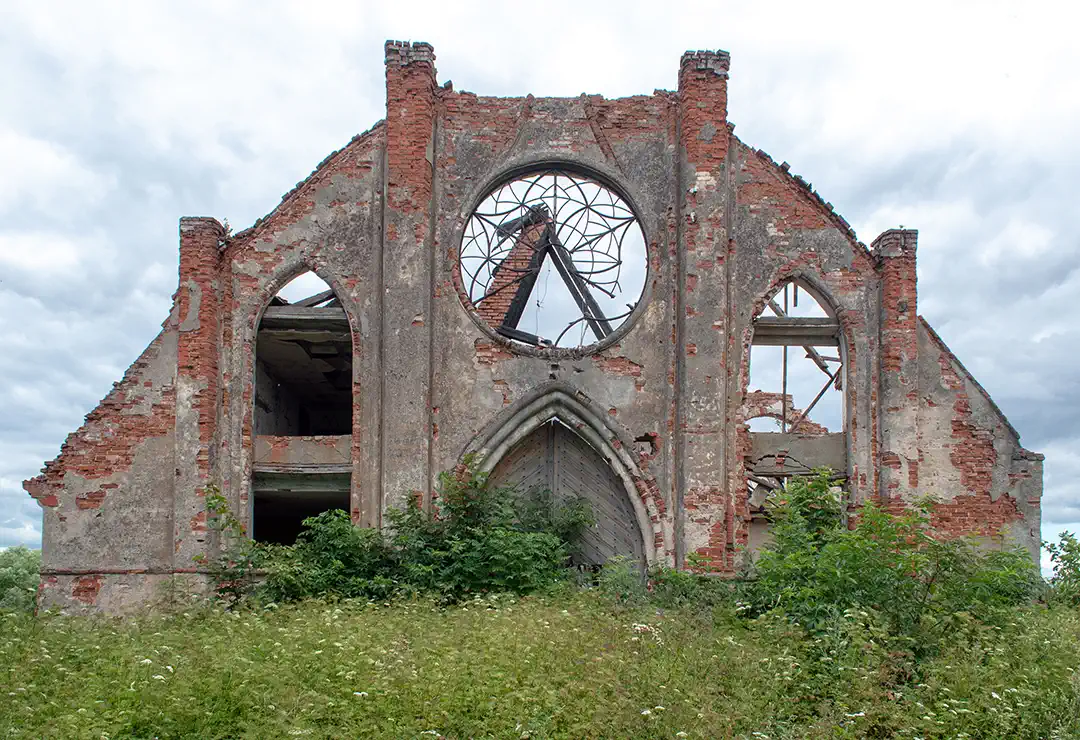
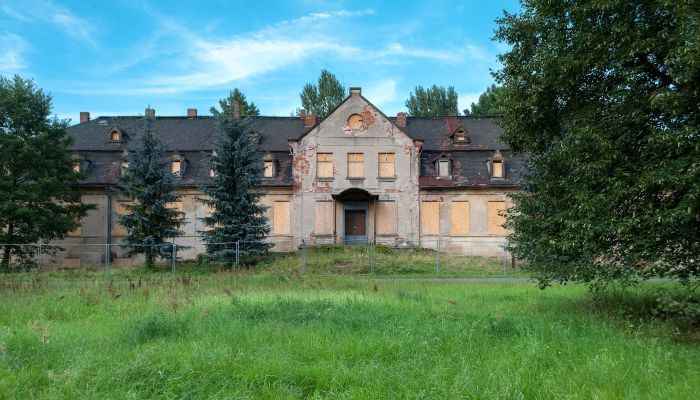
Historic buildings in particular are exposed to an increased risk of uncontrolled major fires due to their structural characteristics. Many will remember the devastating fire at Notre-Dame Cathedral in Paris in 2019. Fires in castles and vacant historic sites are not isolated incidents: recent cases include the former FDJ College at Lake Bogensee (01/26), Thiergarten Hunting Lodge near Regensburg (10/25) and the Baroque Johannstorf estate in Mecklenburg-Western Pomerania (03/25). A comprehensive fire protection strategy can significantly reduce the extent of damage caused by technical faults or arson.
For this article, we spoke with fire safety expert and author of the Brandschutzfibel (Springer, ISBN 978-3658344429) Adam Merschbacher and compiled the following practical guide. The Brandschutzfibel is a German-language professional reference work focusing on fire safety practice in Germany.
- When is a fire safety concept mandatory?
- Why historic buildings are particularly vulnerable
- Heritage protection versus fire safety
- Fire safety costs and economic considerations
- Legal requirements: what is mandatory?
- Who is liable in an emergency?
- Fire safety in practice: a structured starting point
- Modern fire safety systems in historic buildings
- Checklist: is your property adequately protected?
- Fire safety as part of responsible stewardship
When is a fire safety concept mandatory?
Whether a fire safety concept is required depends primarily on three factors: the size and structural scale of the property, the actual use of the building and the group of people who have access to it.
If a castle, for example, is used exclusively for private purposes and no alterations or changes of use are planned, the general requirements of the relevant state building regulations are often sufficient. These typically include smoke alarms as well as basic fire safety requirements for electrical installations and escape routes.
However, once third parties enter or use the building, for example for events, guided tours, accommodation or commercial use, the legal requirements become significantly more stringent. In such cases, the focus shifts away from protecting the owner towards protecting a larger and often unfamiliar group of occupants. At this point, a term becomes central to the further fire safety classification: the special building (german: "Sonderbau").
Special buildings: definition and significance
Special buildings are structures for which specific fire safety requirements are necessary due to their use, size, height or the number and type of occupants. The legal basis for this classification is set out in the respective German state building regulations.
The decisive factor is not the historical significance of a building alone, but the increased risk to occupants and the potential difficulty of self-evacuation in the event of a fire. For special buildings, a qualified fire safety concept is generally mandatory and forms part of the building authority approval process.
A historic building is typically classified as a special building if at least one of the following criteria is met:
- Public or commercial use
As soon as a building is opened for guided tours, exhibitions, events, catering or tourism-related use, it is generally classified as a special building. This also applies to temporary or occasional use, for example for events or public visits. - Accommodation of guests
Any form of accommodation, regardless of the size of the operation, will usually result in classification as a special building. The decisive factor is the presence of occupants unfamiliar with the building who rely on clearly defined escape and evacuation arrangements in an emergency. - Large building height or footprint
Above a certain building height, typically more than 7 metres and in higher building classes more than 13 metres, or in the case of very large and complex layouts, special building regulations apply, even if the building is predominantly or entirely used for private purposes. - Change of use
A change to the approved use, for example from residential use to event, conference or accommodation purposes, will in most cases trigger the requirement for a fire safety concept. - Heritage protection and deviations from building regulations
Historic buildings often do not comply fully with current building regulations, for example with regard to escape routes, stair widths or fire resistance ratings. Where deviations are required, a fire safety concept must demonstrate how the fire safety objectives are achieved through appropriate compensatory measures. - Large buildings in exclusively private use
In the case of very large historic buildings used exclusively for private purposes, with no public access and no planned alterations, a formal classification as a special building may not apply in individual cases. Nevertheless, due to the size and complexity of the building, there is often an increased fire safety risk. In such cases, a professional fire safety assessment is at least advisable, particularly with regard to liability and insurance requirements.
The need for a fire safety concept should be clarified at an early stage. Early coordination with the competent building authority provides planning certainty and helps to avoid later delays, changes and additional costs.
Why historic buildings are particularly vulnerable
Castles, manor houses and other historic buildings were constructed at a time when systematic fire safety, as understood today, played little or no role. Building materials and construction methods were primarily guided by regional availability, craftsmanship traditions and structural requirements rather than by fire safety objectives.
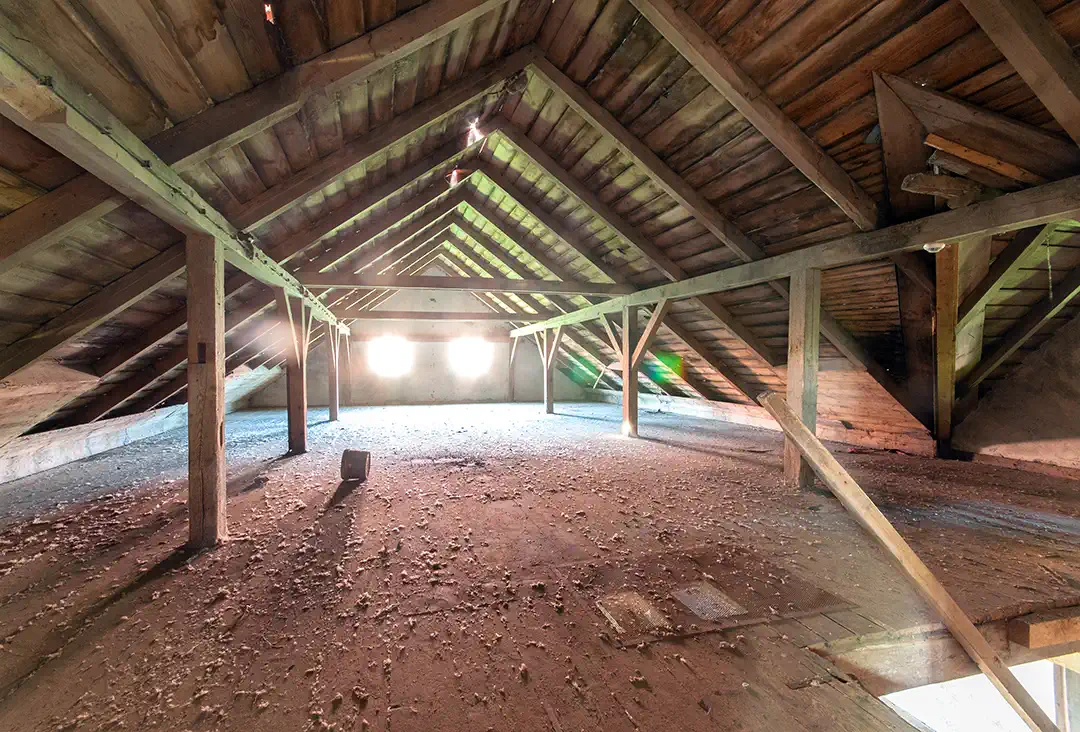
Typical characteristics of this building stock include substantial timber structures, complex and irregular floor plans, a high proportion of combustible materials, a lack of adequate fire compartments and often outdated technical installations. In addition, many of these buildings are now subject to uses that differ significantly from their original purpose. What was once designed as the residence of a single family with domestic staff may now be used as a hotel with numerous guest rooms, an event venue or a museum with high visitor numbers. As a result, both the fire load and the risk to occupants increase considerably.
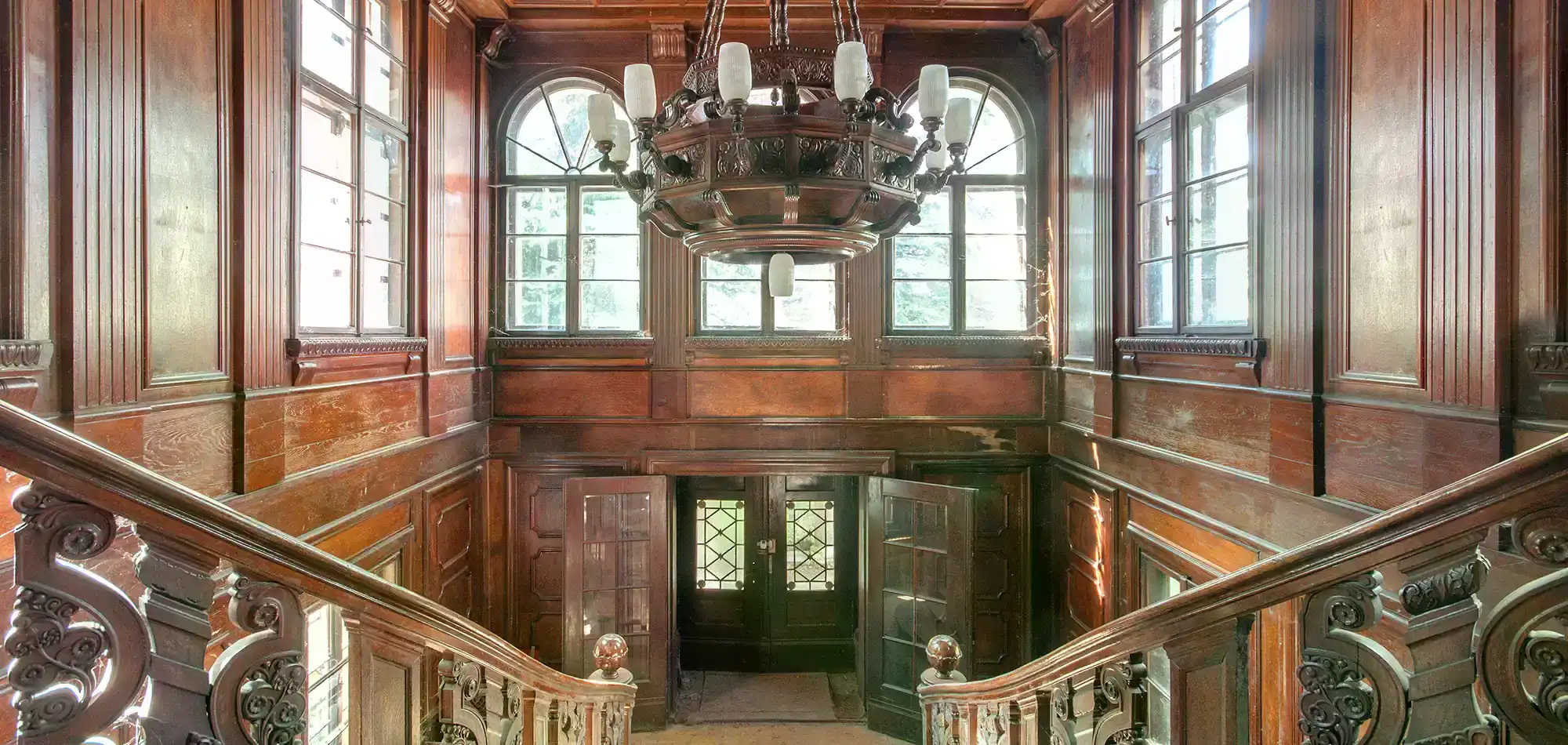
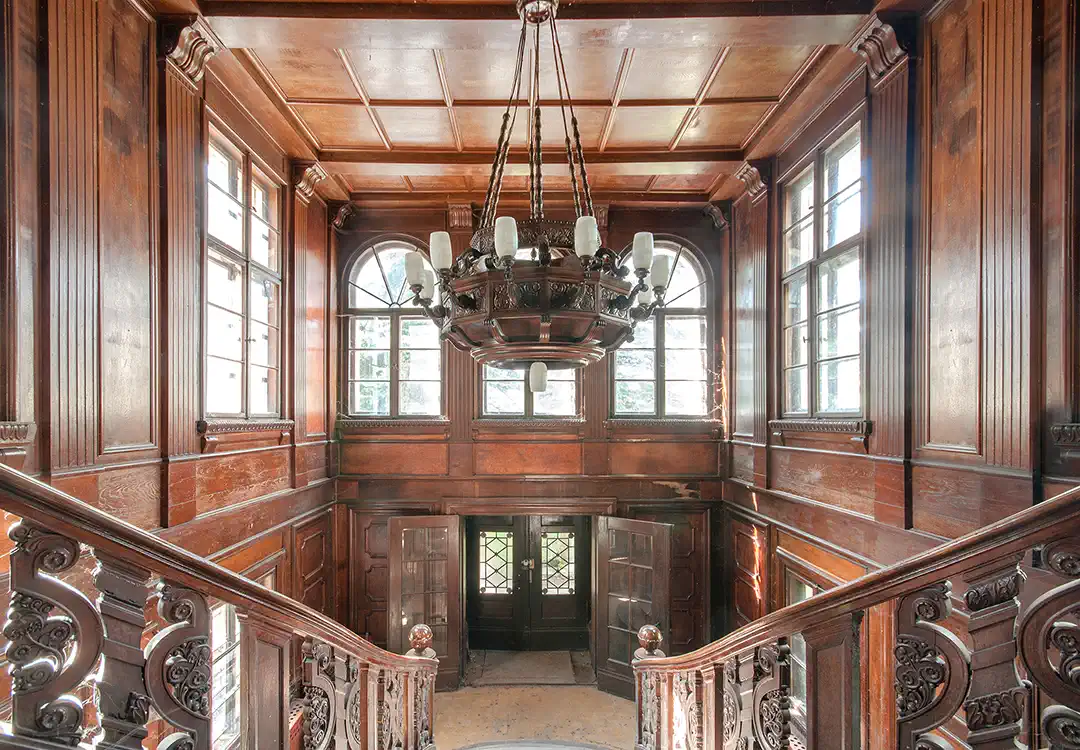
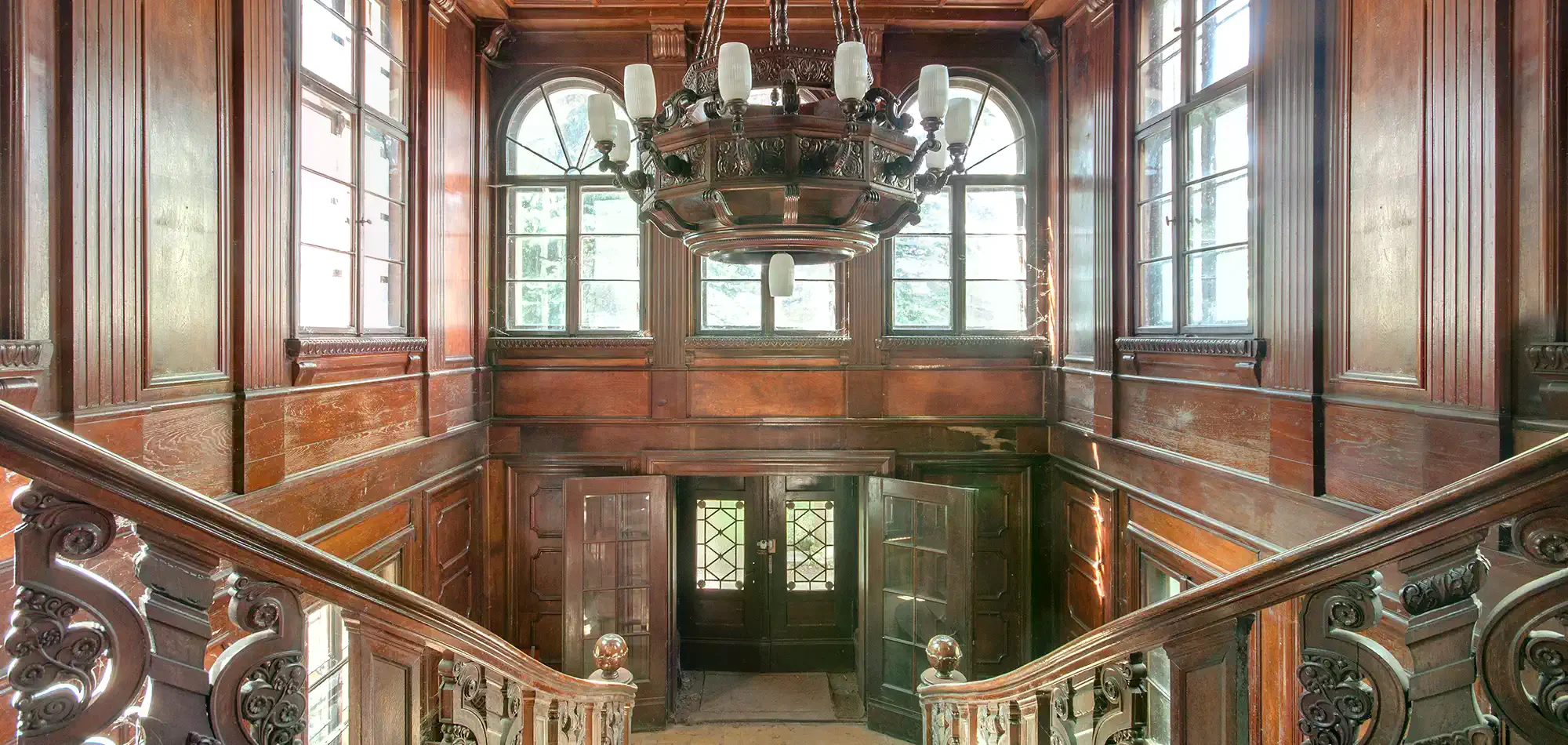
For a fire to develop, three conditions must coincide, a concept known among professionals as the fire triangle: an ignition source, combustible material and oxygen. Potential ignition sources include defective electrical wiring, open flames or external influences such as lightning strikes. Combustible materials are present in historic buildings in large quantities, for example in the form of timber beams, wall panelling and staircases, often made of oak which, although relatively slow-burning, remains combustible, as well as furniture, textiles and other fittings.
Of particular concern is the formation of hot fire gases. These rise upwards, accumulate beneath ceilings and roof structures and, once the ignition temperature is reached, can engulf an entire space almost instantaneously. This phenomenon, known as flashover, leads to rapid and uncontrolled full fire development within a very short period of time.
The conflict of objectives: heritage protection versus fire safety
When planning fire safety measures in historic buildings, there is often a tension between the requirements of heritage protection and the provisions of preventive fire safety. While heritage protection focuses on preserving the historic fabric, original materials and the appearance of the building, fire safety aims to protect human life and ensure safe self-rescue and assisted rescue in the event of a fire.
However, this conflict of objectives is not fundamentally irresolvable. Modern fire safety systems now often make it possible to implement solutions that are functionally effective while also respecting heritage conservation requirements. Technical installations such as fire detection or suppression systems can be planned in a way that allows them to be discreetly integrated into the historic fabric. Organisational and operational measures can also make a significant contribution to achieving fire safety objectives.
Early and close coordination between the client, the heritage authority, the fire safety consultant and the building control authority is essential. If certain structural requirements, such as the formation of fire compartments or the construction of additional fire walls, cannot be implemented for heritage reasons, equivalent compensatory measures must be developed. These may include shorter escape route lengths, additional means of escape, technical monitoring or organisational measures.
Solutions can also often be found for the routing and signage of escape routes that are both functional and compatible with heritage protection, for example through discreet guidance systems or alternative arrangements within the building.
Practical experience shows that, through interdisciplinary planning and early professional coordination, viable and approvable solutions can be developed in most cases. This requires a realistic assessment of the existing constraints as well as a willingness to give equal consideration to both heritage conservation and fire safety requirements.
Costs of fire safety and economic considerations
Fire safety measures in historic buildings are often perceived as a significant cost factor. In practice, the financial outlay can indeed be substantial, but it must be assessed in relation to the associated risks, potential consequential costs and legal obligations.
The cost of preparing a fire safety concept varies depending on the size, use and structural complexity of the building. For smaller properties, budgets of at least EUR 5,000 to 20,000 should be expected, while for large buildings with commercial or public use the costs can be considerably higher. These figures relate exclusively to planning and conceptual services and generally represent only a relatively small proportion of the total cost of the required fire safety measures.
The implementation of the measures specified in the fire safety concept is highly dependent on the individual property. Technical systems such as fire detection installations can, depending on building size, number of detection points and heritage conservation requirements, result in costs in the range of EUR 20,000 to 100,000. Automatic fire suppression systems, such as sprinkler or water spray systems, may require investments of EUR 80,000 to 300,000 or more, depending on the system design and the size of the property. Additional costs may arise from the installation of fire-resistant doors and gates, the upgrading of escape and rescue routes including lighting and signage and the refurbishment or replacement of electrical installations to current safety standards.
For historic buildings used as hotels, event venues or museums, the total cost of fire safety measures can therefore amount to several hundred thousand euros and, in individual cases, may reach seven-figure sums.
These costs must be weighed against the potential consequences of a fire. The reconstruction of a historic building following a fire is generally associated with significantly higher expenditure. In addition, losses of original building fabric, historic fittings and cultural assets are often irreversible. There are also potential liability risks, claims for damages in the event of personal injury and, where applicable, criminal consequences for owners or operators, which in the worst case may have lifelong implications.
From an insurance perspective, fire safety is also becoming increasingly important. Insurers regularly require evidence of adequate and up-to-date fire safety measures. Insufficient fire safety provisions may lead to higher insurance premiums, restrictions of cover or, in extreme cases, refusal of insurance. In the event of a loss, deficiencies in the implementation of fire safety measures may also affect claims settlement.
Legal requirements: what is mandatory?
The legal requirements for fire safety in historic buildings are often underestimated. A widespread misconception is: “Our building is listed, so the standard fire safety rules do not apply.” This is incorrect. The fire safety provisions of the relevant German state building regulations also apply to listed buildings. Heritage protection does not exempt owners or operators from fire safety obligations, but often makes their implementation more demanding. The aim is to find solutions that take into account both the protection of human life and the preservation of the historic building fabric.
Fire safety documentation: mandatory evidence and fire safety concept
As soon as a building project requiring approval is planned, a change of use is intended or a building application is submitted, formal fire safety documentation is required. In the case of special buildings, which include most historic buildings with public access, this requirement is generally fulfilled by means of a qualified fire safety concept.
The fire safety concept is prepared by a suitably qualified professional, such as a fire safety expert or a specialised engineering consultancy. It sets out how occupants are to be protected in the event of a fire and forms a key basis for the building permit. Without an approvable concept, lawful operation is not possible.
It is important to note that a fire safety concept does not have unlimited validity. It always relates to the specific structural condition and the approved use of the building. If alterations are carried out later or the use changes, the concept must be reviewed and adapted. A concept prepared for private residential use is not automatically suitable for later use as a hotel or event venue.
Escape and rescue routes: lifelines in an emergency
Escape and rescue routes are a central element of fire safety and often present the greatest challenge in historic buildings. As a rule, two independent means of escape are required. Their design depends on the building class, the use of the building and the number of occupants.
Escape routes must lead to the open air or to a protected area and must not exceed certain maximum travel distances. Above all, they must be usable at all times. This means that corridors and staircases must not be obstructed, doors must not be locked, trip hazards must be avoided and clear signage as well as functioning emergency lighting must be provided.
In practice, this often leads to conflicts of use. Furniture, decorative elements or temporary installations, for example for events, can unlawfully restrict escape routes. Historic doors that are locked at night can also pose a problem if they serve as a second means of escape.
Additional requirements apply to hotels, care facilities, assembly buildings and other special buildings. These often include additional escape routes, subdivision into fire compartments, smoke extraction measures or automatic fire detection systems. At the latest at this stage, it becomes clear how complex fire safety in historic buildings can be.
The fire safety officer: responsibility in day-to-day operations
While the fire safety concept sets out how fire safety is planned, the fire safety officer ensures that these requirements are complied with during day-to-day operations. The role includes regularly reviewing the implementation of measures, identifying new risks and supporting organisational procedures.
Whether a fire safety officer is required depends on the use of the building, its size, official requirements and not least the conditions imposed by insurers. In larger or more complex buildings, this function is often mandatory in practice. The role may be fulfilled by a suitably qualified member of staff or outsourced to an external service provider.
Fire safety inspections: external checks, internal responsibility
In many German federal states, regular fire safety inspections are carried out by the authorities or the fire brigade. These inspections assess whether the applicable fire safety requirements are being met. In the case of special buildings, such inspections usually take place at shorter intervals.
A common misconception is to regard an inspection without findings as a form of clearance. In fact, full responsibility for fire safety remains with the owner and operator. Even if deficiencies are not identified during an inspection, this does not relieve them of liability should damage or loss occur at a later stage.
Consequences of non-compliance: from fines to criminal proceedings
Breaches of fire safety regulations can have serious consequences. Initially, regulatory measures such as restrictions on use, conditions or fines may be imposed, which can place a significant economic burden on a project.
If personal injury occurs, criminal consequences may follow. In cases of negligent disregard of fire safety obligations, custodial sentences are possible, particularly where people are injured or killed. Liability may extend beyond owners to include managing directors, operators and other responsible persons.
Case law makes it clear that lack of knowledge does not exempt anyone from responsibility. Anyone who opens a building to guests or the public, or uses it for commercial purposes, is obliged to familiarise themselves with the applicable fire safety requirements and to implement them.
Who is liable in an emergency?
That is what insurance is for
is a widespread but dangerous assumption. After a fire, it is examined in detail whether all statutory and organisational obligations have been complied with. In practice, it often becomes clear that responsibility extends far beyond what many parties are aware of.
Liability does not rest solely with the owner of a building. Managing directors, operations managers, event managers or other persons entrusted with specific duties may also be held personally responsible. What matters is not the job title, but the actual area of responsibility. If, for example, an event involves the use of open flames without appropriate extinguishing equipment being provided or staff being properly instructed, liability may be attributed to several responsible parties at the same time.
Case law is clear on this point. Anyone who invites people into a building or opens it to guests assumes a comprehensive duty of care. This duty is not limited to the mere existence of escape and rescue routes. It also includes their regular inspection, staff instruction, maintenance of technical systems, clearly defined responsibilities in an emergency and organisational measures designed to minimise risk.
Especially in complex or publicly used historic buildings, the importance of clear responsibility structures and professionally sound planning becomes evident. A properly implemented fire safety concept, documented inspections and realistic organisational procedures form a key element of legal protection for all parties involved.
Fire safety in practice: a structured starting point
Anyone encountering fire safety requirements in historic buildings for the first time as an owner, buyer or investor should address the issue at an early stage. The later fire safety considerations are taken into account, the greater the effort, costs and legal risks become. This applies in particular to vacant properties and historic buildings in need of restoration, where an up-to-date fire safety concept is often missing or previous uses are no longer compliant with current approvals. A structured approach helps to maintain oversight and avoid costly mistakes.
- Step 1: Review of the existing situation
The first step is to determine whether a fire safety report or fire safety concept already exists. If so, it should be reviewed to assess how old it is and whether it still reflects the current building condition and actual use. In many cases existing concepts are outdated and do not take into account later alterations, technical changes or changes of use. - Step 2: Initial professional assessment
The next step should be a site inspection by a fire safety expert. The aim is to identify the main risks and assess which measures are mandatory and which can be planned in the medium term. This initial assessment forms the basis for all further planning and approval steps. - Step 3: Early coordination with heritage authorities
Before detailed and cost-intensive planning begins, early consultation with the competent heritage conservation authority is recommended. This clarifies which fire safety measures are permissible and where heritage-compatible alternatives or compensatory solutions may be possible. Early coordination helps to avoid later planning changes and conflicts. - Step 4: Preparation and submission of the fire safety concept
Based on the coordination process, the fire safety concept is developed. It describes the structural, technical and organisational measures required to protect people in the event of a fire. The completed concept is submitted to the competent building authority as part of the building application or change of use. Only once it has been approved by the authority does the concept become binding and form the basis for implementation. - Step 5: Prioritisation and implementation of measures
After approval, the measures defined in the concept are implemented. Not all measures need to be carried out at the same time. What matters is a professionally justified prioritisation. Measures that directly affect life safety, such as functional escape routes or alarm systems, take precedence. Further measures may be implemented in later construction or refurbishment phases, provided this is approved. - Step 6: Organisation during ongoing operation
In addition to structural and technical measures, organisation in day-to-day operation plays a key role. This includes regular inspections, clear responsibilities, staff training, fire safety rules and up-to-date escape and rescue plans. The regular inspection of technical systems and conscious management of fire loads are also essential components of effective fire safety. - Step 7: Documentation and continuous updating
All measures, inspections, maintenance activities and training sessions should be properly documented. This documentation is not only important for daily operations but also crucial in the event of damage. In addition, the fire safety concept should be reviewed regularly and updated whenever structural or organisational changes occur.
Modern fire safety systems in historic buildings: what is possible today
Technical possibilities in fire safety have developed significantly in recent years. As a result, even demanding historic properties can now be equipped with modern protection systems without unnecessarily affecting their appearance or historic fabric.
Modern fire detection systems can often operate using wireless technology. This reduces the need for cabling and avoids extensive interventions in historic walls or ceilings. The smoke detectors used today are significantly smaller and more discreet than earlier models and can be positioned in a way that has minimal impact on the character of the space.
Automatic fire suppression systems have also become far more flexible than they were in the past. Sprinkler heads can be integrated into ceiling surfaces or adapted to the design, for example by installation within panelling or through bespoke solutions that reference historic finishes. For particularly sensitive areas such as archives, libraries or rooms with delicate contents, waterless suppression systems are also used. These operate with gases or fine aerosols and can extinguish fires without damaging valuable fabric through extinguishing water.
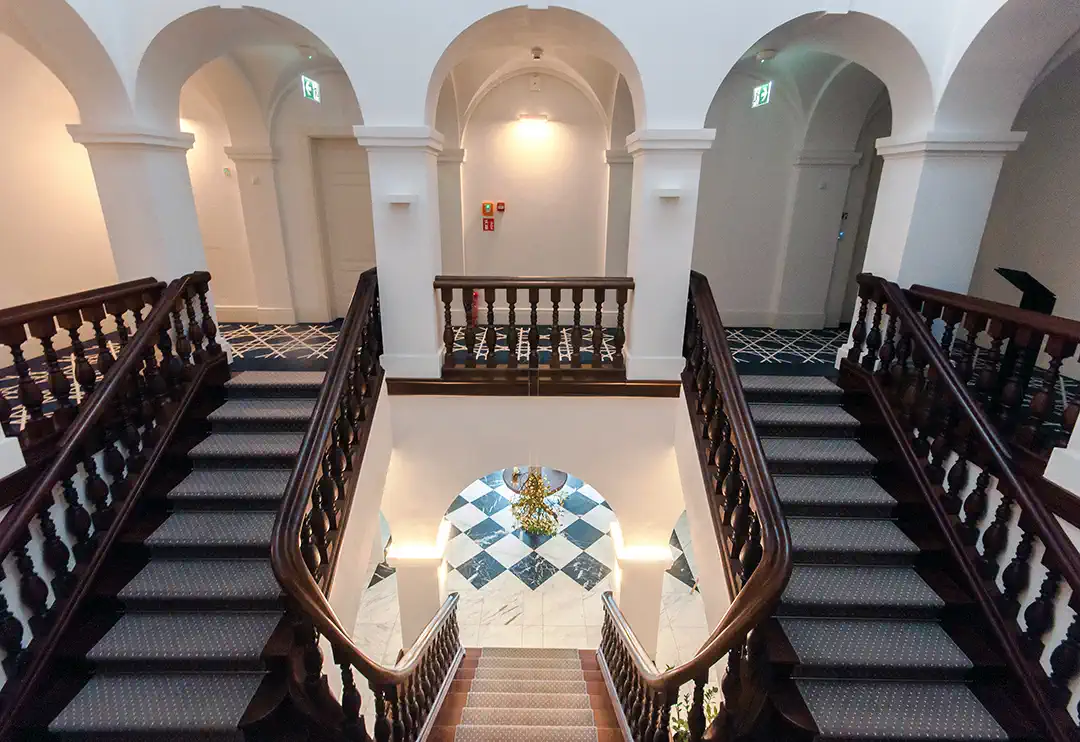
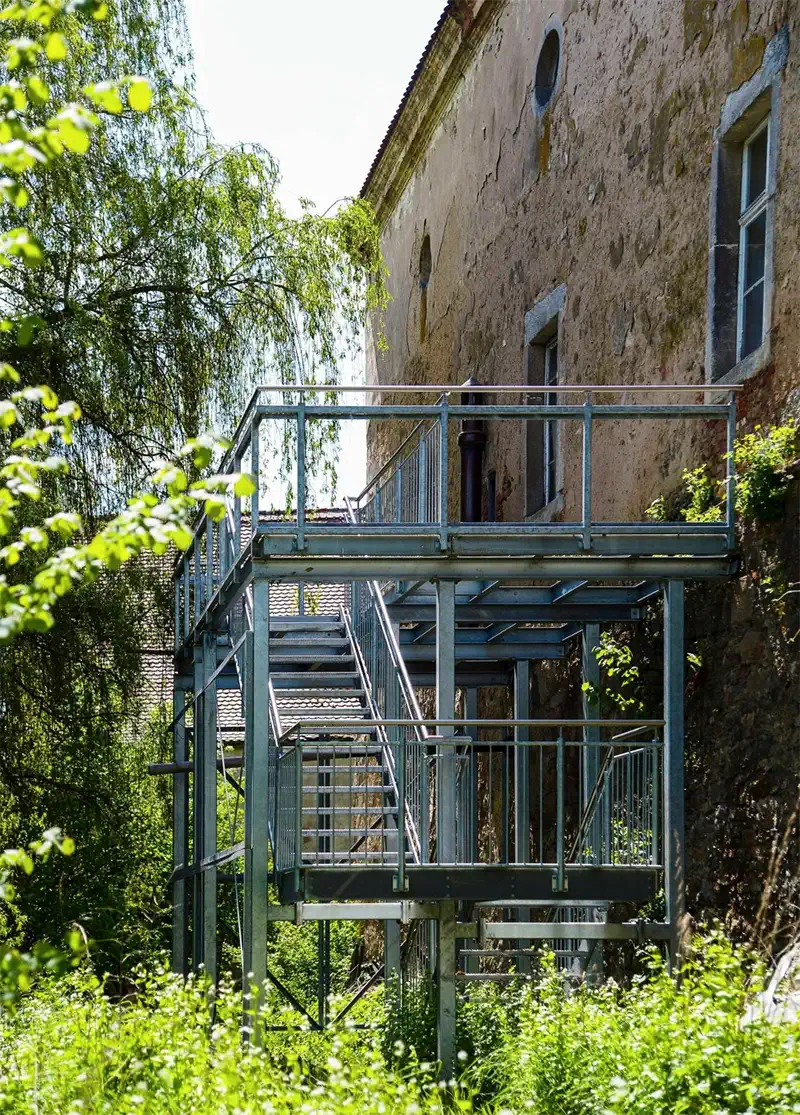
There have also been advances in the design of escape and rescue route systems. Modern LED technology allows for very discreet emergency lighting that can be integrated into skirting boards, handrails or staircases. Escape route signage is now available in variants that can be adapted in colour and design to suit historic interiors.
The decisive factor for the success of such solutions is timing. When fire safety is integrated into the planning process from the outset, technical, design-related and heritage conservation requirements can be meaningfully combined. The result is an overall concept that protects both people and cultural assets while respecting the historic character of the building.
Checklist: is your property adequately protected?
- Is there a current fire safety concept in place (not older than five years)?
- Does the fire safety concept reflect the current use of the building?
- Are two independent escape and rescue routes available and unobstructed?
- Are all escape and rescue routes clearly marked and adequately illuminated?
- Is there a functioning fire detection and alarm system?
- Are sufficient fire extinguishers provided and regularly maintained?
- Has a fire safety officer been appointed?
- Are regular fire safety inspections carried out?
- Is staff trained in fire safety procedures?
- Are up-to-date escape and rescue plans available?
- Are the electrical installations compliant with current technical standards?
- Has the insurance concept been reviewed recently?
If one or more items on this checklist are currently unclear, action is required. A structured fire safety concept provides clarity and planning certainty.
Fire safety as part of responsible stewardship
Historic buildings are demanding in many respects and require a high level of care and foresight. Their architectural value, often complex structures and contemporary uses make them particularly vulnerable to fire risks that are only partly comparable to those of modern buildings.
Fire safety is still frequently perceived as a bureaucratic obligation. This view falls short and underestimates its actual importance. A well-founded fire safety concept combines structural, technical and organisational measures into a coherent overall system. Modern technology and interdisciplinary planning demonstrate that this balance can now be achieved in many cases.
Those who address fire safety at an early stage, clearly define responsibilities and involve professional expertise create planning certainty and reduce long-term risks – legally, economically and operationally. Late or half-hearted solutions, by contrast, often lead to unnecessary costs, conflicts with authorities and avoidable hazards.
A well-designed fire safety concept protects human life and the historic building fabric. It helps prevent existentially threatening liability claims, criminal prosecution and the economic consequences of a fire that could have been avoided.
- Fire Safety Handbook by Adam Merschbacher, Springer, ISBN 978-3658344429
- Building regulations of the 16 German federal states, provided by FeuerTrutz

 19386 Kreien, Mecklenburg-West Pomerania