RTICO
RTICO

Historic properties have their own indoor climate. The question of how large rooms with massive, cold walls can be heated without damaging the building fabric or incurring prohibitive costs is one of the central challenges of any restoration.
While heat pumps are politically established as the standard solution, conventional water-based systems in listed buildings often reach technical and design limits. Infrared heating is still viewed with skepticism in this context or dismissed as an inefficient form of electric heating.
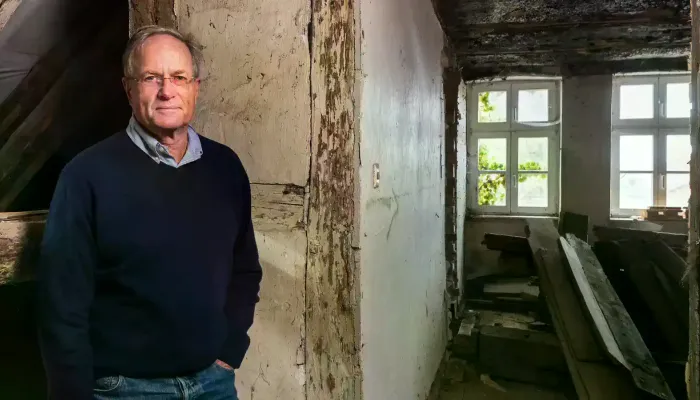
The building biologist and independent expert Gerd Mappes as well as Markus Willegger from Infrarothimmel.at have been restoring large-volume historic buildings for many years using the CELSIUS ALL in ONE dehumidification and heating system. On their YouTube channel @Infrarothimmel they challenge common myths about infrared heating and share practical knowledge for property owners and renovators. The conversation focuses on the efficiency question, moisture and preservation of building fabric, and whether hybrid heating concepts in castles could become necessary in the future.
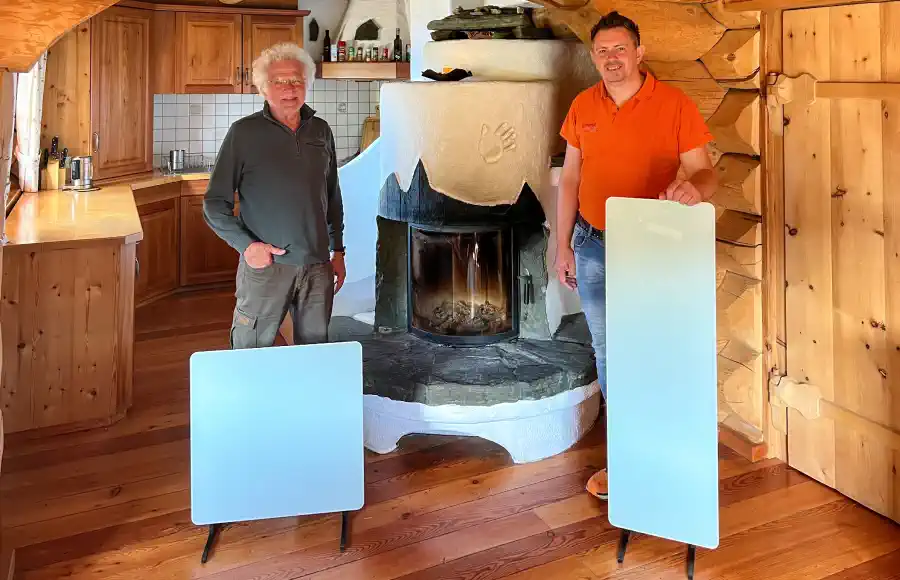
The perceived aesthetic interference of infrared panels is often more a prejudice than a reality.
- Why is infrared underestimated?
- How does infrared heating work?
- Renovating on a small budget – where does infrared help?
- Heat pump or infrared: what is more economical in a castle?
- Heritage protection and infrared: a contradiction?
- Infrared panels in historic interiors
- Does infrared damage historic surfaces?
- Infrared alone or hybrid: what is the future?
1. The heat pump is now considered the standard for energy-efficient heating. Why does the infrared concept play a smaller role in public perception than in practice?
I believe this is mainly due to historical and political reasons. Convection systems, whether gas, oil, or water-based, have been the industrial standard for decades. Planning, skilled trades, and grant frameworks are geared towards them. The heat pump has assumed this status in recent years through strong political support.
Infrared falls outside this framework, it is decentralized, low maintenance, and does not require an extensive installer network. This makes it less attractive for the industry. In practice, especially in historic buildings, the balance often looks different, and this is becoming more widely known.
However, not all infrared heating is the same. Systems differ significantly in design, control, and range. We combine dehumidification and heating with an 8-stage control system that regulates energy use according to actual demand. In practice, depending on the building and usage, this can result in significantly lower consumption than often assumed in theoretical models.

2. For readers without a technical background: how does infrared heating work and how does it differ fundamentally from conventional air- or water-based heating systems?
Instead of primarily heating the air, infrared systems emit radiant heat which, provided they have sufficient range, is absorbed directly by surfaces and objects. This stored heat is then reflected back into the environment, creating a comfortable indoor climate.
Deeper building elements such as walls, floors, and ceilings are also reached. This allows for sustained heating without the need to heat the entire air volume. The absence of convection from the panels results in a healthier indoor climate. Ideally, relative humidity remains between 40 and 60 percent.
Systems differ greatly in range and efficiency. High-performance infrared solutions regulate energy input according to demand, whereas simple panels with basic thermostats usually have a limited range, generate high surface temperatures, and primarily heat the air like conventional systems.
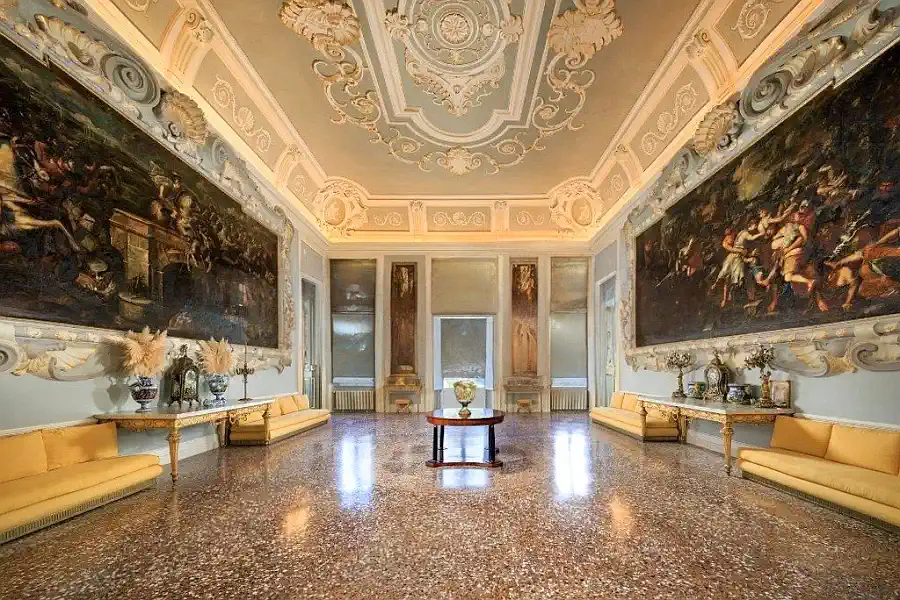
3. Many owners renovate historic buildings on a limited budget. When is infrared a realistic alternative to water-based systems and where are the limits?
In historic buildings, reducing wall moisture is crucial. Damp walls can lead to condensation in conventional heating systems because warm air meets cold building surfaces. This can reduce insulation performance and cause long-term structural damage. Infrared systems with a long range work differently: they temper building components and furnishings directly, effectively dehumidifying and drying out building elements to a corresponding penetration depth.
In practical terms, infrared solutions require significantly less installation effort. They need no pipework, no wall chasing, and no chimney sweep service. Maintenance and operation are usually simple to maintenance-free, which significantly reduces both upfront and ongoing costs, especially in smaller renovation projects or when budgets are limited.
Even in large-volume buildings, a high-range infrared heating system can be used as a standalone solution. A hybrid approach can be useful for systems with limited range.
4. Heat pumps generate several times more heat from one kilowatt hour of electricity, while infrared operates physically at a 1:1 ratio. Why can this calculation still favor infrared in large historic buildings?
The 1:1 calculation primarily applies to simple resistance heaters, which work like conventional electric radiators and have a short range. High-performance infrared systems utilize the thermal mass of the building. Floors, walls, ceilings, and even furniture are evenly tempered. By using a range of 12 meters, we can build up significant stored heat. Precise control ensures that energy use is regulated according to demand.
In practice, well-designed infrared systems can achieve significantly lower energy consumption than comparable convection systems. The effective thermal comfort achieved often far exceeds what a simple 1:1 ratio suggests.
Based on many years of experience and numerous reference projects, experts are increasingly convinced that well-designed infrared solutions represent an economical alternative, especially in large historic buildings and at low outside temperatures.
Important measures against uncontrolled heat: Fire protection for historic properties.
5. Listed buildings require particularly careful planning. What structural conditions must be met so that infrared systems function long term without damaging the fabric?
In heritage protection, preserving the historic fabric is the top priority. Conventional heating systems can alter building physics or stress the masonry. Infrared heating systems with a dehumidifying effect, on the other hand, can help protect the fabric in the long term and keep walls dry. An example from Innsbruck illustrates this: over 15 years, an infrared system was used in listed buildings with sandstone walls several meters thick. These were permanently dried and heated without affecting the historic fabric.
Such experiences show that, with careful planning, infrared systems can gently heat historic buildings while also preserving the building fabric.
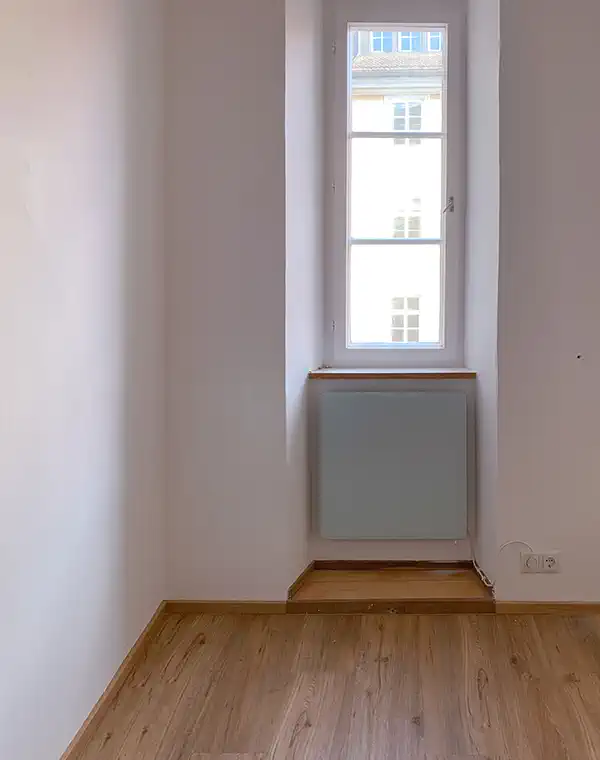
6. Infrared panels in historic interiors could be perceived as visual intrusions. How can infrared systems be integrated into castles and large halls without affecting the room’s character?
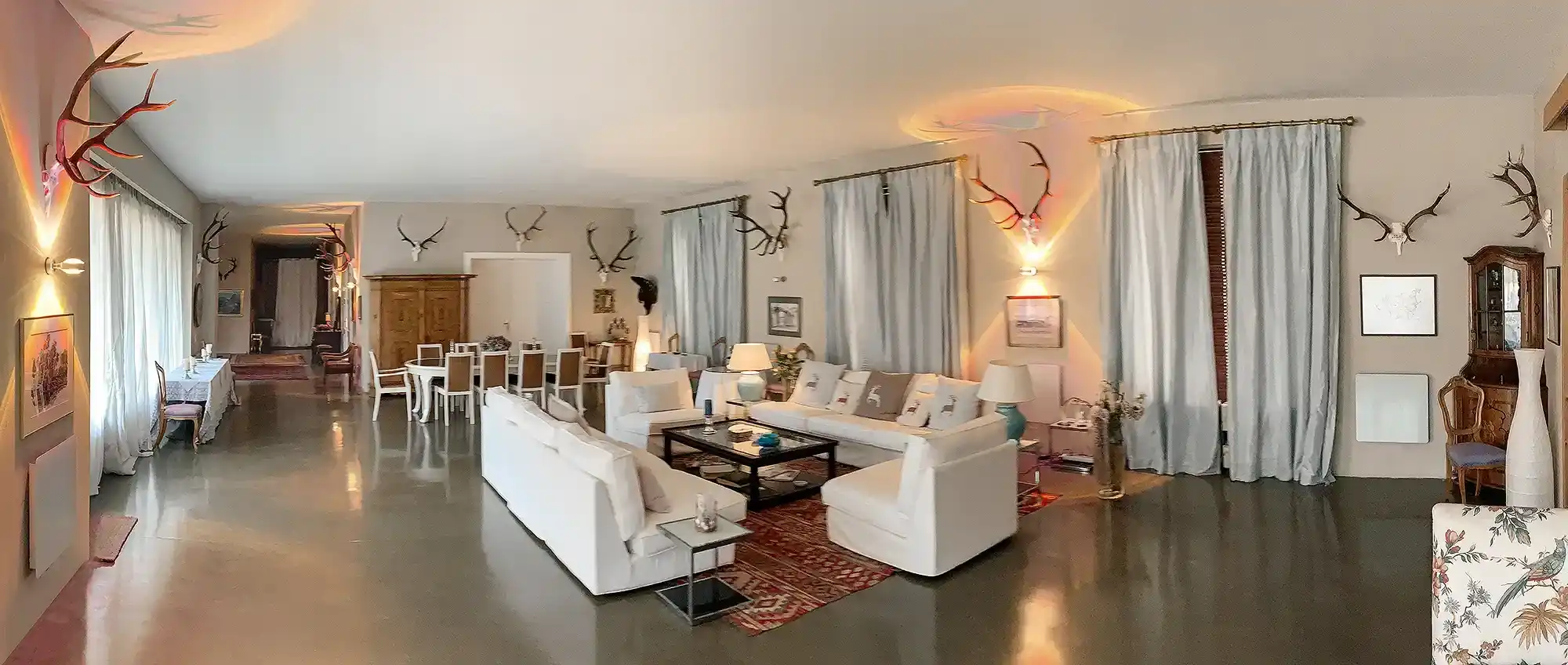
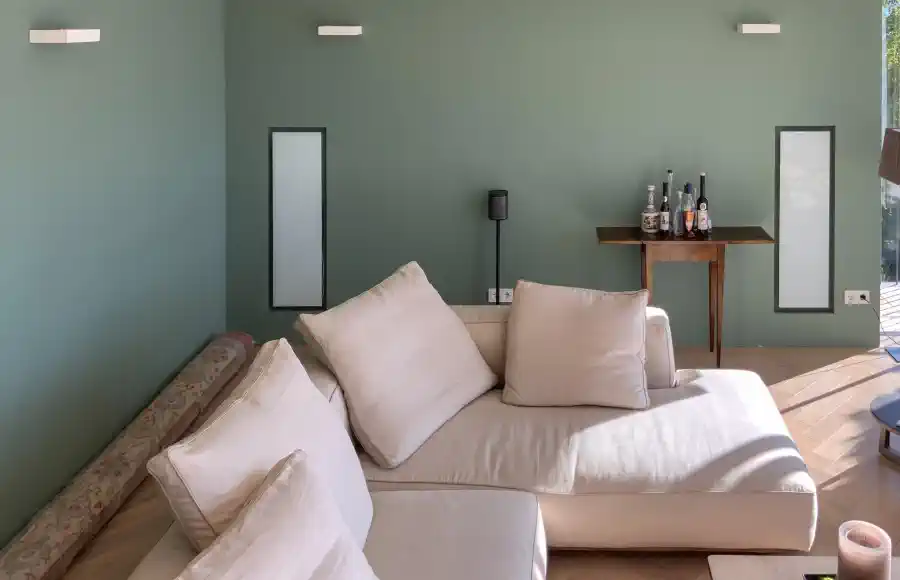
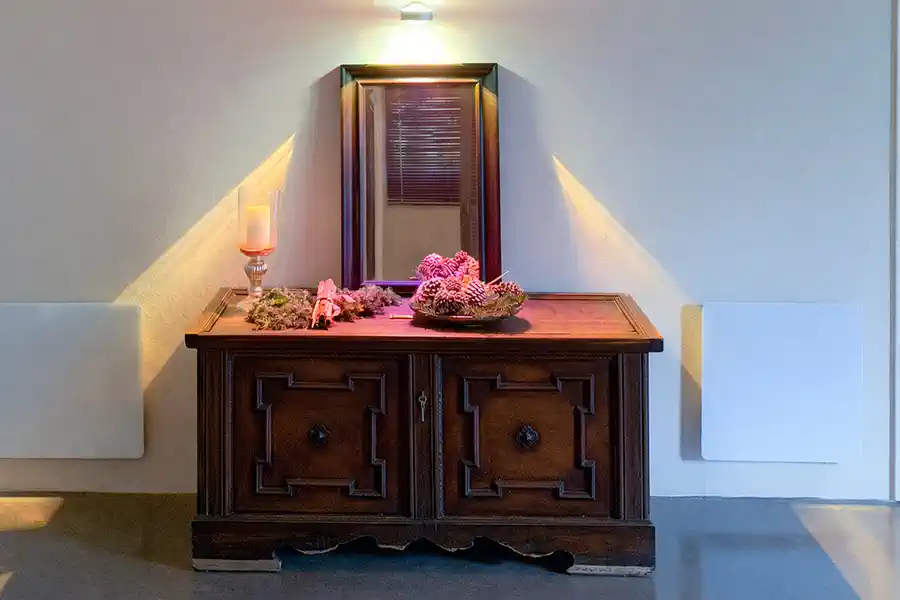
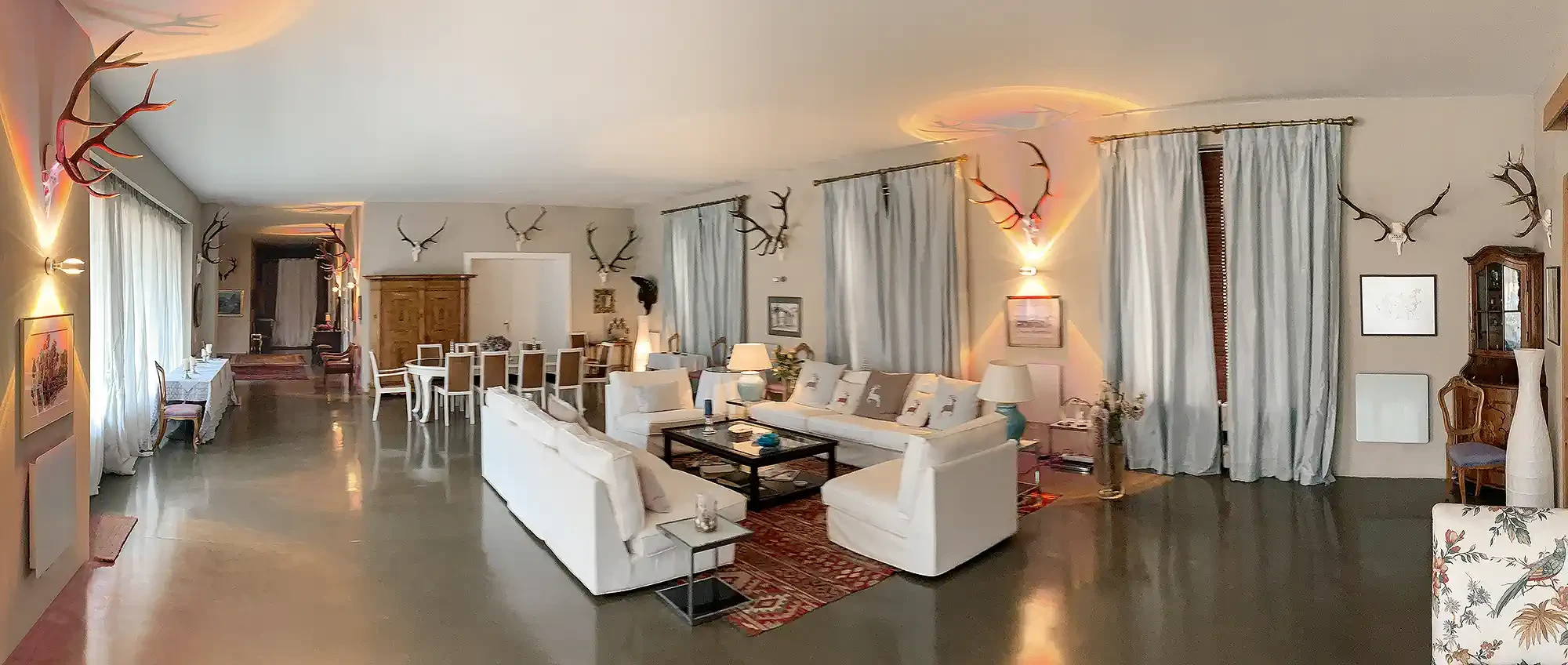
This is a common concern, but in practice, modern infrared panels are usually slimmer and more discreet than conventional radiators. They can be recessed into walls or visually integrated, for example, as a square panel framed with ornamental plasterwork that blends seamlessly into the decoration of a hall.
Glass crystal panels, color matching, and decorative surfaces allow the elements to match wallpaper or wall patterns. In this way, large halls and castles can be heated without disturbing the aesthetic appearance of the rooms.
7. There is concern that infrared radiation could damage wood, furniture or historic surfaces. How do you assess these concerns from a building biology perspective?
These concerns are unfounded based on our experience. Radiant heat tempers materials without overheating them. High-performance infrared heating brings moisture in wood, textiles, or books to a normal level, which reduces musty odors and prevents mold growth.
A high infrared range contributes to the preservation of the building fabric, minimizes thermal bridges, and promotes a healthy indoor climate, potentially reducing long-term renovation costs.
8. Do you see the future more in standalone heating systems or in hybrid solutions?
High-performance infrared systems can definitely be used as standalone heating: low maintenance, decentralized, and offering demand-driven control for individual rooms or entire buildings.
The economic efficiency results from the overall balance: lower investment costs, zero maintenance, and no conventional plumbing requirements. When these factors are combined, the result is often different from what a simple kWh calculation would suggest.
Infrared, with sufficient range, ensures a comfortable indoor climate. When used correctly, it supports the preservation of historic building fabric and adapts flexibly to different requirements.
Infrared offers an approach that can be structurally and economically viable in different usage scenarios, from castles and hotels to ordinary residential buildings.
It is not cheap in the sense of low quality: planning and installation are individual and have their price. However, when the total cost of ownership is considered, the result often differs from a simple kWh analysis.
If you want to assess whether infrared is suitable for your castle, old building, or listed property, an initial non-binding consultation can help evaluate the possibilities realistically.
 Potsdam, Brandenburg