RTICO
RTICO

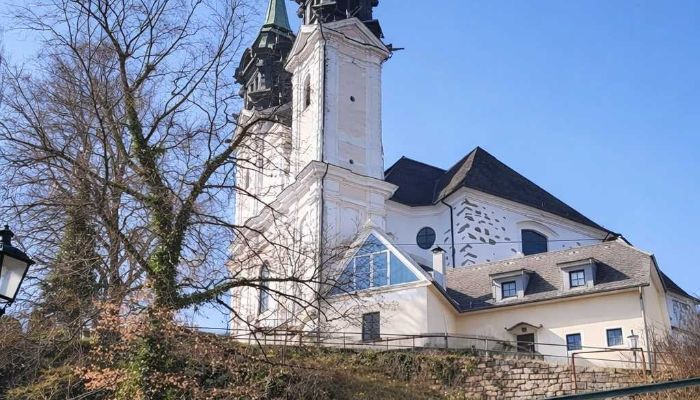
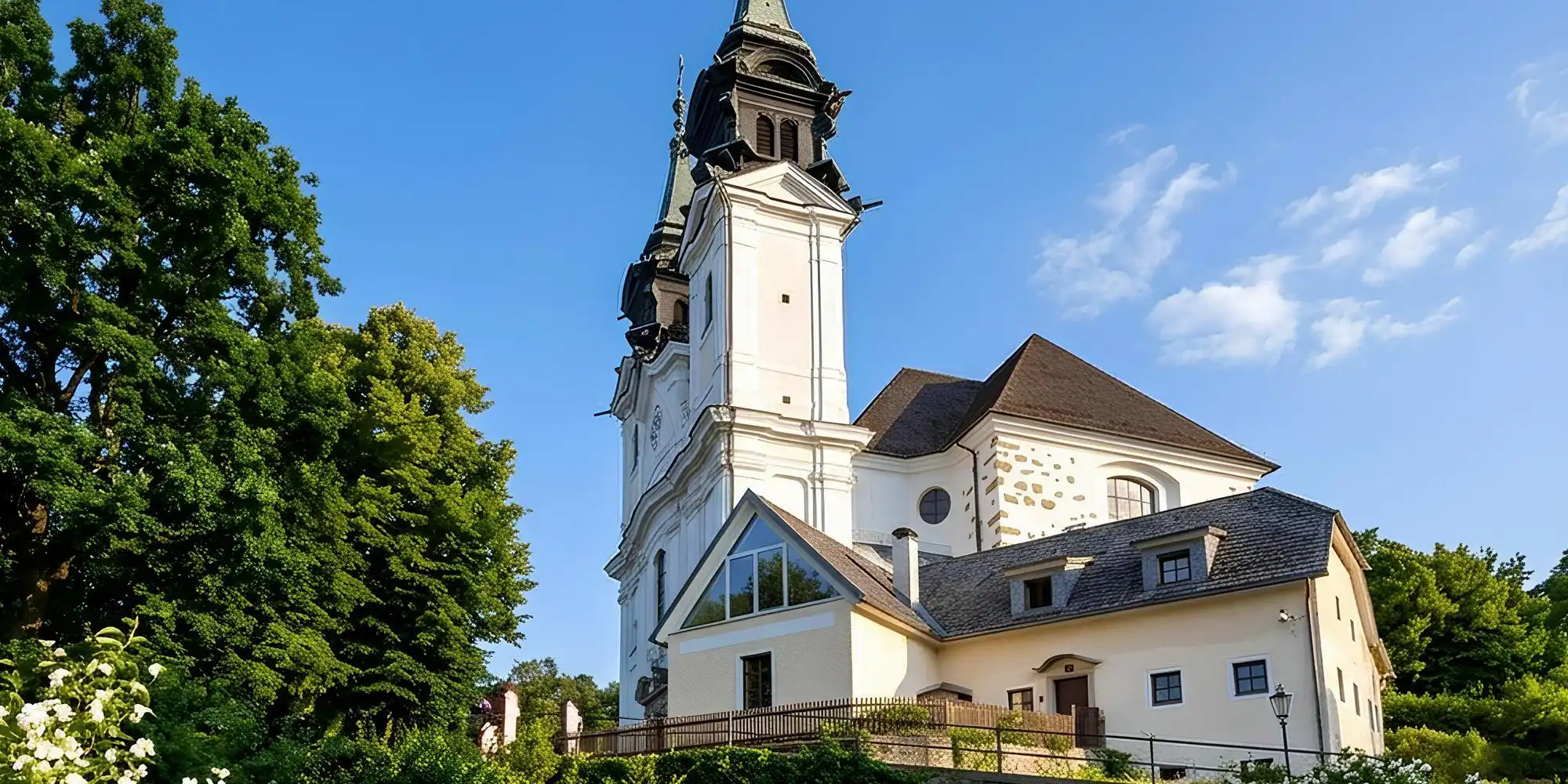
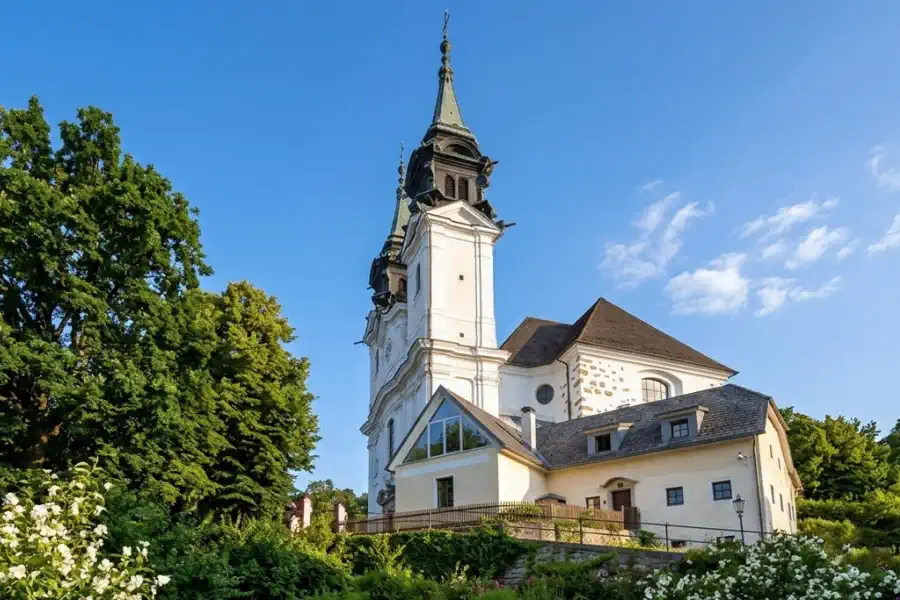
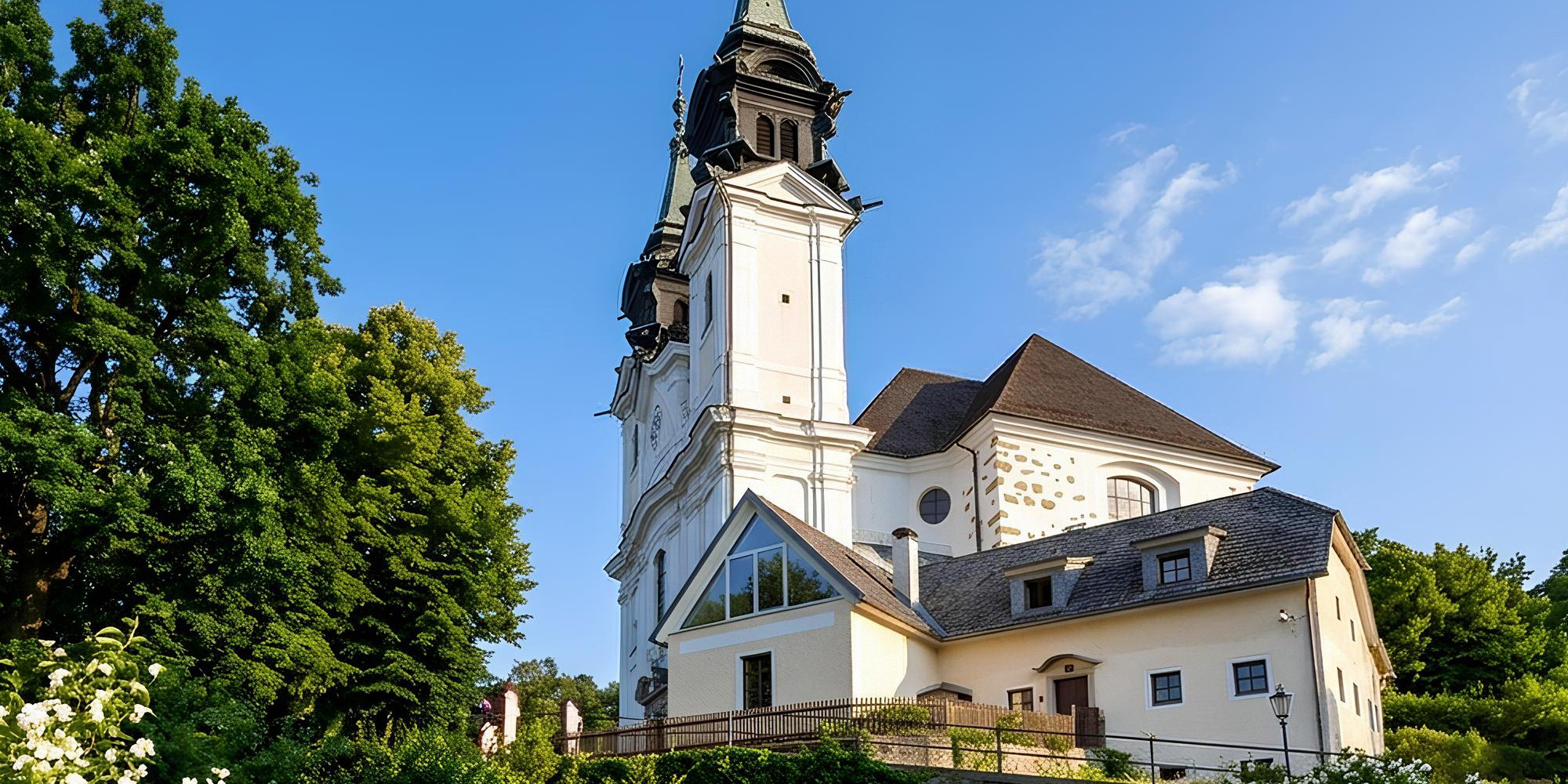
Linz lies on the Danube, where the Mühlviertel meets the Alpine foothills. Rising above the city in the northwest, Pöstlingberg was of strategic importance in the 1830s as part of the Maximilian Tower Line, a Habsburg fortification system surrounding Linz. The basilica, the city panorama, the view across the Mühlviertel: The hill has a unique gravitational pull. Directly beside the pilgrimage church stands a house that is older than the basilica itself. A Biedermeier residence from the early 19th century, documented as the first schoolhouse on the hill, later home to a devotional goods shop, and owned by the same family since 1902.
The woman who shaped this house over decades is a biologist, sculptor, ceramic artist and art therapist — and, as she describes herself, a person driven entirely by creativity and design. She rescued the building from decay, resolved centuries-old legal issues, developed lighting concepts that no technician understood at first, and created a ceramic Christ Child figure acquired by the diocese. Now she is passing it on.
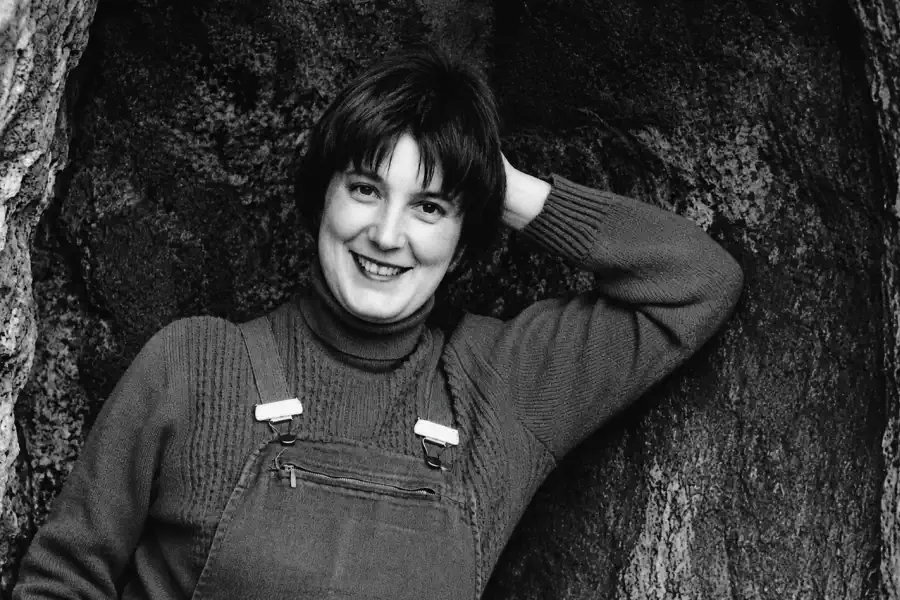
Michaela Frank: biologist, sculptor and art therapist
1. Ms Frank, what made you decide to live and work here of all places?
As an artist, I need an environment that speaks to me on an inner level. Here, the city is close while at the same time feeling slightly distant. The view over Linz and the Danube landscape, together with the unique topography of Pöstlingberg and its historic towers and fortifications, are essential parts of this atmosphere. When I first came here, I immediately knew: This is where I can breathe freely. This is where I want to live and work.
2. The house had been in your family since 1902 and stood empty for a long time. Your stepfather called it the old Römerburg
and wanted to let it decay. How did you and your mother decide to save it?
That is difficult to explain rationally. There are houses you enter and immediately leave again. And then there are houses where you notice many things at first, but remain uncertain and need time to think. And finally, there is that rare moment when you sense: There is something here. That is exactly how it was with this house.
We saw the house and both knew quite quickly that we wanted to save it. It was not a rational decision, but rather an immediate affection and a feeling of connection.
3. You describe the restoration as a “forty-year dialogue with the building fabric”. What does that mean in practice? How does one learn to listen to a house?
You sit in a room and allow it to speak first, without a concept and without intervention. You observe the light, the proportions and the atmosphere, repeatedly and over a longer period of time. Slowly, images and possibilities begin to emerge. At some point, there is a moment when you know: This is the way forward. Only then does the actual implementation begin.
4. How did you balance the requirements of heritage protection with your own creative vision?
Heritage protection was never a field of conflict for me. This is certainly because the protection here primarily concerns the façade and the ensemble, not the interior. A historic building has a strong presence of its own, and that needs to be respected. My aim was not to create a museum-like restoration, but rather a contemporary continuation with modern comfort while preserving the character of the house. I was always aware of the aesthetic limits of a modern intervention. I did not want different periods of architecture to compete with each other, but rather to create a living evolution. Overall, there were only two consultations between my architect and the Federal Monuments Authority.
My design ideas were clear from the beginning: a winter garden above the former commercial area to open the house towards the landscape, and a terrace in the rear roof section. These interventions were not intended to disrupt the existing structure, but to continue its logic while referencing the original form of the building. This was complemented by very specific functional wishes. I wanted a bathtub in the historic part of the house, a lift and an open spatial arrangement wherever possible. All of this could be achieved in agreement with the authorities.
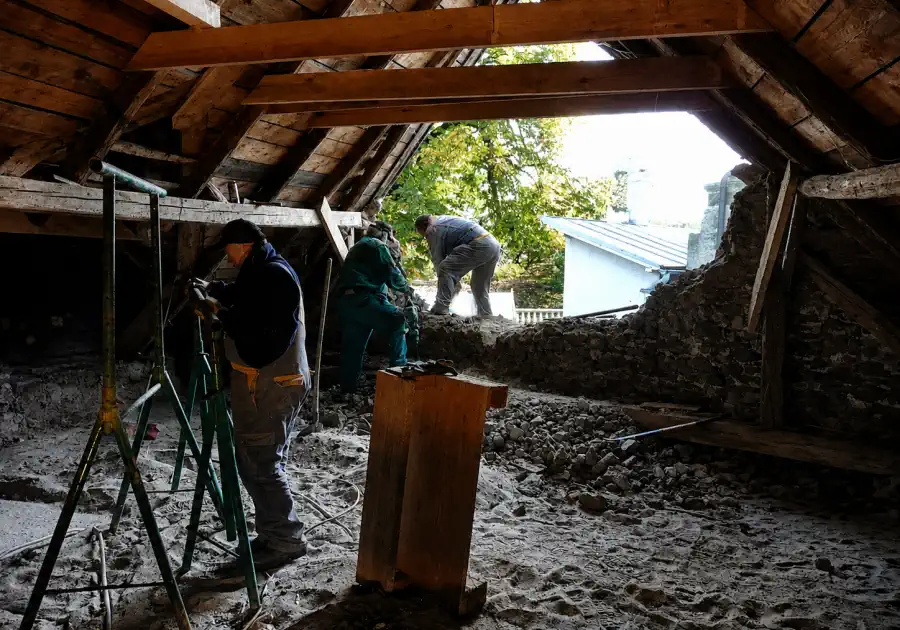
Opening of the side roof area next to the church
5. The lighting design was a challenge lasting many years. You say you could not have left this to an architect. What makes lighting in a historic house so demanding, and what solution did you eventually find?
I would not say that it was fundamentally difficult, but from the beginning there was a very clear inner concept that was difficult to translate into technical language. My intention was to make the historic architecture truly visible through light and to stage certain rooms almost like a scene.
Every decision began with the question: How does the light fall and how does the room respond? Even with spotlights, the same question kept returning: How do the beams of light and the shadows interact? Because what matters is not only the light itself, but the pattern it creates within the space.
One example was the vaulted bathroom on the lower level. A lamp originally selected created a deep red cone of light on the white tiles after installation. That was not what I wanted. In the end, a very simple and reduced solution for wet areas proved to be the right choice. Often, it was precisely the understated solutions that worked best. This is where the visual language of the house emerged. I wanted a very clear and uncompromising visual language.
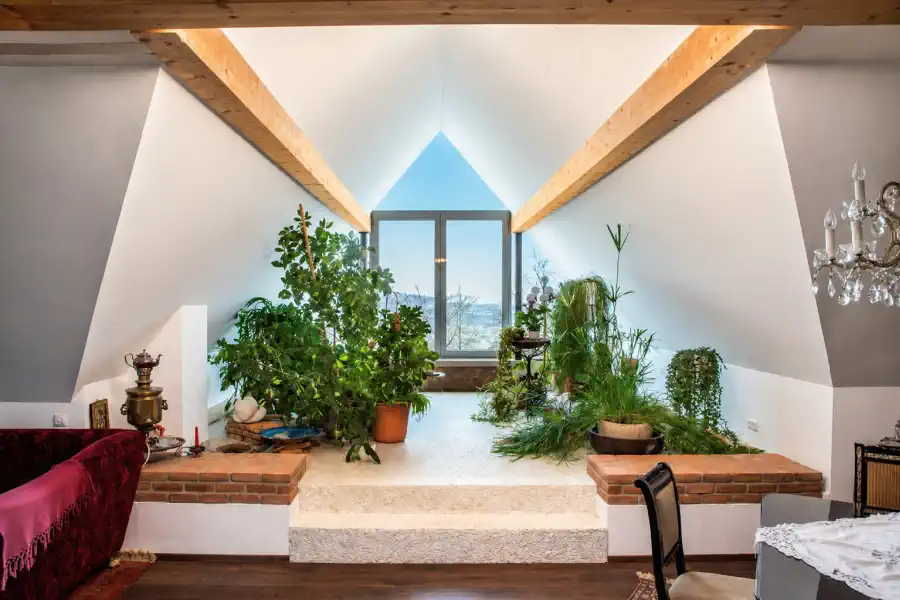
Structure above the former commercial area: a view into the distance. This intervention was one of the few changes that altered the external appearance of the house.
6. Alongside the visible restoration work, you also carried out a “legal restoration” in the background. What needed to be clarified to place the house on a secure foundation for the future?
When I took over the house, I was initially unaware that the legal situation surrounding the property had remained unresolved for a long time. This was probably the greatest challenge. There was a historic situation that had existed across generations in practice, but did not have a complete legal equivalent in the land register.
In practical terms, this meant that the entire property was not registered as building land. Since the house is almost completely surrounded by church-owned land and has only one neighbouring property, the clarifications were correspondingly complex and time-consuming.
I had to resolve this legal situation step by step, which required years of work. This included boundary adjustments with surveyors as well as a complete resurvey of the property. A decisive milestone was reached in 2011, when the right of way and access along the connecting road was permanently secured in the land register. Only then was the foundation created for the further development of the building.
The access to the road is only possible via a small strip of meadow. Behind it, a parking area on private land can be created. The purchase of this 15 m² plot of land in front of the property has already been agreed by preliminary contract and is currently being transferred into the land register. The applications to the authorities will then be submitted shortly.
I am handing over the house knowing that I have placed it on a clear legal and structural foundation.
7. The Pöstlingberg, with its basilica and city skyline, is a familiar landmark for the people of Linz. The house itself, however, remains largely unknown as a private residence. What can someone expect when entering for the first time?
Total surprise. From the outside, the house appears rather modest, almost reserved. The impression changes instantly upon entering. A tall, generous space opens up and feels unexpectedly expansive. This contrast between the outward appearance and the interior experience defines the entire house.
One immediately senses a remarkable calm and an unexpected sense of spaciousness. Many visitors describe it as something they simply did not anticipate.
Every room has its own character, and none gives away what awaits in the next. Particularly striking is the silence throughout the house. Even the nearby church bells are barely audible indoors, nor is the lively activity around the pilgrimage church.
A special place is the dining area in the lower kitchen. Guests often find themselves lingering there much longer than they had intended. It is a place with a very special energy.
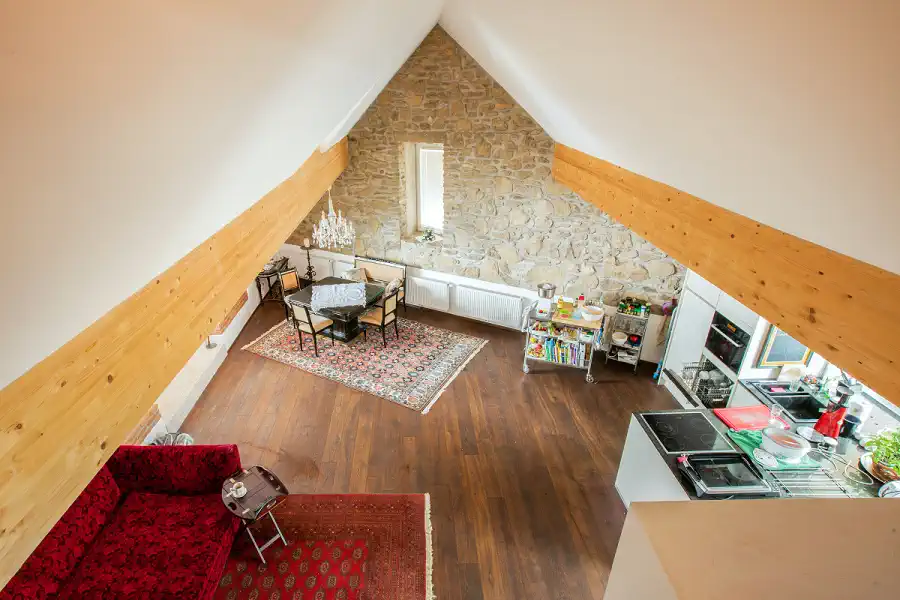
The main living space viewed from the gallery. The lighting follows the geometry of the roof structure. The stone wall marks the location of the former opening shown earlier.
8. You regard the house as a work in itself, and you are accustomed to letting go of your works. What do you hope for in its next chapter?
Yes, in many ways this house is my greatest work, and I am proud of it. I conceived the entire interior myself and realised it room by room together with the master builder. I am grateful that I was given the opportunity to do so, not least from a financial perspective. Working on this house has been a privilege, never something to be taken for granted. Yet a true work also lives through being released at some point.
For the next chapter, I hope for owners who recognise the potential and complexity of this place. Above all, one thing matters to me: the house should be allowed to change. It does not need to remain exactly as it is simply because these were my ideas. Every generation brings its own vision and its own form of vitality.
I hope the new owners will understand this protected place and use it to develop their own ideas further. The house is open to that.
9. The Christ Child of Pöstlingberg
and its acquisition by the Diocese connect your work to this place. What does that connection mean to you?
As an artist, I do not see a direct conceptual connection between the work itself and this location. My sculptural work develops independently of the geographical setting or the immediate surroundings of the church. The “Christ Child” emerged from an intellectual and spiritual engagement with the Christmas Gospel and represents my personal approach to the subject:
The earthly nature of humanity is expressed through clay, fired earth. The cloth, as an organic fabric, points to physical existence and, through its swaddling form, already anticipates the Cross, the burial shroud and the Resurrection. Yet the essential aspect remains invisible: the nature of God is infinite abundance beyond imagination. Only through this birth does life become possible in both its earthly and transcendent forms.
For me, the acquisition by the Diocese was above all a form of recognition for this work, which also represented a considerable technical challenge. The connection to Pöstlingberg arises more from the place where it was created than from the content of the work itself.
The real connection exists on another level. The house itself, my “Römerburg”, provided the protected space in which such works could come into being over many decades. In that sense, it is not the place that shaped the work, but the house as a place of life and creativity.
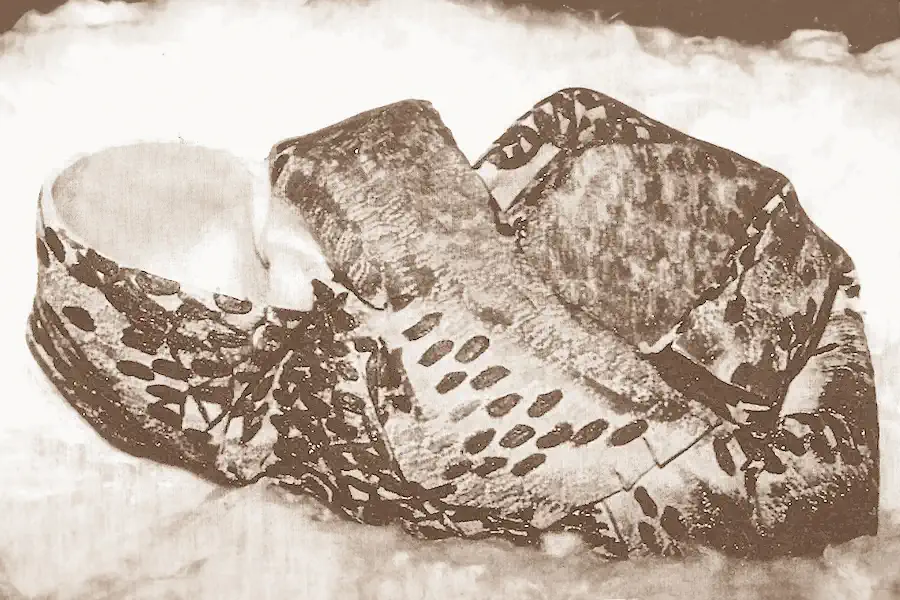
Michaela Frank (1993): The Christ Child of Pöstlingberg
 8271 Bad Waltersdorf, Styria