RTICO
RTICO

In the deep green valleys of inland Galicia, terraced vineyards drop steeply toward the River Miño. Ancient monasteries cling to the cliffs. In this landscape, the Ribeira Sacra is undergoing a quiet transformation. Long overlooked, it is now becoming one of Spain's most compelling rural regions.
At the heart of this area, just outside the small town of Pantón, stands Pazo de Ferreiroá. A noble house whose history is closely tied to the development of Galicia itself.
- Six centuries of change
- Architecture of a classic Galician pazo
- The Palacios family restoration
- The Ribeira Sacra
- Life in the valley
- Pazo de Ferreiroá today
Six centuries of change
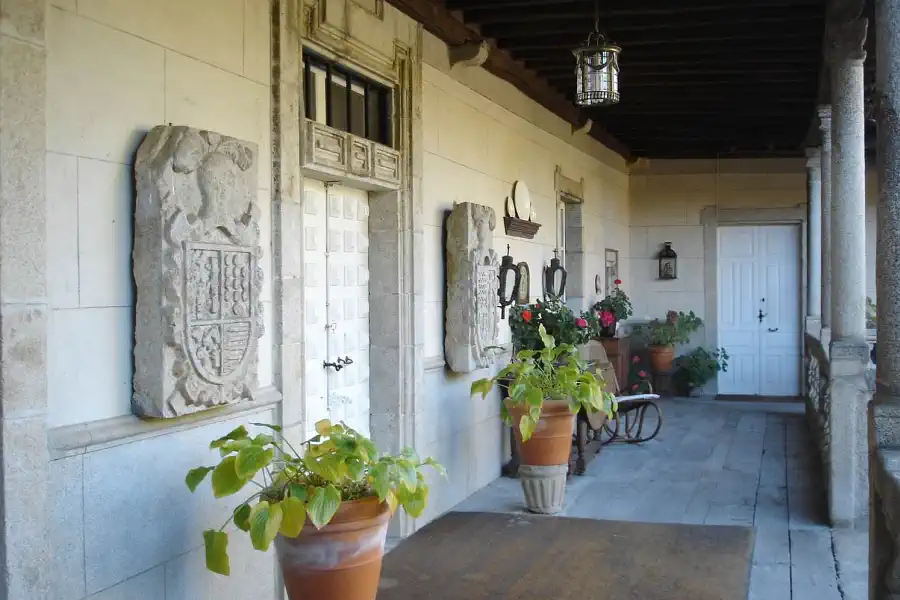
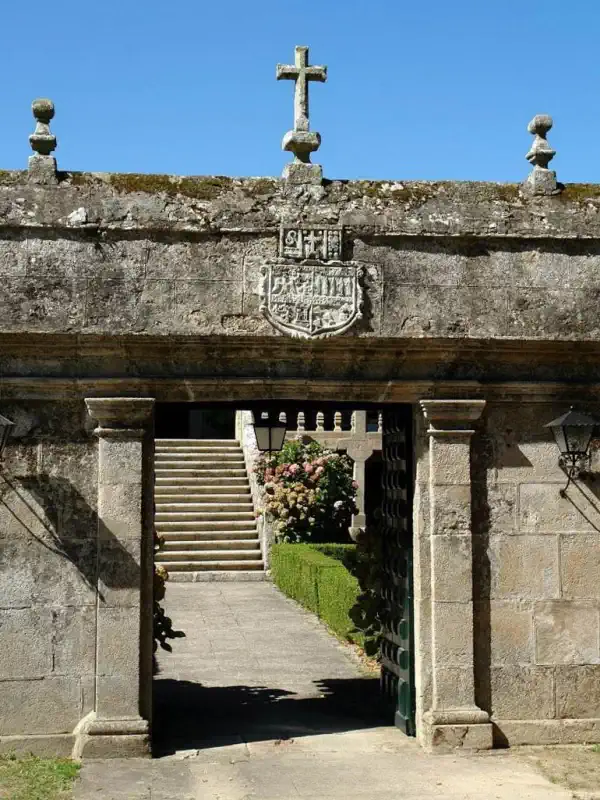
The earliest references to this traditional Galician pazo date to 1403, when land in rural Galicia was divided among noble families, monasteries and local lords. By the early eighteenth century, the house had already taken the form visible today, serving as both the administrative and residential centre of a working rural estate. It belonged then to the Pallares and Gayoso families, established names in Galician aristocratic history. In 1816, the head of the Pallares line received the title of Count of Pallares, consolidating the estate's standing within the regional nobility. Through marriage and inheritance, ownership later passed to the Pardo Salgado family and was subsequently linked to the Arias family of the Pazo de Maside. The heraldic coats of arms on the granite façades still record this succession: Losada, Osorio, Quiroga, Somoza, López-Lemos and Saavedra, each name a marker of alliance and continuity across the centuries.
Architecture of a classic Galician pazo
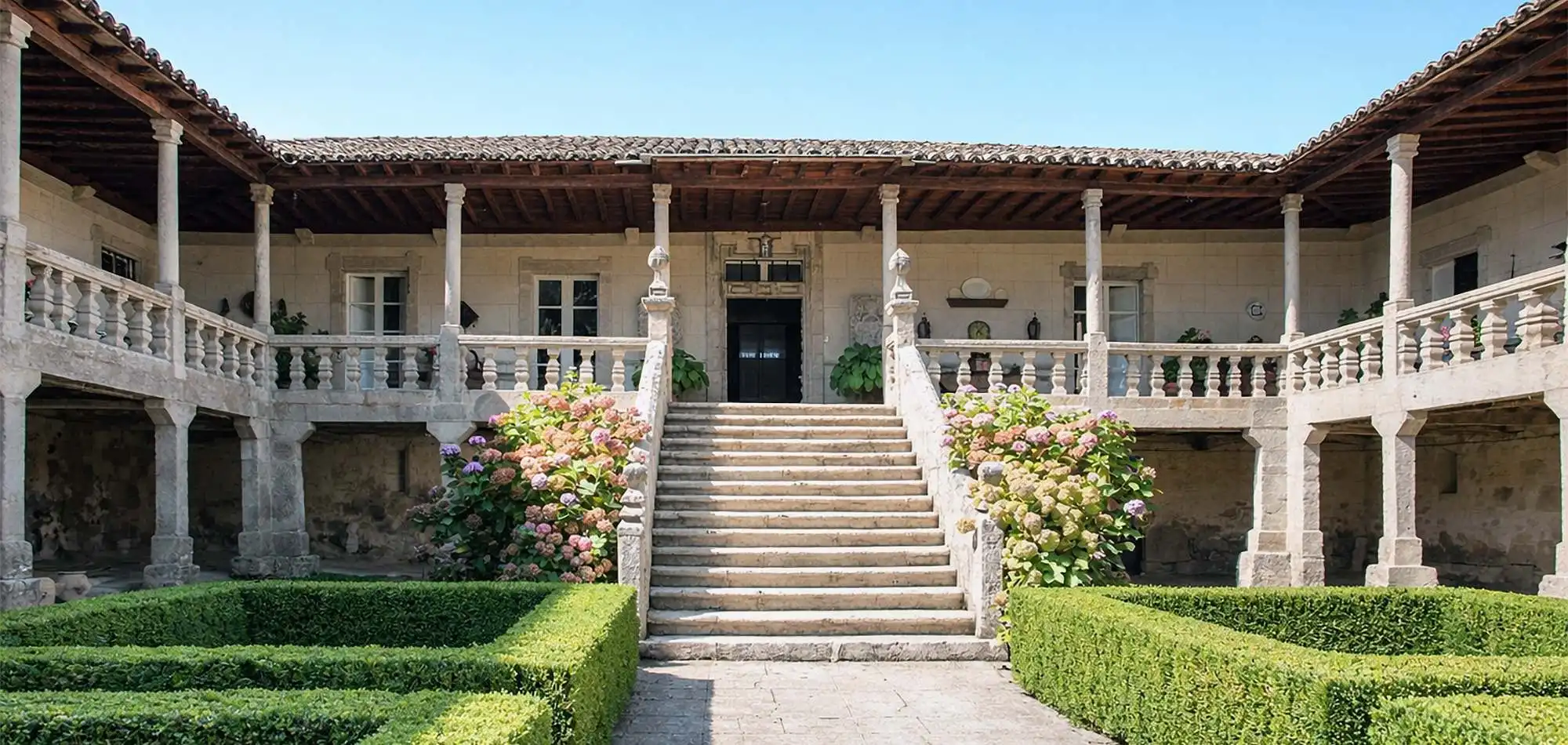
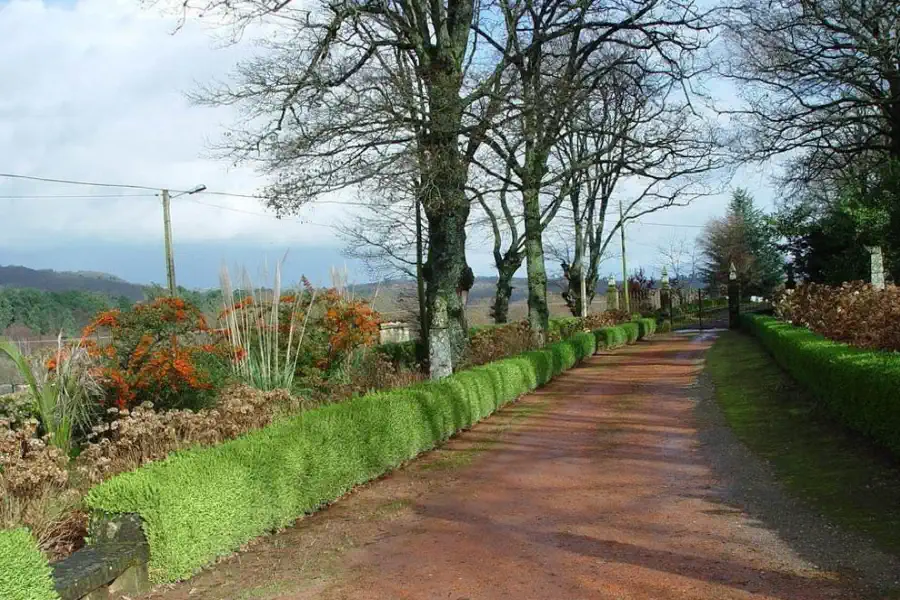
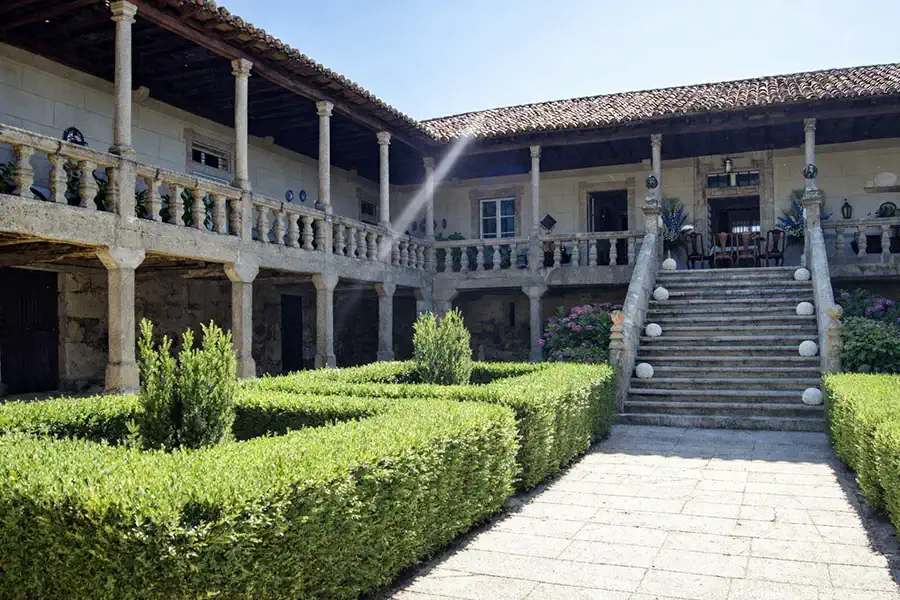
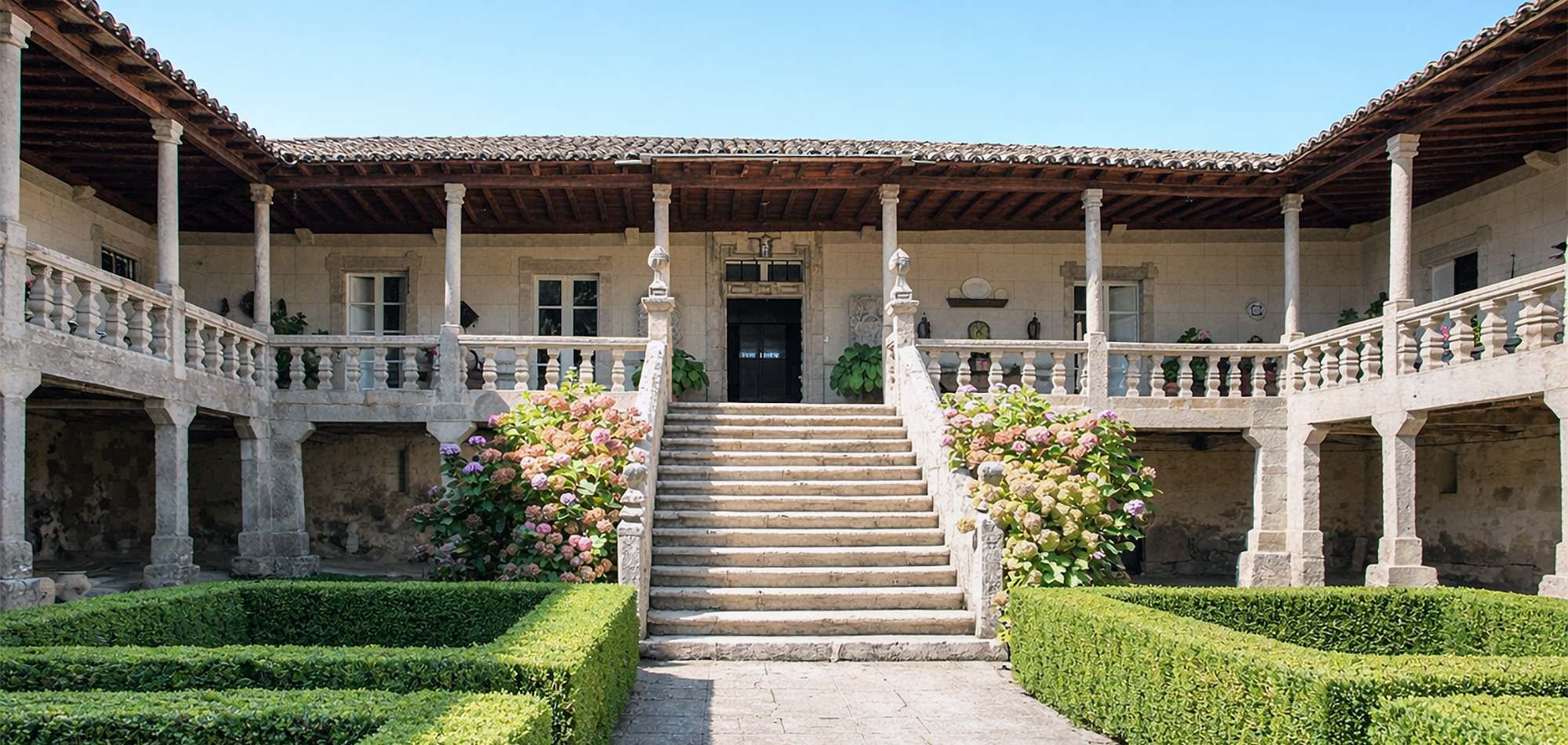
A long alameda of mature oaks leads to the entrance gate. The approach has changed little over the centuries. The house behind it even less. The building follows a U-shaped layout around a central courtyard, accessed by a granite staircase with balustrades that rises to the planta noble
, the main living floor. This arrangement was not an architectural gesture but the expression of a social order. The pazo received clergy, nobility and guests; its library, formal dining room and ballroom were the setting for a regulated public life. Beneath the house lies a stone wine cellar of around 300 square metres, a reminder of the viticultural tradition that monastic communities established in this region centuries ago.
The Palacios family restoration
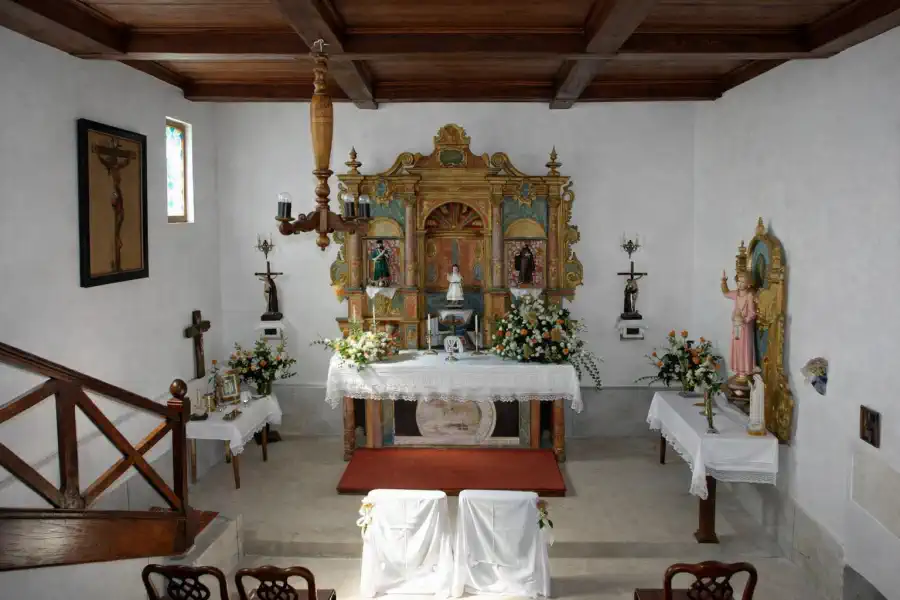
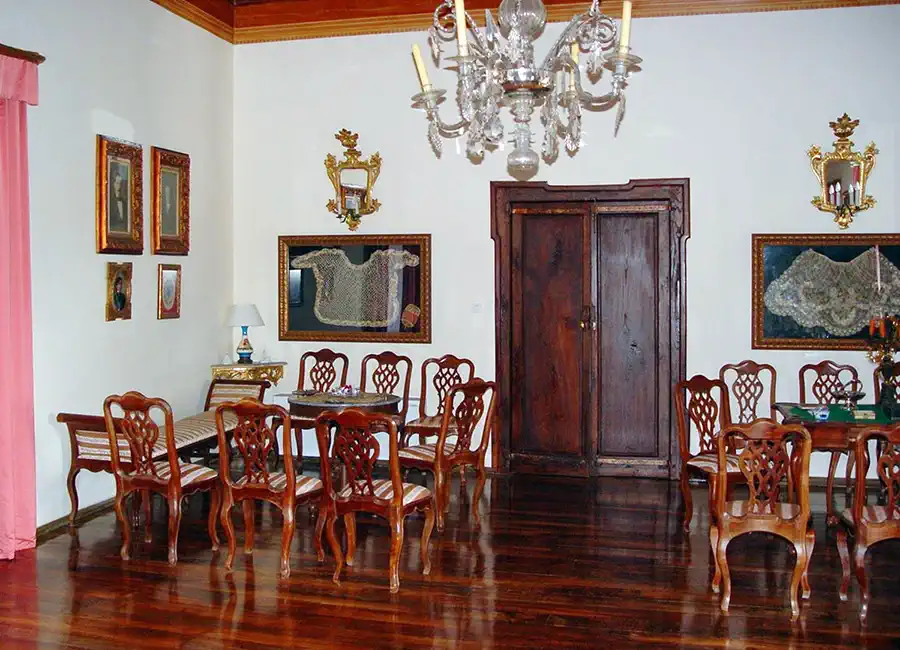
When Manuel Palacios and his family took over the estate, the decision was straightforward: preserve, not transform. Roofs were repaired, carpentry consolidated, structural damage addressed. The interiors were not given a new identity; their existing one was maintained. Antique chests, carved tables and traditional Galician pieces were introduced without overcrowding the rooms. Embroidered cloths, lace curtains and antique fabrics are distributed throughout the house — present not as decoration but as material continuity. The result is a house that reads as coherent, because nothing in it claims to be something it was not already.
Castillos, palacios, pazos: Spanish heritage protection law.
The Ribeira Sacra
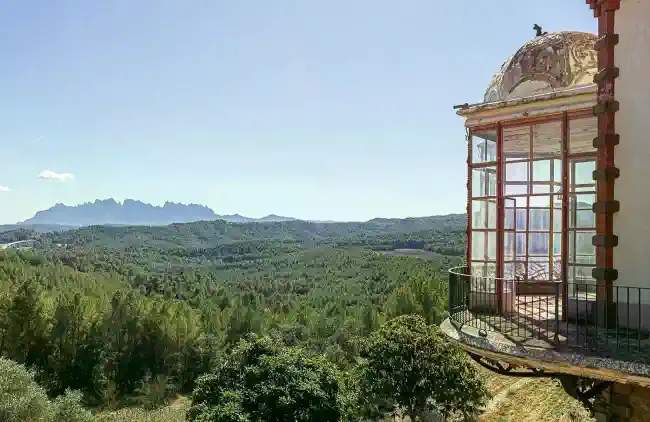
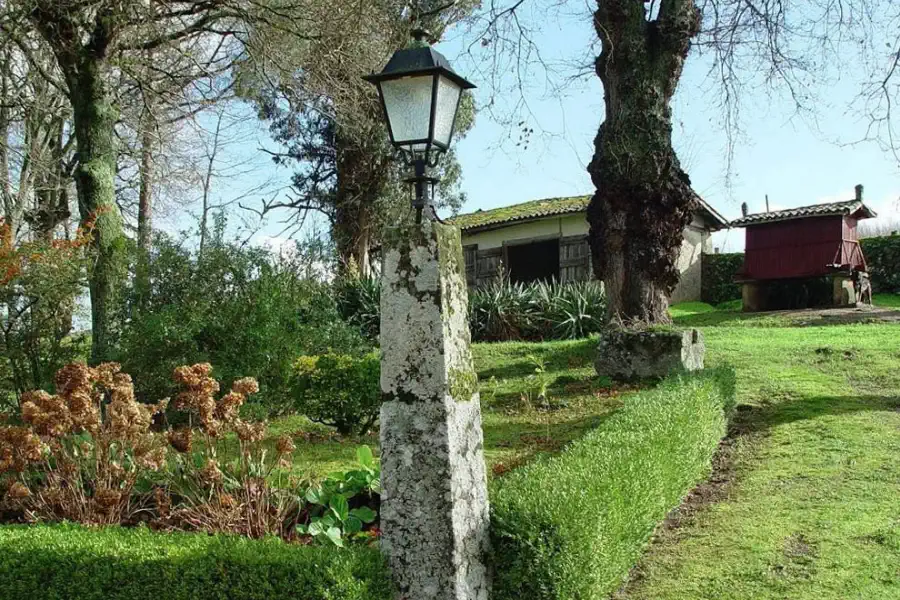
Two hectares of gardens and parkland surround the pazo; beyond them, a landscape that has been farmed for centuries. The Ribeira Sacra — spanning parts of Lugo and Ourense — takes its name from the medieval period: Sacred Riverbank
, a reference to the concentration of monasteries along the Miño and Sil rivers. It was monastic communities that introduced viticulture here, shaping the steep terraced vineyards that remain in use today. The region holds a Denominación de Origen designation and has been attracting growing international interest from visitors, wine enthusiasts and buyers of historic rural properties. For a long time it remained in the shadow of better-known Spanish wine regions. Its landscape is largely unchanged, and that quality of preservation is now part of what draws people here.
Life in the valley
Ferreira de Pantón, the nearest village, covers daily needs. Monforte de Lemos is around fifteen minutes away, with schools, healthcare, shops and rail connections. The thermal baths of Ourense, Santiago de Compostela and the Atlantic city of Vigo are all within roughly ninety minutes by car.
Pazo de Ferreiroá today
Pazo de Ferreiroá does not assert itself through scale or ornament. Its history runs from medieval land records through aristocratic ownership to a conservative restoration in the twenty-first century. Each phase added to its character without displacing what came before. In a region that is itself gaining wider recognition, it stands as a rare example of a historic house that has kept its substance fully intact.

 O Barrio, Galicia