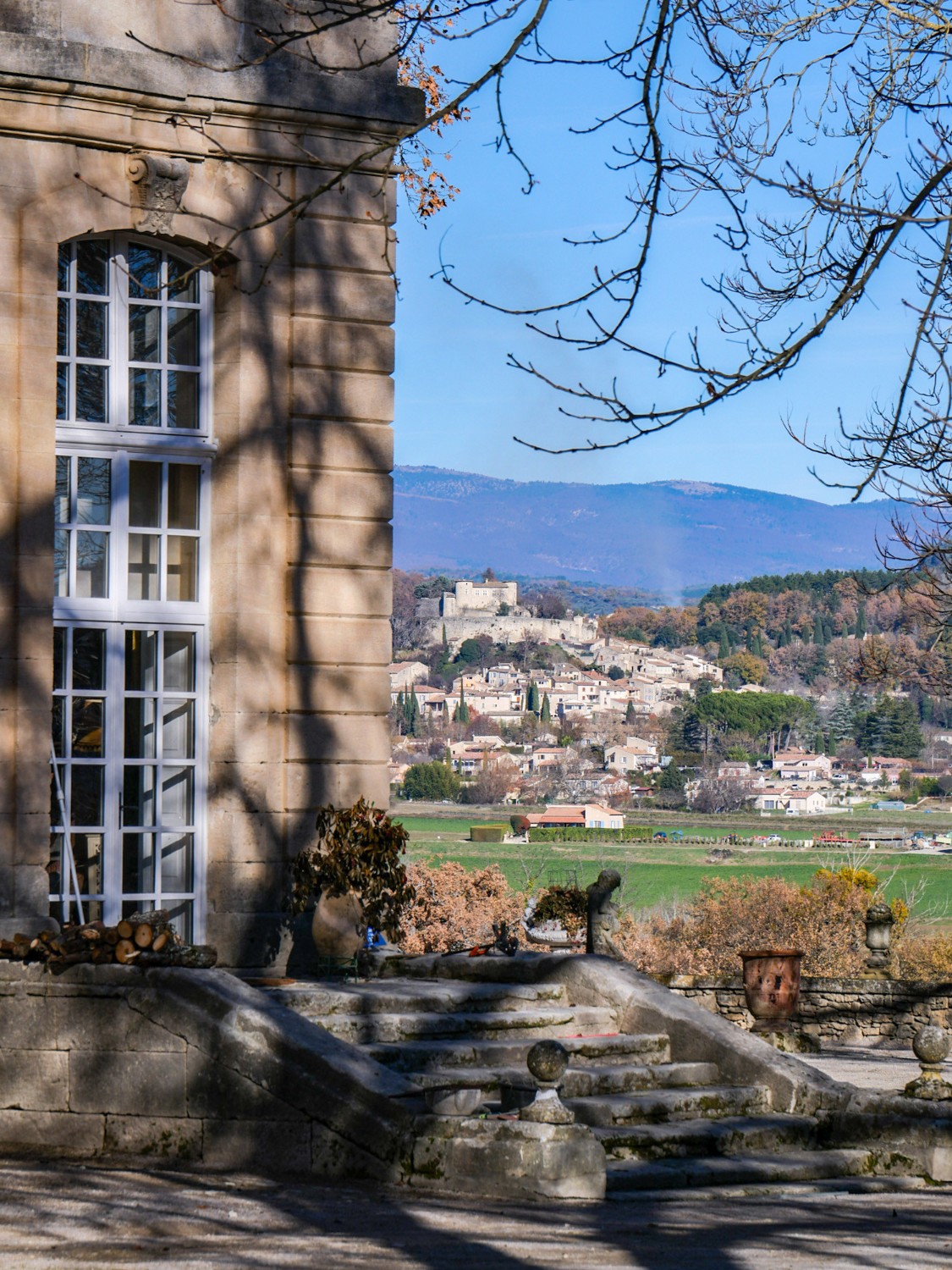
Set within a sublime landscape where the view stretches for several kilometres, this classical palace built around 1720 embodies the French art of living during the Régence period, worthy of the film Que la fête commence (Let the Party Begin). The architectural magnificence of what is considered the most beautiful 18th-century château in Provence is matched only by the extraordinary effort required to construct it during Europe's last plague epidemic, which struck Marseille from 1720 to 1722, coupled with the colossal financial means available at the time, fuelled by the speculative euphoria surrounding John Law's banking system.
Designed by the great Parisian architect Pierre-Alexis Delamair, who built the Hôtel de Soubise in Paris (now the French National Archives), its construction was entrusted to Jean-Baptiste Franque, responsible for some of the finest 18th-century buildings in Provence, notably in Aix and Avignon.
Architecture
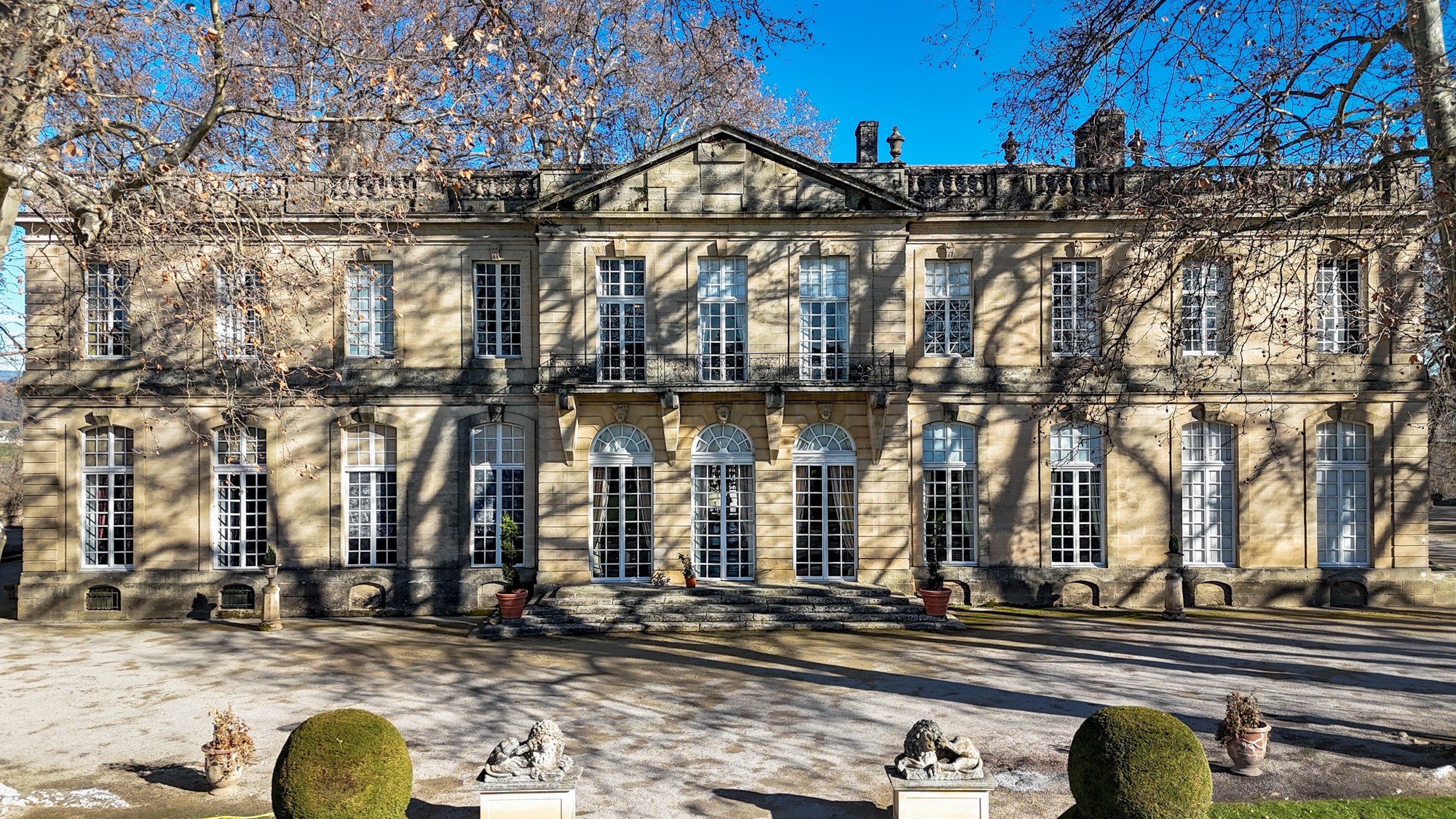
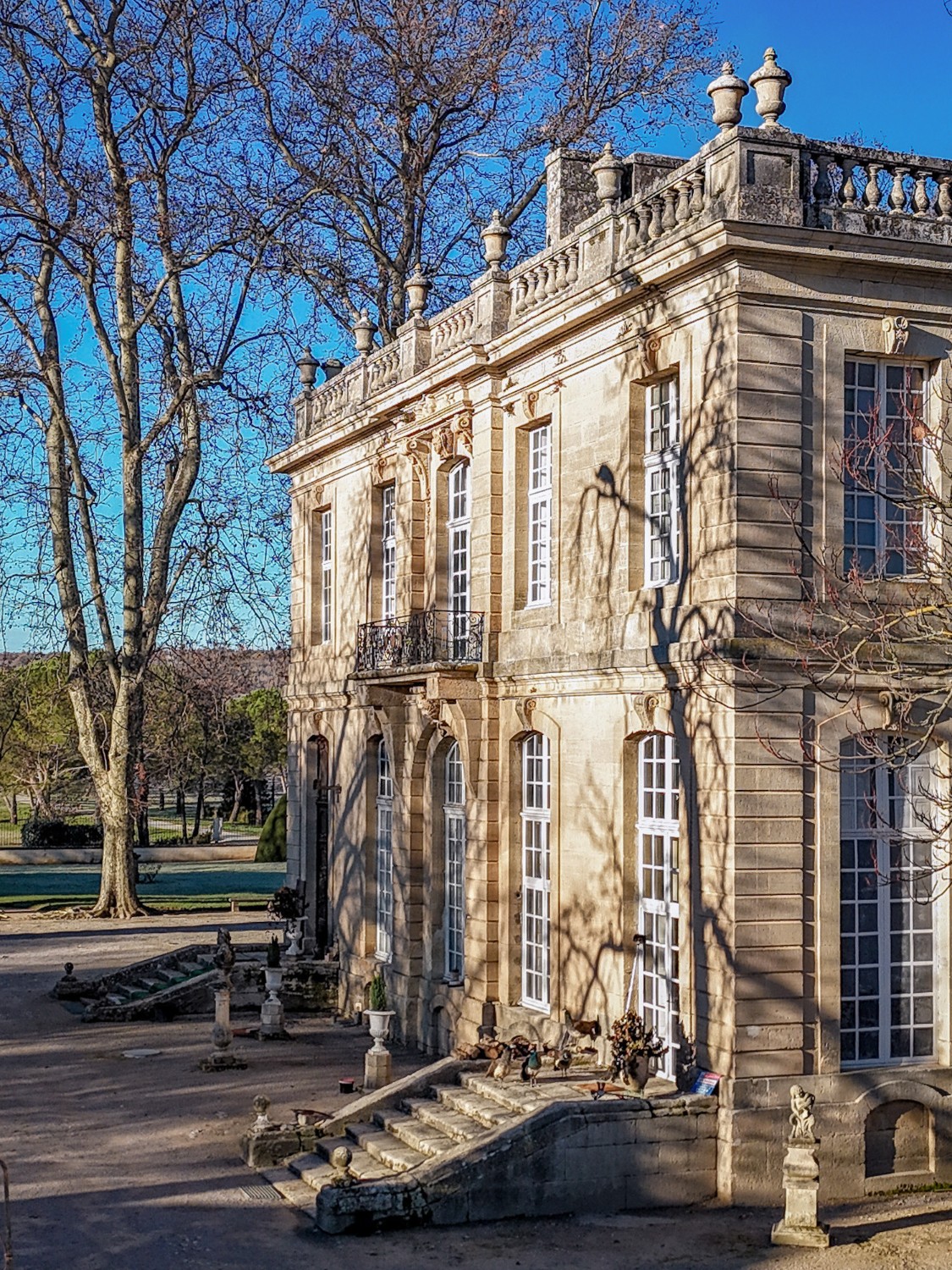
Its 18th-century classical architecture - strongly inspired by Parisian and Versailles design - is particularly refined, classical, and symmetrical, centred on a three-bay avant-corps with three French windows beneath a large pediment. It is known as the "Trianon of Provence."
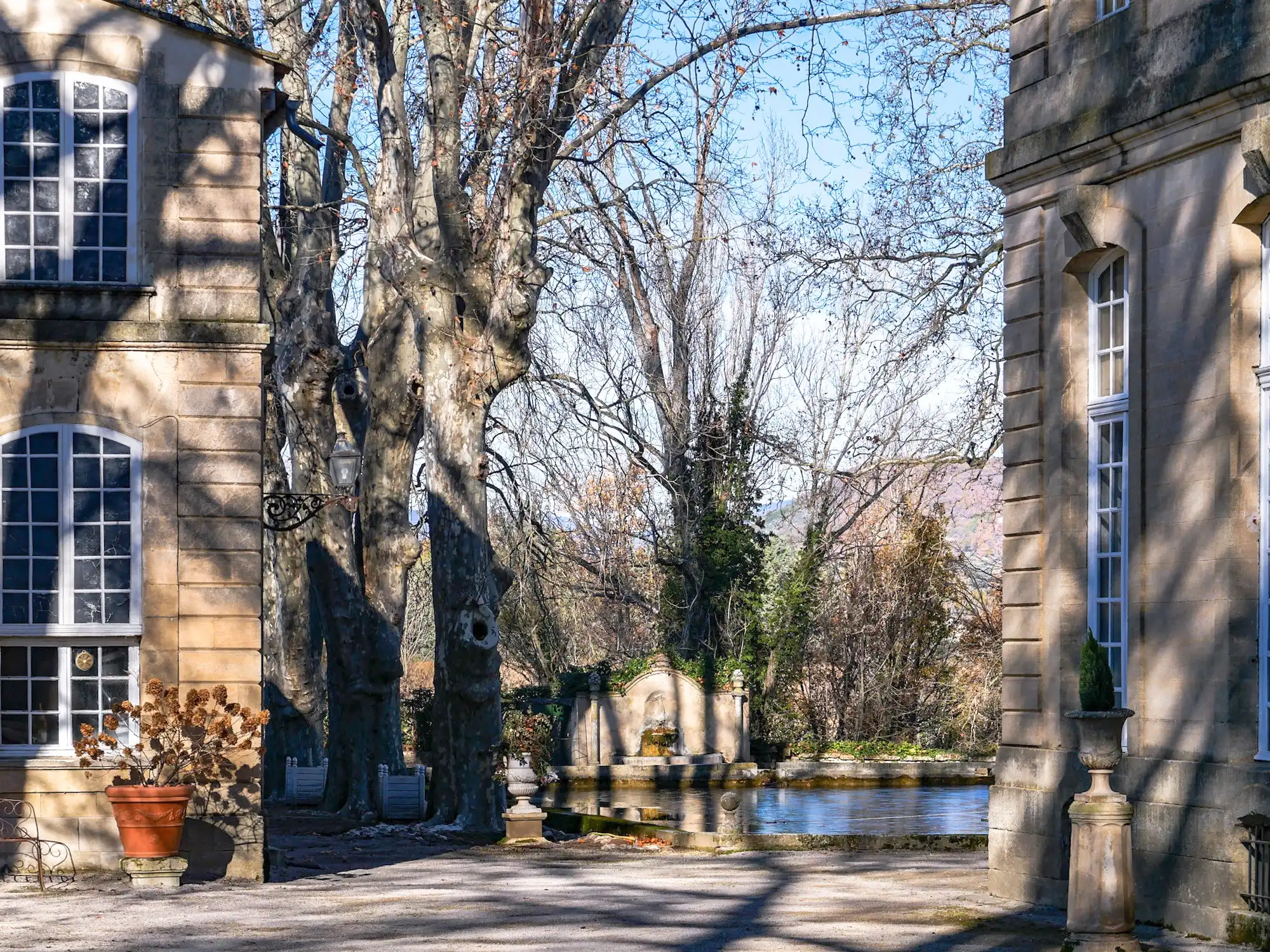
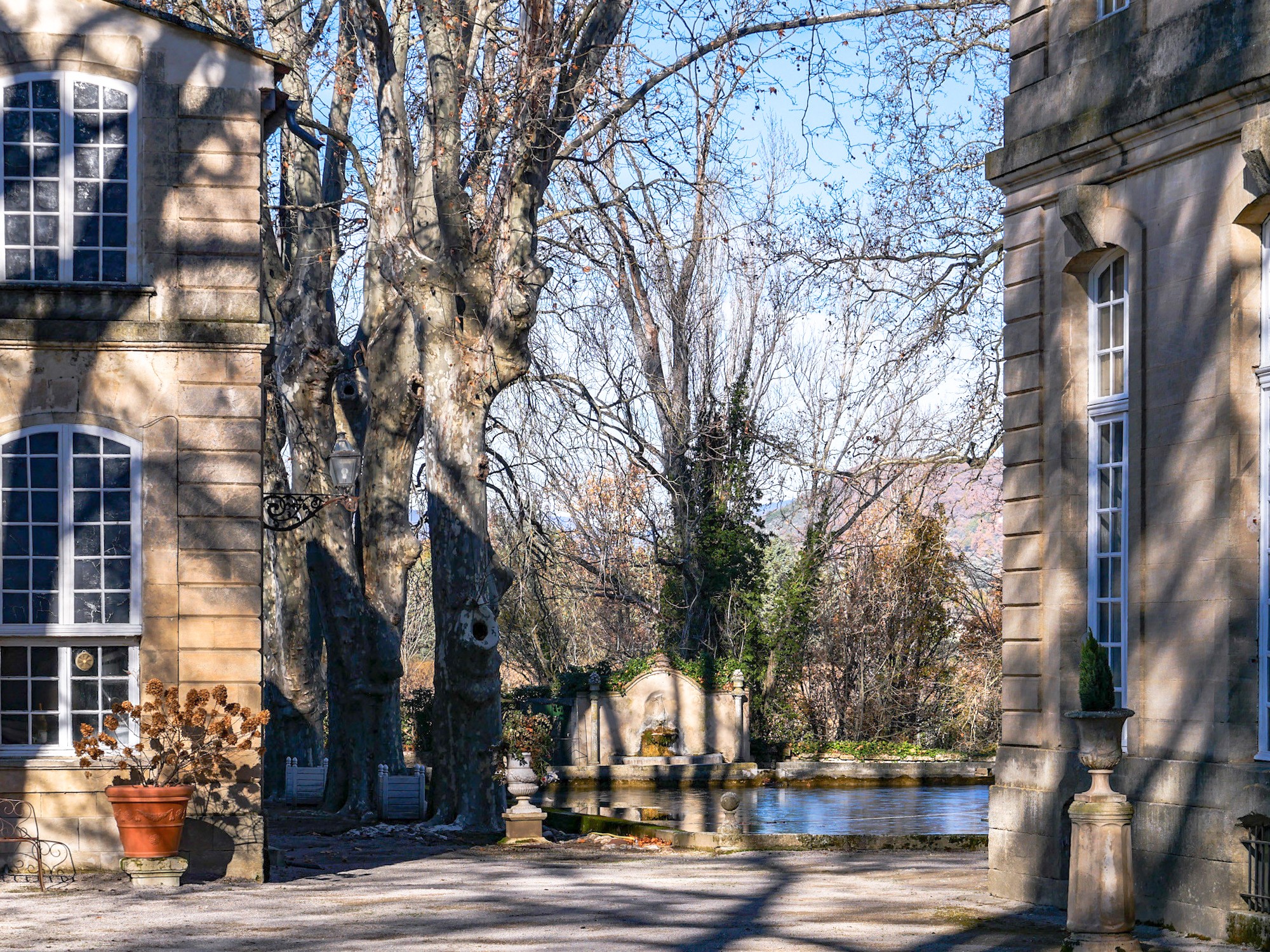
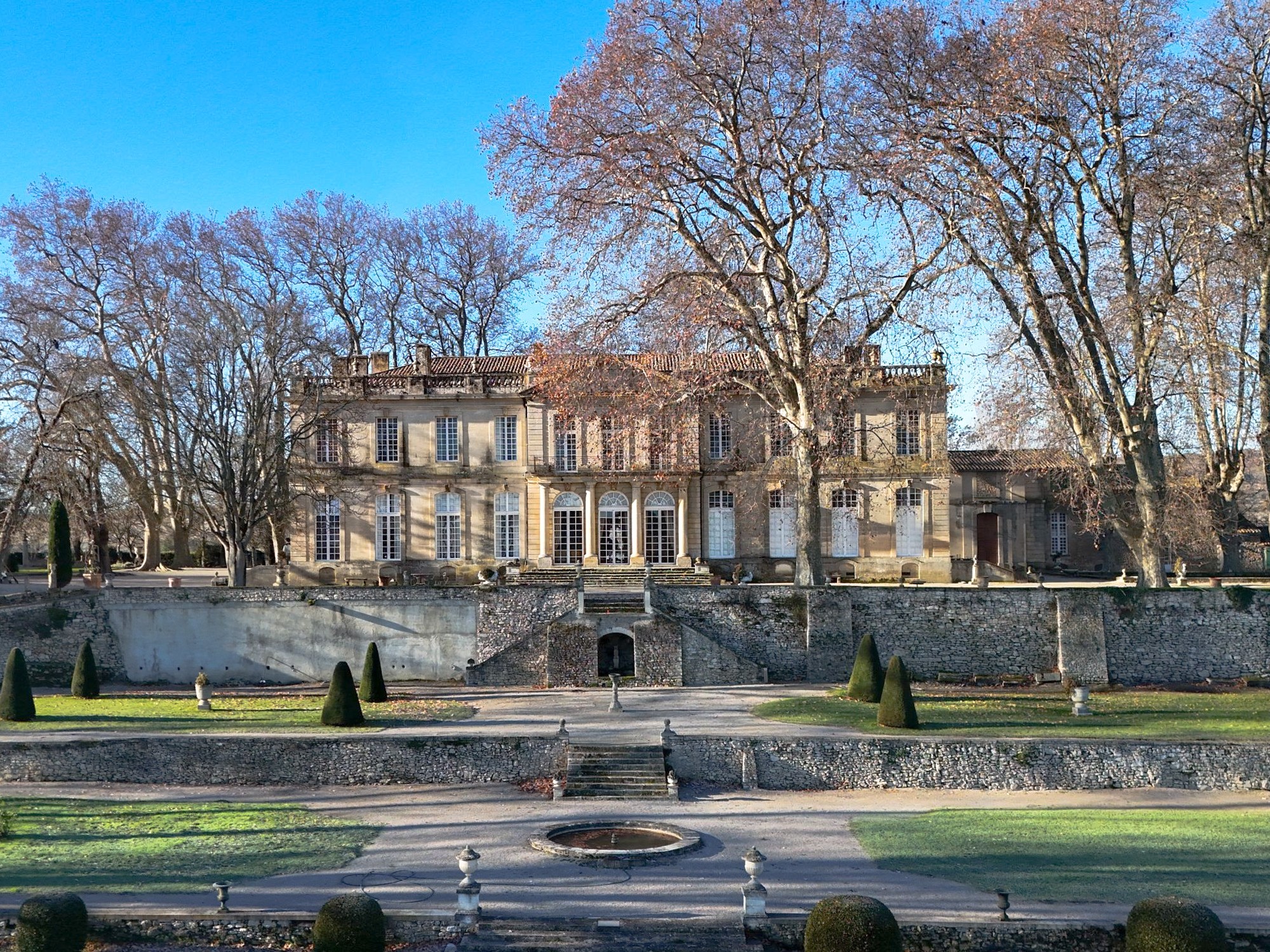
The gable ends are equally remarkable, featuring rich sculptural decoration, ornate wrought-iron balconies, and - on the park side - a wide terrace overlooking the vast recently recreated French formal garden. The central avant-corps of this façade displays a magnificent portico with four free-standing columns, an exceptionally rare feature for a private residence in the 18th century, as such classical elements inspired by Antiquity were generally reserved for the highest-ranking individuals connected to the royal family.
Interior
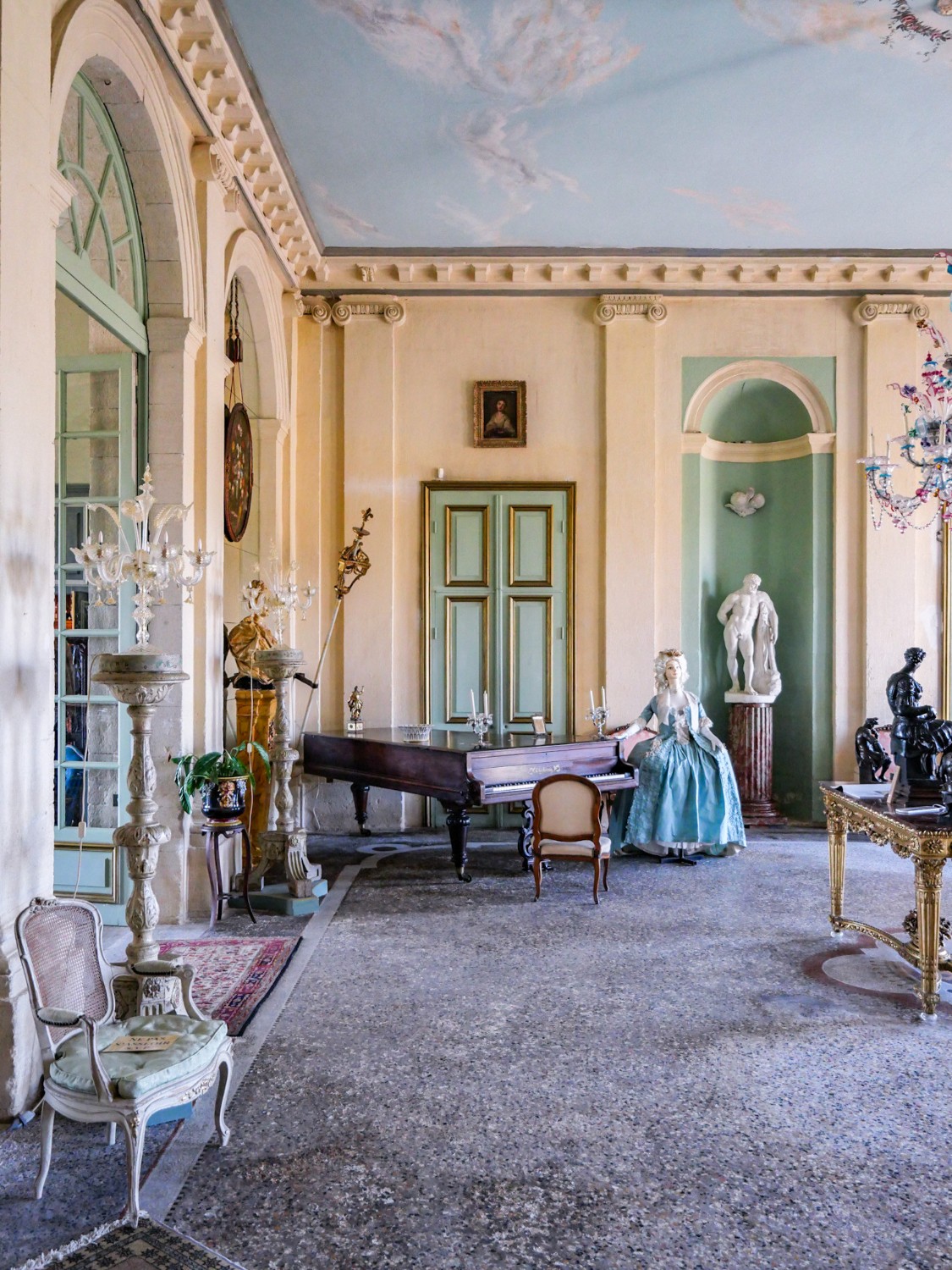
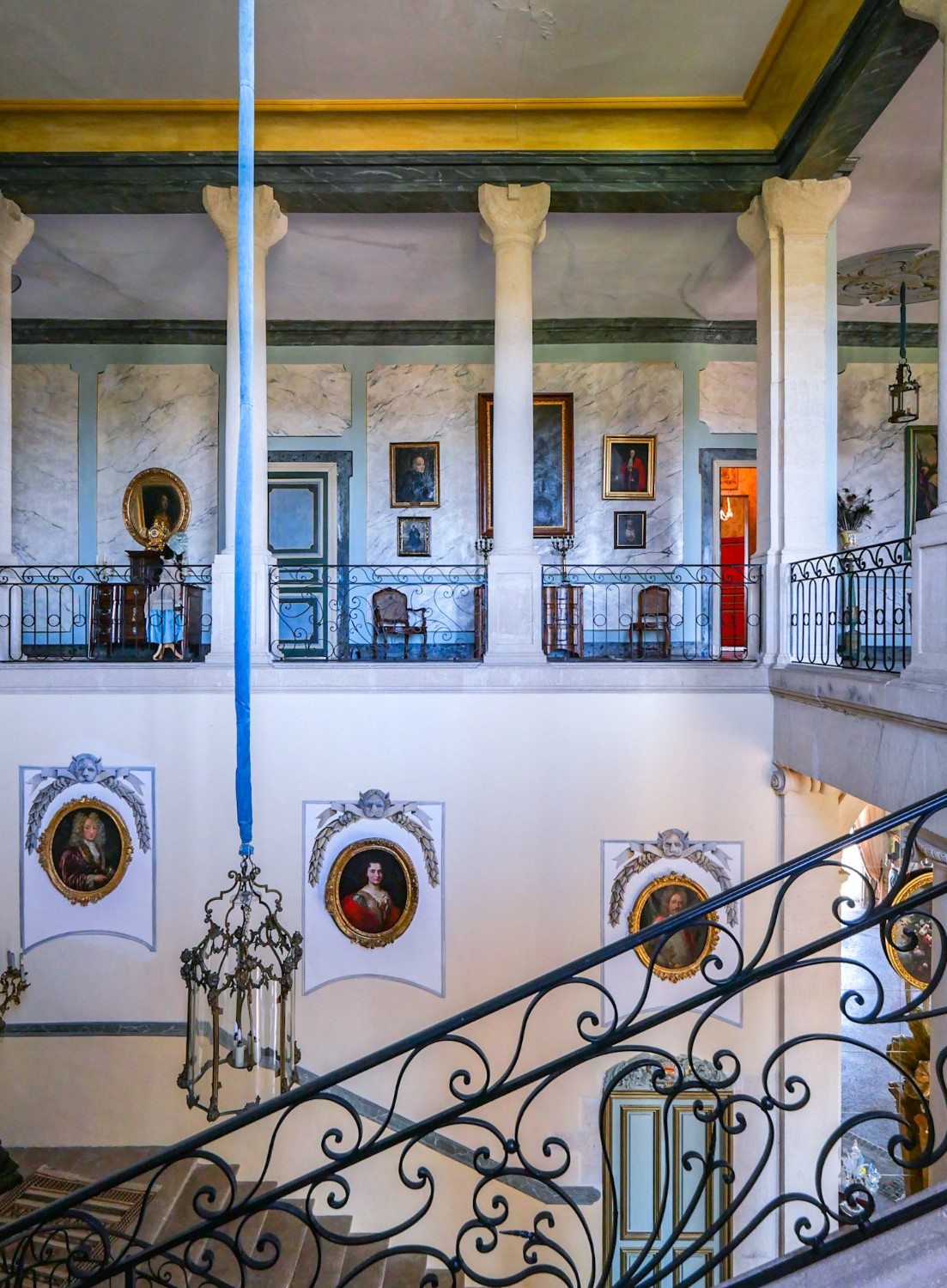
Inside, beneath ceilings rising 5.3 metres high and bathed in light from all sides, the through-hall opens onto the 80 m² grand salon. It is adorned with pilasters topped with Ionic capitals, mirroring the monumental free-standing columns that open onto the majestic staircase - completely open, with its grand flight of steps leading to the upper floor, where columns form balconies dramatically overlooking the hall. It is undoubtedly one of the most beautiful private 18th-century staircases in France.
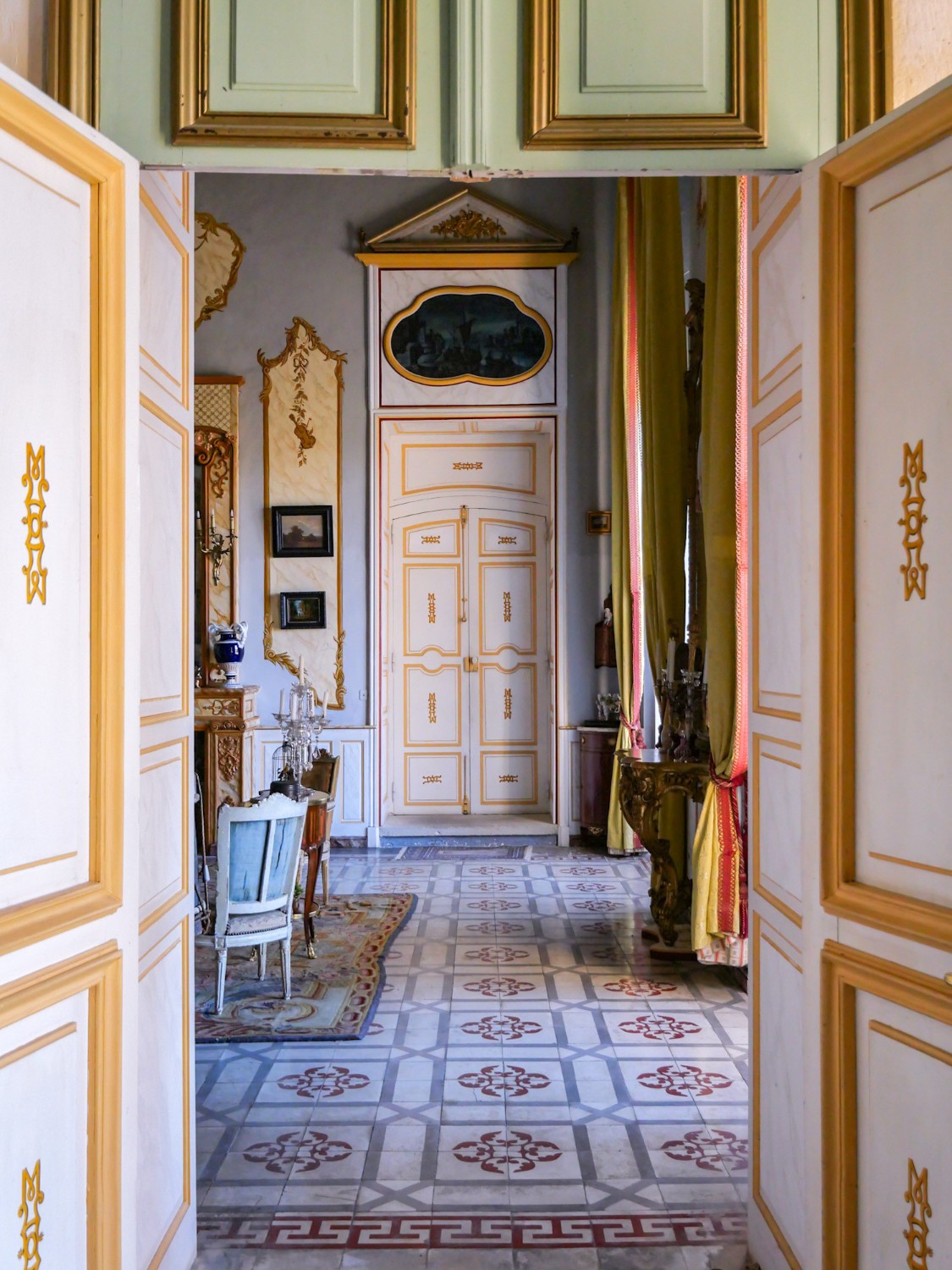
The ground floor opens on all sides to a suite of salons with very sober decoration, unfinished in the 18th century following the collapse of John Law's bank in 1720, in which the Forbin family - commissioners of the château - are believed to have been involved.
Ground Floor:
- Grand salon
- Music room adorned with a balustrade
- Salon with niche and alcove
- Large dining room with neo-Gothic fireplace
- Entrance hall on the south gable (former chapel location)
- Two large rooms used as visitor shops
- Mezzanine apartment with 3 bedrooms, laundry room, WC
- Second mezzanine apartment: kitchen, living-dining room with south porch access; upstairs: study, laundry room, two bedrooms, access to music room mezzanine
First Floor:
- Extraordinary 45-metre-long gallery alongside the majestic columned hall
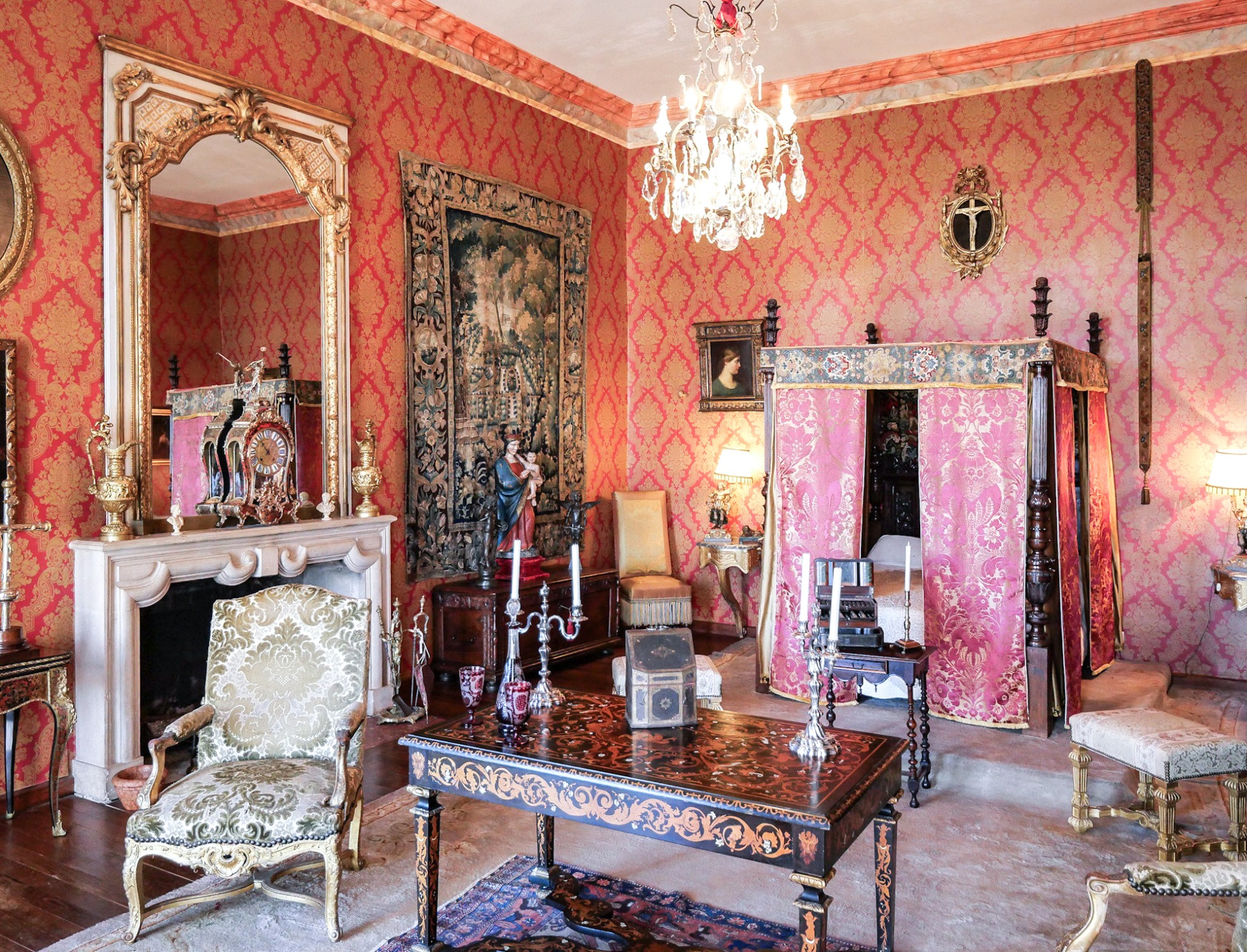
- 8 beautiful bedrooms, some with antechambers and cabinets, all with fireplaces
- Billiard-library room with fine 19th-century wallpaper
- Chapel
- Large attic
Basement:
- Extensive vaulted stone cellars
- Wine cellars
- Tunnel
Heating: Central heating in part of the château
Outbuildings
- Two gîtes (2 and 3 bedrooms)
- 3-bedroom dwelling
- Reception hall in former orangery (capacity: 150 guests) with professional kitchen and sanitary facilities
- Large garage for 2 cars
- Swimming pool
Gardens & Grounds
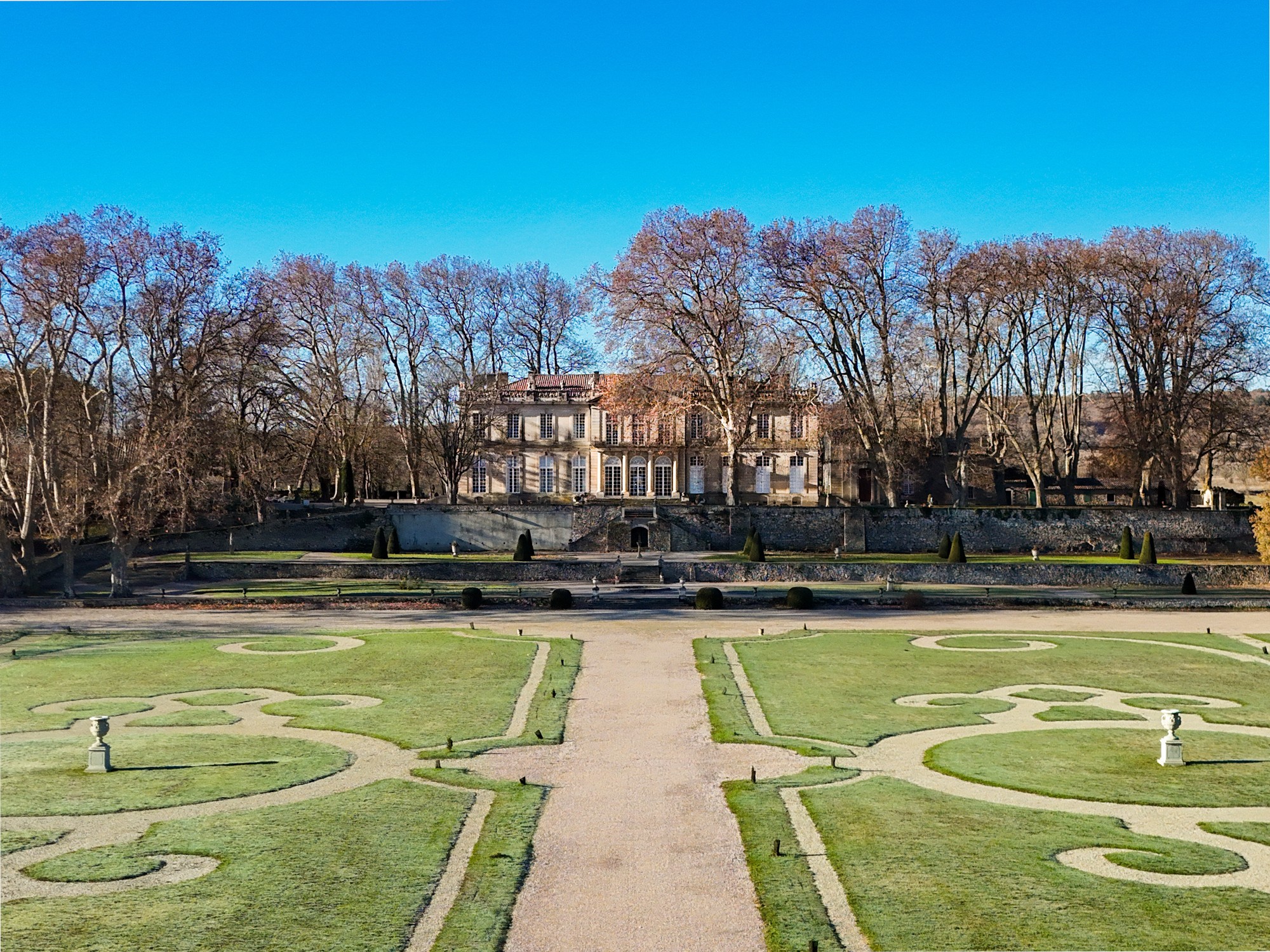
Sumptuous terraced gardens aligned along a 500-metre axial perspective: 300 metres of grand alley facing the château and 270 metres on the garden-terrace side.
- Embroidered parterre gardens based on the original 18th-century plan by Pierre-Alexis Delamair, preserved in Munich and recreated in 2023, marked by a monumental stone obelisk
- Large basin with fountain to the north
- 18th-century double-flight staircase
Location
- 2.5 km from nearest shops and services, hotel 1.5 km
- 3 km from five-star hotel
- 5 km from Forcalquier (all amenities)
- 20 km from A51 motorway
- 67 km from Aix-en-Provence (1 hour)
- 87 km from Aix TGV station (1h 10) – Paris in 2h 50
Information about the risks this property is exposed to is available on the Géorisques website: www.georisques.gouv.fr